

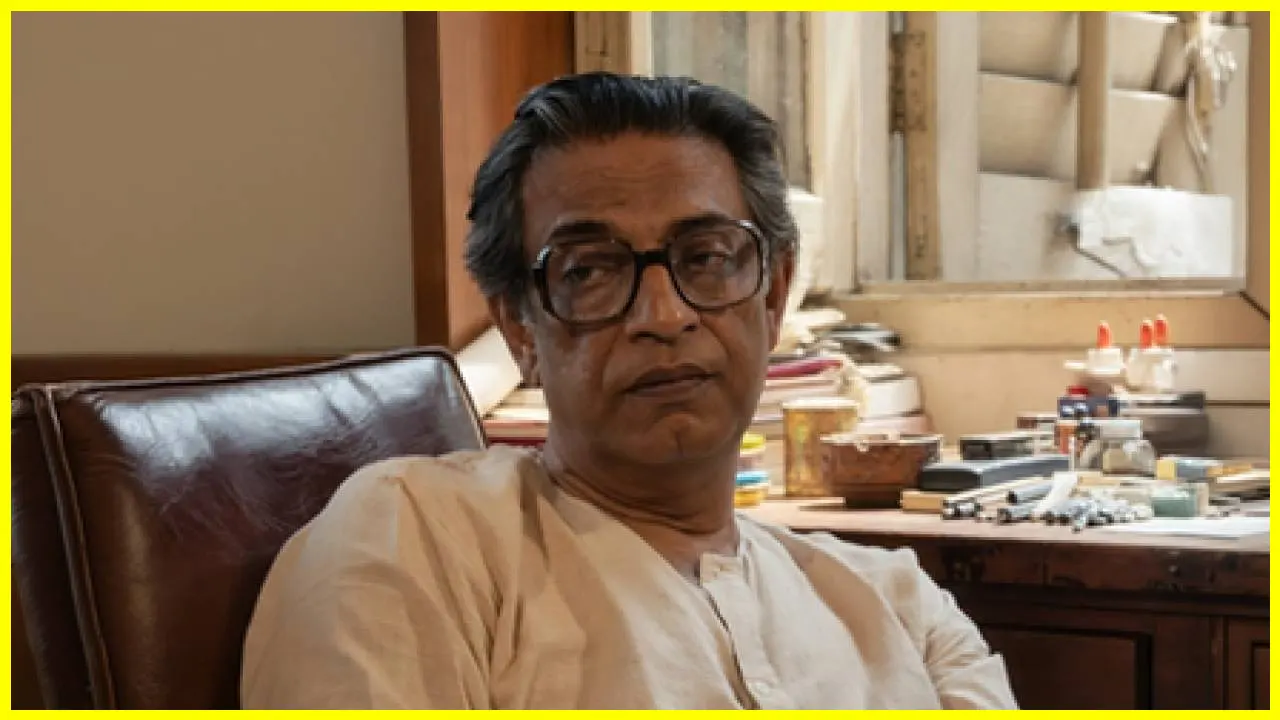

Mumbai, May 1: Satyajit Ray, a luminary in Indian cinema, faced significant struggles before achieving success with his first film, ‘Pather Panchali,’ which is regarded as a milestone in world cinema. To convince producers, Ray would carry a notebook filled with beautiful sketches of key scenes from the film. When no producer showed interest, he even mortgaged his life insurance policy to fund the project.
Born on May 2, 1921, in a culturally rich family in Kolkata, Ray developed a passion for films, Western classical music, and painting from a young age. Encouraged by his mother, he studied painting at Santiniketan in 1940. After returning home in 1942, he began working as a junior visualizer at an advertising agency, where he spent 13 years.
During this time, Ray began writing screenplays as a hobby. A trip to London, where he watched Vittorio De Sica’s ‘Bicycle Thieves,’ profoundly influenced him, leading him to decide to create realistic films. He acquired the rights to the famous book ‘Pather Panchali’ by Bibhutibhushan Bandopadhyay and spent two years searching for financiers. Despite showing his sketches to producers, he faced repeated rejections. Ultimately, he borrowed money from friends and relatives and mortgaged his life insurance policy.
On October 27, 1952, on a Sunday, he shot the first scene of the film, featuring Apu and Durga running to see a train in the rice fields. The shooting faced numerous interruptions due to financial constraints. For the role of Apu, Ray placed advertisements in newspapers, auditioning hundreds of children before selecting a boy named Bijoya from South Kolkata.
After overcoming many obstacles, ‘Pather Panchali’ was released on August 26, 1955, in Kolkata, achieving box office success and winning the Special Jury Award (Best Human Document) at the Cannes Film Festival in 1956.
This success brought Ray international acclaim. The films ‘Pather Panchali,’ ‘Aparajito,’ and ‘Apur Sansar’ are collectively known as the Apu Trilogy, addressing themes of poverty, hunger, social injustice, and women’s suffering in a realistic manner. Unlike the glitz of Mumbai’s commercial cinema, Ray’s films portrayed the true essence of Indian life.
Ray continued to make films almost every year until 1981, with notable works including ‘Parash Pathar,’ ‘Devi,’ ‘Charulata,’ ‘Mahanagar,’ ‘Shatranj Ke Khiladi,’ and ‘Ghare Baire.’ In 1992, he was honored with an Oscar for Lifetime Achievement and the Bharat Ratna. Satyajit Ray’s cinema was deeply concerned with social issues.

My name is Kuldeep Singh Chundawat. I am an experienced content writer with several years of expertise in the field. Currently, I contribute to Daily Kiran, creating engaging and informative content across a variety of categories including technology, health, travel, education, and automobiles. My goal is to deliver accurate, insightful, and captivating information through my words to help readers stay informed and empowered.