

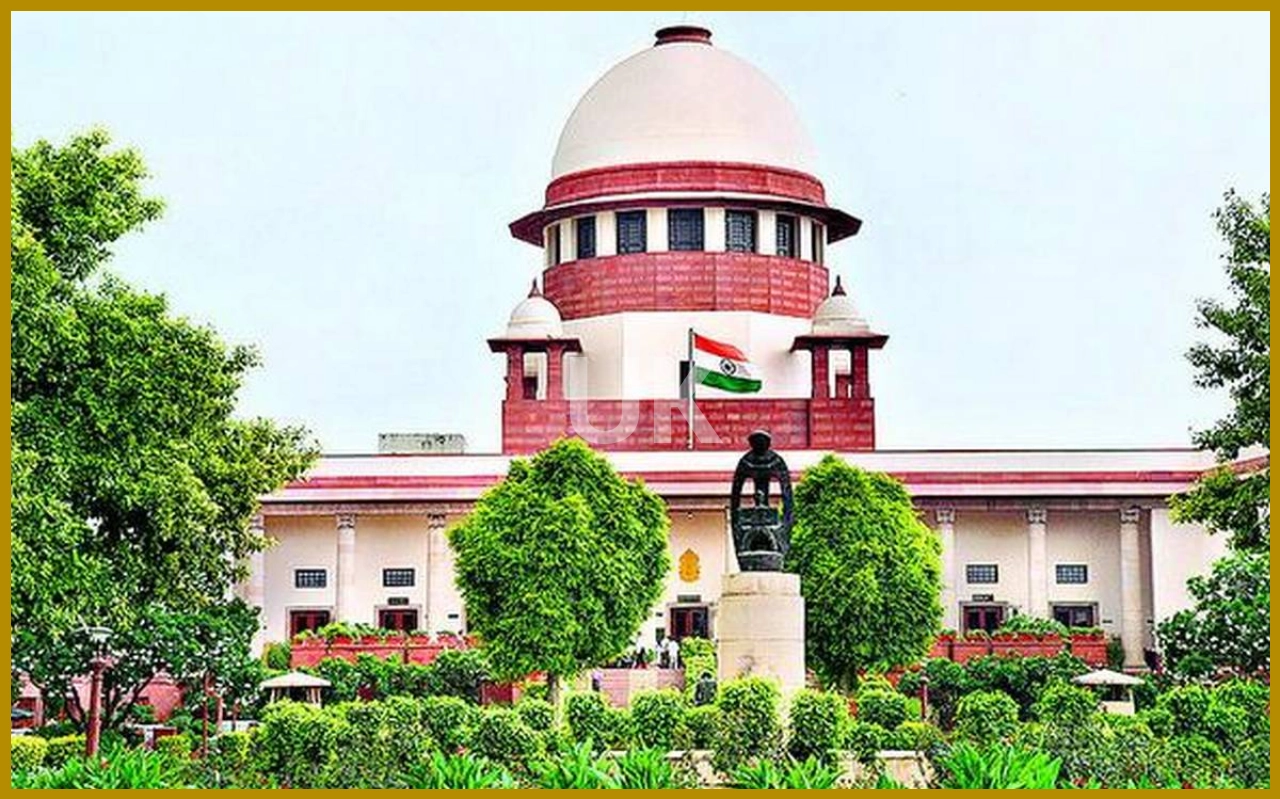

The Supreme Court has put a stay on its own order defining the Aravalli mountain range. The next hearing in this case is scheduled for January 21. The court has also directed the formation of a new committee to conduct a survey and study of the Aravalli hills.
The Supreme Court bench, headed by Chief Justice Suryakant and comprising three judges, stated that the verdict delivered on November 20 will not be applicable until the next hearing. Notices have been issued to the central and state governments asking for their responses.
The Chief Justice remarked that a fresh committee will be constituted to study and survey the Aravalli hills. He emphasized the need to reconsider whether including only hills above 100 meters in the definition of Aravalli might lead to illegal mining activities. The court noted the importance of clearly identifying areas that are not part of the Aravalli range.
On November 20, the Supreme Court had accepted a uniform definition of the Aravalli hills and mountain range, covering areas across Delhi, Haryana, Rajasthan, and Gujarat. It had imposed a ban on mining leases until expert reports on the mountain range were submitted.
The primary dispute over the Aravalli lies in its geographical boundaries and definition. The absence of a clear definition has often resulted in violations related to construction and mining activities. Earlier, the court had ruled against a complete ban on mining in the Aravalli, expressing concern that such a ban could encourage illegal mining.
The new definition adopted by the court was based on recommendations from a committee formed by the Ministry of Environment, Forest and Climate Change. According to the committee, an “Aravalli hill” is any landform in designated Aravalli districts with a height of 100 meters or more above the local lowest point. An “Aravalli mountain range” is defined as a group of two or more such hills located within 500 meters of each other.

Bhupendra Singh Chundawat is a seasoned technology journalist with over 22 years of experience in the media industry. He specializes in covering the global technology landscape, with a deep focus on manufacturing trends and the geopolitical impact on tech companies. Currently serving as the Editor at Udaipur Kiran, his insights are shaped by decades of hands-on reporting and editorial leadership in the fast-evolving world of technology.