

India and Canada Discuss Strengthening Bilateral Ties
Indian Foreign Minister S. Jaishankar meets Canadian counterpart Anita Anand to enhance diplomatic relations and explore new agreements.

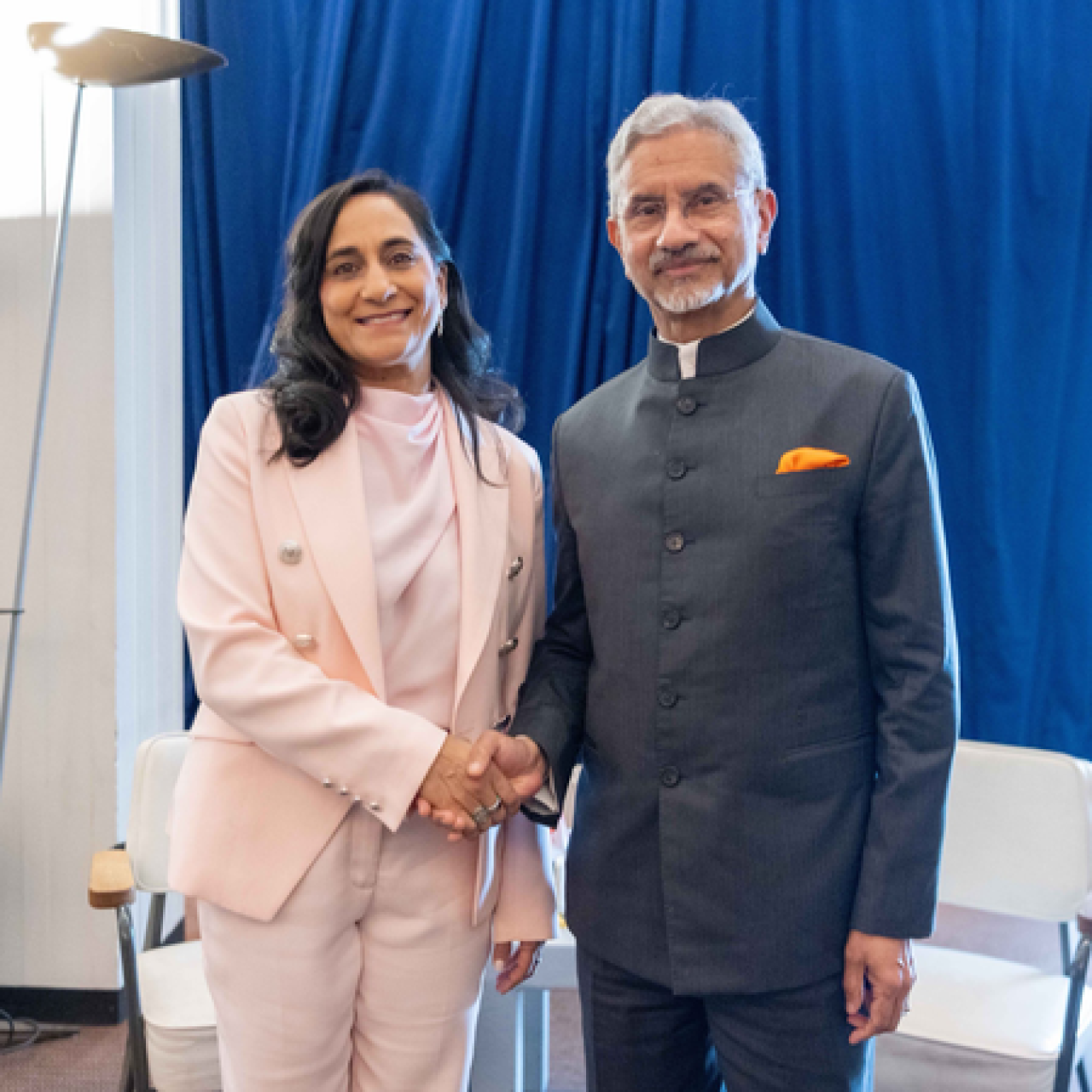
New York, September 27 (Udaipur Kiran) : During the ongoing United Nations General Assembly in New York, Indian Foreign Minister S. Jaishankar met with Canadian Foreign Minister Anita Anand to discuss elevating the bilateral relationship between the two nations. Jaishankar expressed optimism about taking India-Canada ties to “a new and higher level.”
This significant meeting aimed to advance the newly initiated diplomatic relations and transform recent high-level contacts into agreements covering trade, energy, technology, security, and education. Jaishankar shared his enthusiasm on social media platform X, stating, “It was a pleasure to meet with Canada’s Foreign Minister Anita Anand during UNGA-81. We had a good and meaningful conversation. We are preparing to take our countries’ relations to a higher level.”
While details regarding specific topics of discussion or new agreements were not immediately disclosed by either side, Jaishankar’s remarks are seen as a positive indication of progress in India-Canada relations. Over the past year, there has been a notable shift in the relationship, with both countries resuming high-level diplomatic dialogues and forming various arrangements for economic and strategic cooperation.
In October 2025, during Anand’s visit to India, both nations announced a joint roadmap. Following that, Canadian Prime Minister Mark Carney visited Mumbai and New Delhi earlier this year. During this visit, Carney and Indian Prime Minister Narendra Modi outlined a substantial agenda for enhancing bilateral ties, focusing on security, defense cooperation, and expanding trade partnerships.
Both leaders also committed to completing negotiations on the Comprehensive Economic Partnership Agreement (CEPA) by 2026. Canada aims for this proposed trade agreement to facilitate annual trade between the two countries, targeting a goal of $70 billion by 2030. The discussions encompass sectors such as trade in goods and services, investment, agriculture, digital commerce, and sustainable development.
Additionally, a strategic energy partnership has been established, involving liquefied natural gas (LNG), liquefied petroleum gas (LPG), uranium, solar energy, and hydrogen. A significant achievement in trade includes a $2.6 billion agreement under which Canadian company Cameco will supply approximately 22 million pounds of uranium to India for nuclear power generation between 2027 and 2035.
Both countries have also identified areas for increased cooperation in critical minerals, artificial intelligence (AI), quantum technology, aerospace, space research, higher education, and robust supply chains. Carney remarked during his visit to India that the country is “the fastest-growing major economy in the world and a significant force in global trade and technology.”
The Indian diaspora in Canada plays a crucial role in strengthening bilateral ties, with over 1.8 million people of Indian origin residing in Canada. According to Canadian government data, India has been the largest source country for immigration in most categories, including study permits, in 2024. In 2025, trade in goods between the two countries reached $10.9 billion, while India’s exports of services to Canada were valued at $15.6 billion in 2024, largely driven by educational travel.
Both governments have also resumed systematic dialogues between national security and law enforcement agencies, addressing issues such as terrorism, violent extremism, organized crime, cybercrime, extortion, financial fraud, drug trafficking, and immigration law enforcement.

Bhupendra Singh Chundawat is a seasoned technology journalist with over 22 years of experience in the media industry. He specializes in covering the global technology landscape, with a deep focus on manufacturing trends and the geopolitical impact on tech companies. Currently serving as the Editor at Udaipur Kiran, his insights are shaped by decades of hands-on reporting and editorial leadership in the fast-evolving world of technology.