

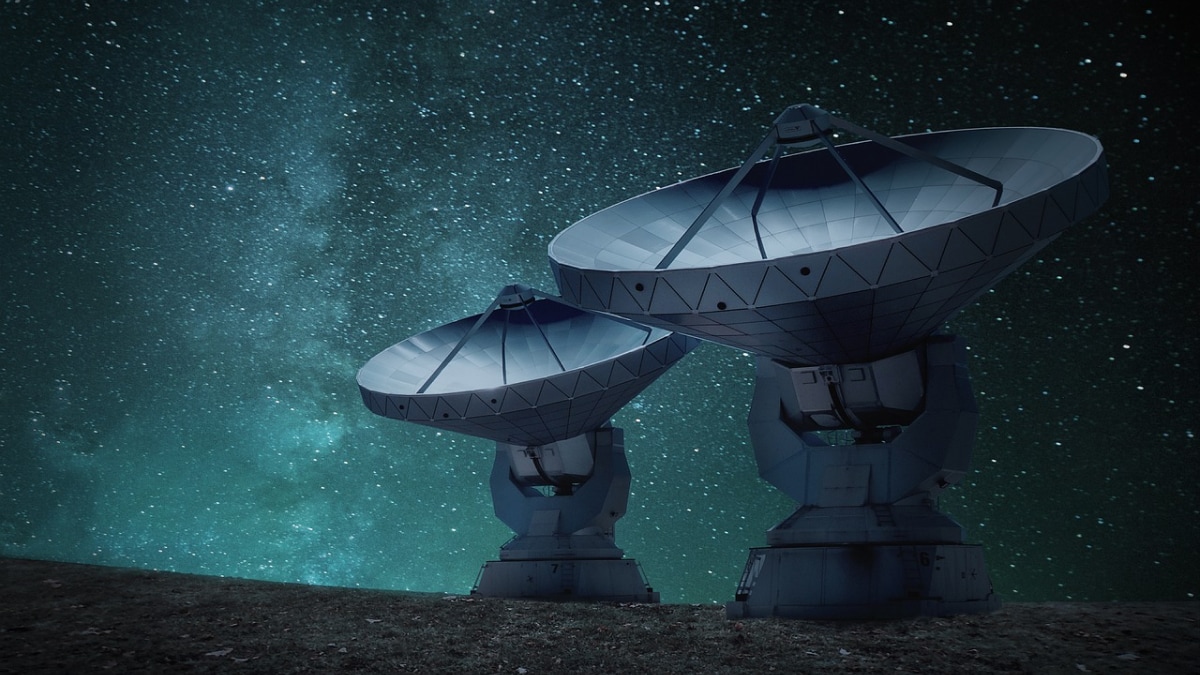

Elon Musk’s Starlink satellites are causing major disruptions for astronomers worldwide, particularly in radio astronomy. Scientists from the Netherlands Institute for Radio Astronomy (ASTRON) and other experts are raising concerns about the interference these satellites are causing with radio waves, which are crucial for observing distant cosmic phenomena like black holes, exoplanets, and galaxies.
Impact on Astronomical Research
The latest second-generation Starlink V2 satellites are emitting much stronger electromagnetic radiation than earlier models, according to Professor Jessica Dempsey, Director of ASTRON. The radiation emitted by these satellites is reportedly up to 32 times stronger, which is making it harder for radio telescopes to detect faint signals from space. This interference disrupts observations of distant cosmic objects, creating a “noise” in the radio spectrum that blinds radio telescopes and hinders vital space research.
Growing Concerns and Urgency for Action
With over 6,400 Starlink satellites currently in orbit and projections of that number surpassing 100,000 by 2030, the problem is becoming more urgent. Cees Bassa, lead author of a study on Starlink’s effects, compared the satellite interference to the brightness of the full Moon, making it impossible to study faint stars and galaxies. Robert Massey, Deputy Executive Director of the Royal Astronomical Society, also emphasized the need for immediate action from SpaceX.
Solutions and Future Outlook
Astronomers are calling on SpaceX to take steps like shielding satellite batteries or redesigning components to reduce radiation emissions. Without such interventions, ground-based astronomy could face severe limitations, impacting humanity’s ability to explore and understand the universe.
Professor Dempsey warned that if left unresolved, this situation could pose an existential threat to astronomical research. However, since SpaceX is the largest satellite provider, scientists believe it has the power to set a global standard for responsible space operations that could help safeguard astronomical research for the future.

Bhupendra Singh Chundawat is a seasoned technology journalist with over 22 years of experience in the media industry. He specializes in covering the global technology landscape, with a deep focus on manufacturing trends and the geopolitical impact on tech companies. Currently serving as the Editor at Udaipur Kiran, his insights are shaped by decades of hands-on reporting and editorial leadership in the fast-evolving world of technology.