

A 1.4-million-year-old fossilized jawbone discovered in South Africa has been classified as belonging to a previously unidentified hominin species within the Paranthropus genus. This groundbreaking discovery sheds new light on early human evolution, suggesting that multiple hominin species coexisted in southern Africa during that period.

Significant Findings from the Research
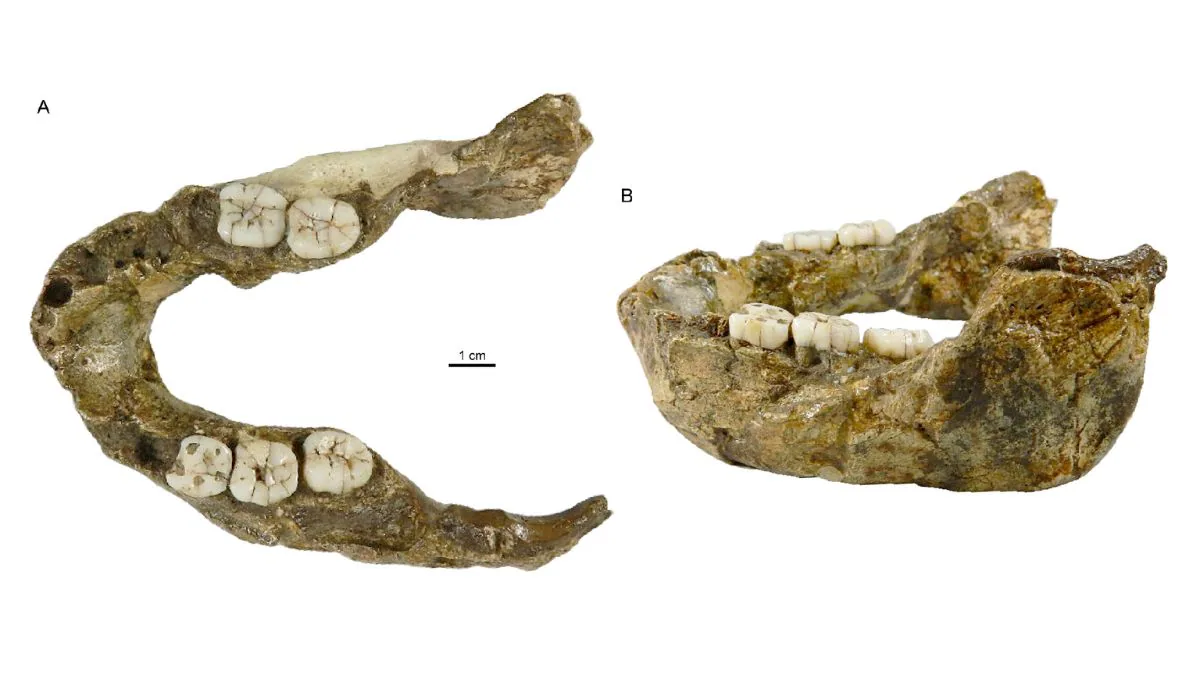
According to a study published in the Journal of Human Evolution, the fossil jaw—catalogued as SK 15—was originally excavated in 1949 from Swartkrans, one of South Africa’s key paleoanthropological sites. Initially classified as Telanthropus capensis and later reassigned to Homo ergaster, recent research has led to a dramatic reclassification.
How the New Classification Was Determined
Clément Zanolli, a paleoanthropologist at the University of Bordeaux, explained that researchers utilized advanced X-ray imaging and 3D modeling to analyze the specimen. Detailed examination of internal and external dental structures revealed that SK 15 does not align with known Homo species.
Key differences include:
- Molars that are longer and more rectangular than those found in Homo species
- A thicker and more robust jaw structure
- Dental features that align more closely with Paranthropus than Homo
Based on these findings, the specimen has been classified as a new species within the Paranthropus genus, named Paranthropus capensis.
Implications for Early Human Evolution
The discovery of Paranthropus capensis confirms that at least two Paranthropus species—P. capensis and P. robustus—coexisted in southern Africa around 1.4 million years ago.
Dietary and Evolutionary Insights
Differences in jaw and tooth structure suggest distinct dietary adaptations between the two species:
- Paranthropus robustus possessed larger molars, indicating a highly specialized diet
- Paranthropus capensis had smaller teeth and a more flexible jaw structure, suggesting a broader and more varied diet
Future Research and Exploration
Despite this breakthrough, researchers caution that Africa’s fossil record remains incomplete, and many unidentified hominin species may still await discovery. Zanolli emphasized the importance of continued excavations in regions like Swartkrans to gain deeper insights into hominin diversity and evolutionary pathways.
This discovery marks a major advancement in paleoanthropology, reshaping our understanding of early hominin evolution and reinforcing South Africa’s role as a critical site for human ancestry research.

Bhupendra Singh Chundawat is a seasoned technology journalist with over 22 years of experience in the media industry. He specializes in covering the global technology landscape, with a deep focus on manufacturing trends and the geopolitical impact on tech companies. Currently serving as the Editor at Udaipur Kiran, his insights are shaped by decades of hands-on reporting and editorial leadership in the fast-evolving world of technology.


