Yes Bank Shares Rise After Board Approves ₹16,000 Crore Fundraising Plan
Mumbai, June 4, 2025 — Yes Bank shares gained in Tuesday’s trading session after the bank received board approval to raise up to ₹16,000 crore through a mix of equity and debt instruments. The move is aimed at bolstering its capital base and supporting future growth.
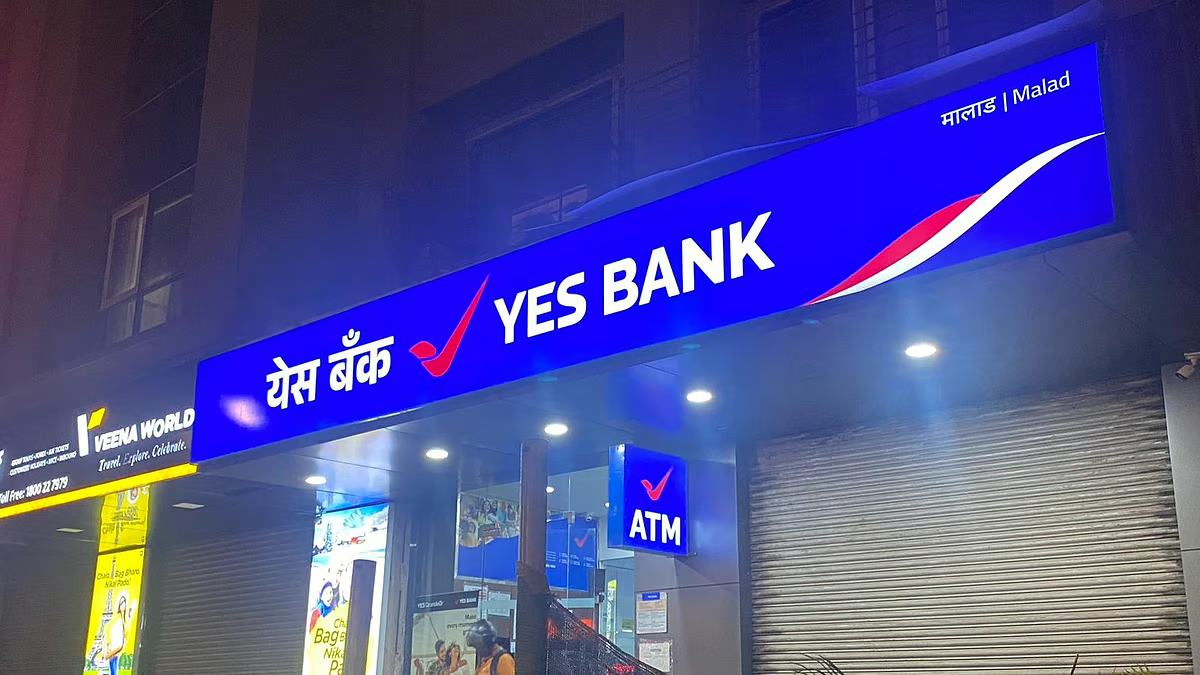

The stock was trading at ₹21.01 on the BSE, up 0.77% from its previous close of ₹20.85. During the day, it touched a high of ₹21.24 and a low of ₹20.74. Trading volume crossed 99 lakh shares on the counter.
Fundraising Plan Breakdown
At its board meeting held on June 3, 2025, Yes Bank approved a proposal to raise:
-
₹7,500 crore via equity securities, including rights issue, qualified institutional placement (QIP), or other methods. The total equity dilution from this issue and any convertible debt will not exceed 10%.
-
₹8,500 crore via debt instruments, which may include bonds, debentures, or other eligible securities denominated in Indian or foreign currency. The aggregate impact, including any future conversion of convertible debt, will also be capped at a 10% dilution threshold.
Both equity and debt will be issued in multiple tranches across domestic and international markets, depending on investor demand and regulatory approvals.
Stock Performance and Market Cap
Yes Bank’s stock has seen some volatility in recent months. It hit a 52-week high of ₹27.41 on July 8, 2024, and a 52-week low of ₹16.02 on March 12, 2025. The scrip’s current market capitalization stands at ₹65,955.70 crore.
Over the past week, the stock has traded between ₹23.40 and ₹20.74. Institutional investors hold 66.34% of the total equity, while non-institutional investors own 33.66%.
Strategic Focus and Growth Outlook
Yes Bank’s fundraise is expected to enhance its ability to grow across retail, corporate, and digital banking verticals. The bank is engaged in a broad range of services, including corporate banking, financial markets, wealth management, branch banking, and investment banking.
The capital infusion, once executed, will strengthen the bank’s balance sheet, improve its capital adequacy ratio (CAR), and help it meet future credit demand, especially in high-growth sectors such as MSMEs, infrastructure, and digital lending.

Bhupendra Singh Chundawat is a seasoned technology journalist with over 22 years of experience in the media industry. He specializes in covering the global technology landscape, with a deep focus on manufacturing trends and the geopolitical impact on tech companies. Currently serving as the Editor at Udaipur Kiran, his insights are shaped by decades of hands-on reporting and editorial leadership in the fast-evolving world of technology.