

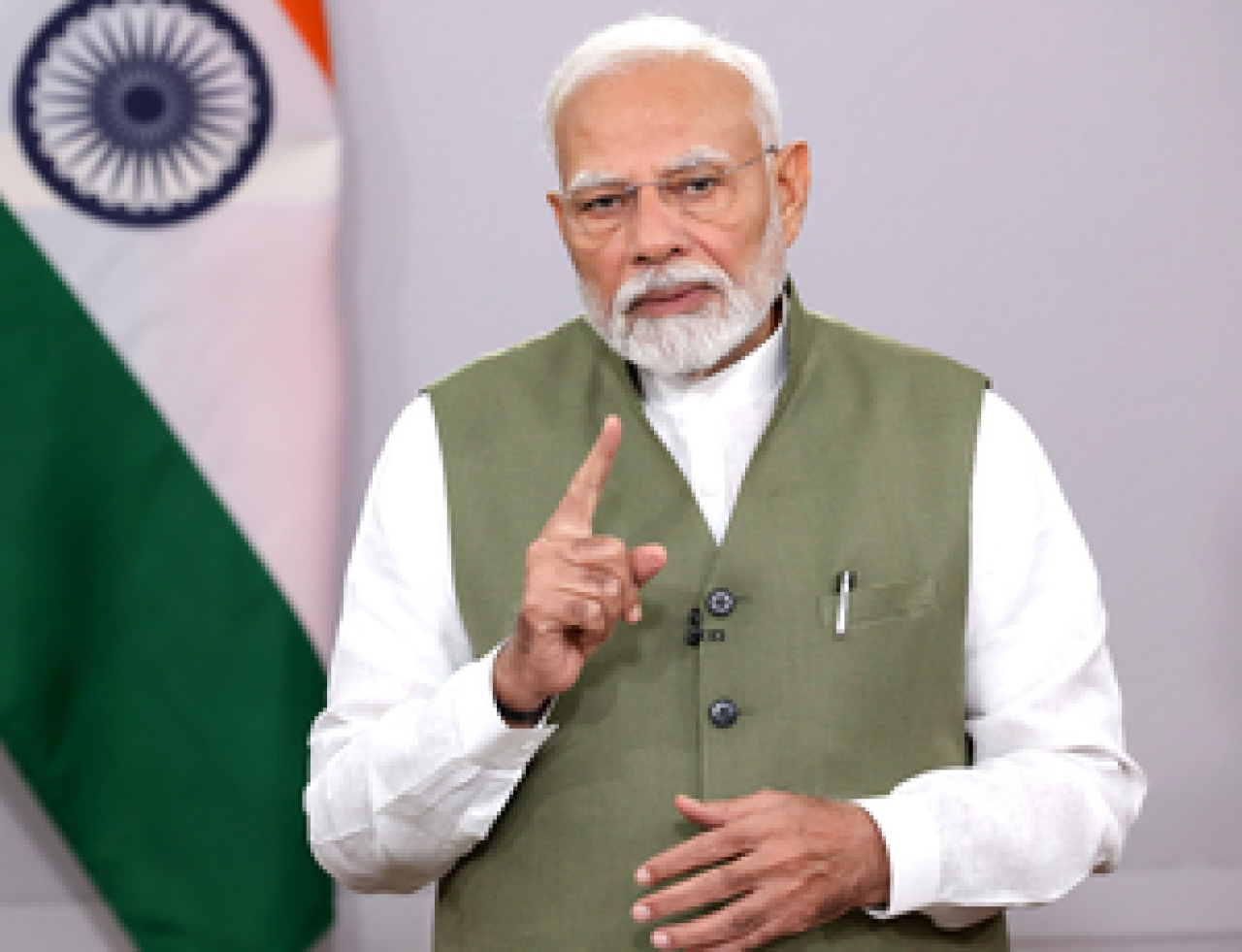

New Delhi, September 30 (Udaipur Kiran) : Prime Minister Narendra Modi announced on Wednesday that the Cabinet has approved the Green Energy Corridor Phase-III (GEC-III) plan, marking a significant step towards achieving India’s target of 900 gigawatts of non-fossil fuel-based energy capacity by 2035. He emphasized that this initiative will enhance clean energy, strengthen the power grid, and create job opportunities.
In a post on the social media platform X, Modi highlighted the importance of “clean electricity, a robust grid, and more opportunities.” Under the GEC-III, the plan aims to ensure the evacuation of 135 gigawatts of renewable energy, develop 50 gigawatt-hours (GWh) of battery storage capacity, and fortify the power grid across states and union territories.
The Prime Minister noted that the initiative would generate large-scale employment in manufacturing, construction, and energy storage sectors, further accelerating India’s clean energy transition.
In another post, Modi assured that the government is committed to safeguarding farmers’ interests and increasing their income. He announced an increase in the minimum support price (MSP) for rabi crops for the 2027-28 marketing season, ensuring that millions of farmers receive a profitable price for their produce.
The Cabinet’s approval of the GEC-III plan aims to develop the necessary infrastructure for effective transmission and integration of up to 135 gigawatts of renewable energy across the country.
India’s energy sector has been rapidly expanding in recent years, with the total installed power generation capacity reaching 552 gigawatts by July 2026, compared to approximately 249 gigawatts in 2014. This includes over 300.50 gigawatts of non-fossil fuel energy capacity, accounting for more than 54% of the total installed capacity. Currently, India ranks as the third-largest country in the world in terms of installed renewable energy capacity.
The country has also made remarkable progress in solar energy, with installed solar capacity reaching 164.59 gigawatts by July 2026, a significant increase from just 2.8 gigawatts in 2014. Solar energy has now become the largest component of India’s total renewable energy capacity.
By 2025, India is poised to become the second-largest solar energy growth market in the world, adding over 37 gigawatts of new solar capacity, surpassing the United States, which added approximately 34 gigawatts during the same period.
The GEC-III plan is expected to be completed by the fiscal year 2032-33, with a total project cost exceeding ₹1.86 lakh crore. Of this, ₹1.36 lakh crore will be allocated for developing transmission systems within states, while ₹50,000 crore will be invested in establishing a 50 GWh Battery Energy Storage System (BESS).
Battery energy storage systems will be installed at renewable energy producers or other critical grid sites to address challenges related to the intermittent availability of solar and wind energy, grid congestion, and peak hour demand.
The government has provisioned ₹54,082 crore in central financial assistance for this plan.

My name is Kuldeep Singh Chundawat. I am an experienced content writer with several years of expertise in the field. Currently, I contribute to Daily Kiran, creating engaging and informative content across a variety of categories including technology, health, travel, education, and automobiles. My goal is to deliver accurate, insightful, and captivating information through my words to help readers stay informed and empowered.