

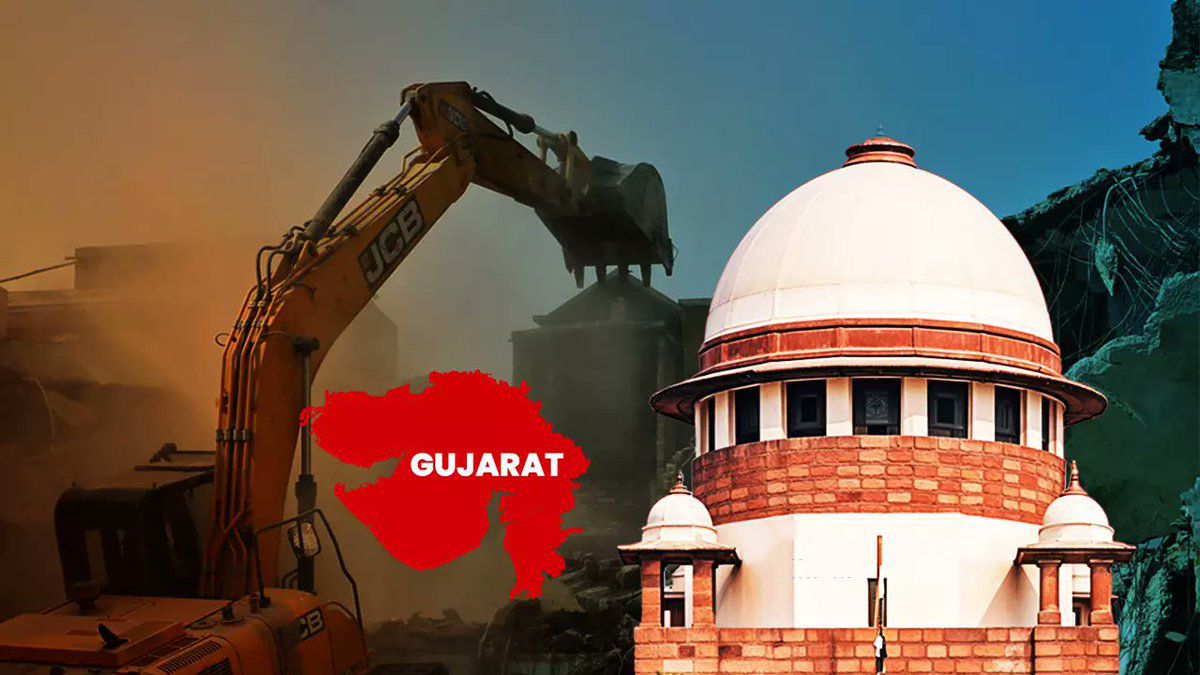
New Delhi, January 31 : The Supreme Court of India has refused to hear a petition challenging the bulldozer action on alleged illegal constructions near Gujarat’s Somnath Temple. The petition sought permission to hold the annual Urs near the site of a demolished dargah, but a bench headed by Justice B.R. Gavai declined to entertain the plea.
Petitioners’ Claims: Centuries-Old Urs Tradition Disrupted
The Muslim petitioners argued that the annual Urs had been held at the site for decades, but authorities denied permission this year. They cited records from 1960, which reportedly allowed the event under certain conditions. The petition also claimed that the dargah had existed since 1299 AD and was a protected monument, but it had been demolished in the recent action.

State’s Response: No Protected Structure, Equal Enforcement of Law
Solicitor General Tushar Mehta, representing the Gujarat government, countered the claims by stating:
- The land was handed over to the Sardar Patel Trust in 1951.
- All illegal structures, including unauthorized temples and dargahs, were removed without discrimination.
- The matter is currently pending before the Gujarat High Court.
- The Archaeological Survey of India (ASI) has confirmed that there is no protected structure at the site.
Previous Supreme Court Rulings on the Bulldozer Action
The Supreme Court had earlier declined to stay the bulldozer action near Somnath Temple on October 4, 2024. The court had warned that if officials were found guilty of contempt, strict action would be taken, including imprisonment and restoration of demolished structures.
An ongoing contempt petition alleges that, despite court orders, large-scale demolitions continued. The petition demanded contempt proceedings against the Gir Somnath Collector and other officials.
Court’s Stance on Bulldozer Justice
On September 17, 2024, the Supreme Court had placed restrictions on the use of bulldozers for punitive actions across various states. The court ruled that no demolitions should take place without judicial approval, except for removing encroachments from public roads, footpaths, and railway lines.

Bhupendra Singh Chundawat is a seasoned technology journalist with over 22 years of experience in the media industry. He specializes in covering the global technology landscape, with a deep focus on manufacturing trends and the geopolitical impact on tech companies. Currently serving as the Editor at Udaipur Kiran, his insights are shaped by decades of hands-on reporting and editorial leadership in the fast-evolving world of technology.