

Supreme Court Seeks Response from Rajasthan Government in Jaipur Town Hall Dispute Within 6 Weeks

New Delhi, June 2 — The Supreme Court on Sunday issued a notice to the Rajasthan government in the ongoing legal dispute concerning the Jaipur Town Hall (Old Assembly Building), seeking a response within six weeks. The court was hearing a petition challenging a Rajasthan High Court order related to the state’s controversial plan to convert the heritage building into a museum.
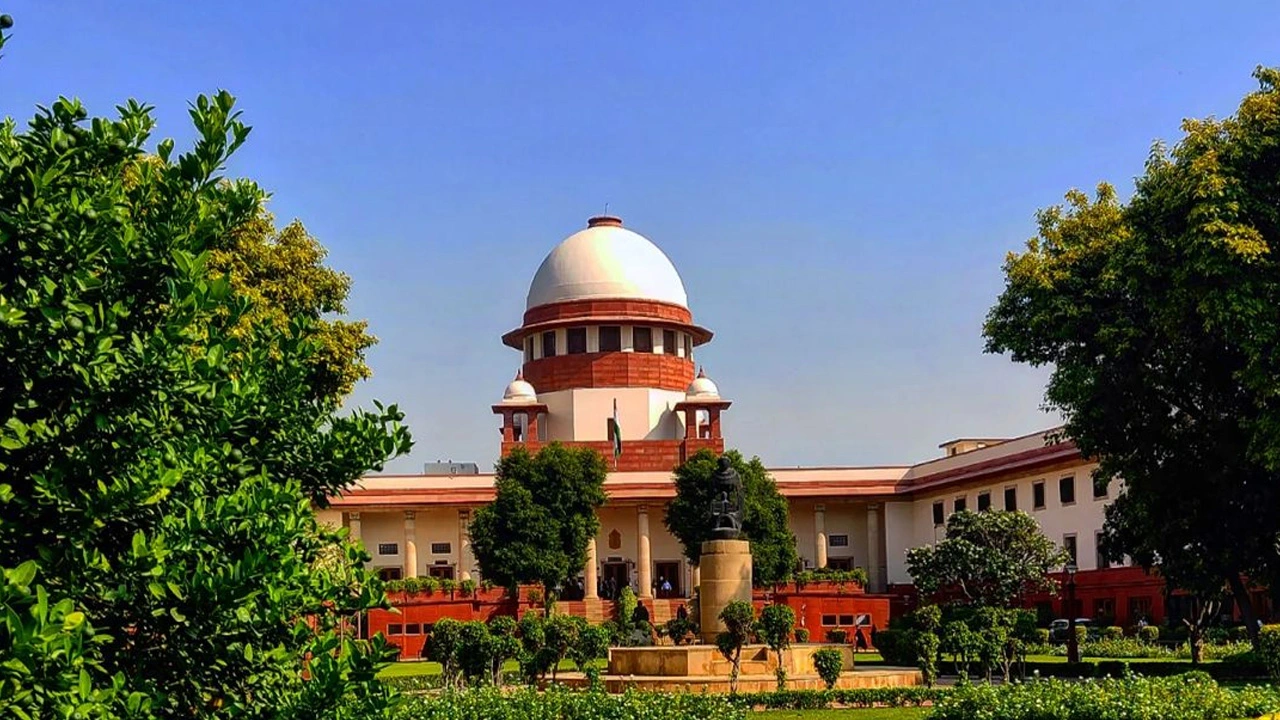
A vacation bench led by Justice Prashant Kumar Mishra refused to grant any interim relief or stay the High Court’s order, stating it would not interfere at this stage.
Background: Dispute Over Heritage and Ownership
The controversy dates back to the previous Ashok Gehlot-led Congress government, which had announced plans to convert the Old Assembly building into a heritage museum to promote tourism and culture. The decision was opposed by Rajmata Padmini Devi, a member of the former royal family, who initially challenged the move in a civil court.
According to Rajmata Padmini Devi, the 1949 covenant agreement signed between the royal family and the Indian government clearly stipulated that the building was to be used strictly for official purposes. She argued that any attempt to use the site for commercial or tourism-related activities would violate that agreement.
Supreme Court Hearing Highlights
Senior advocate Harish Salve, appearing for the petitioner, argued that the issue pertains to ownership rights and the terms of a pre-Constitution agreement. He contended that since the legislative assembly has already shifted to a new complex, the state has no legal right to repurpose the old structure for any non-official or commercial use.
On behalf of the Rajasthan government, advocate Shivmangal Sharma stated that the matter is rooted in pre-Constitution covenants, and hence, under Article 363 of the Constitution, it falls outside the purview of judicial review. He also defended the High Court’s dismissal of the royal family’s petition, calling it legally sound and well-reasoned.
Sharma further emphasized that the Supreme Court should wait for the state government’s formal response before proceeding further on the matter.
What’s Next?
The Supreme Court has now asked the Rajasthan government to file its reply within six weeks. The case will be taken up again after that period. The outcome may have wider implications on how royal properties under historic covenants are used in present-day India, especially those that were handed over under conditional agreements post-Independence.

Bhupendra Singh Chundawat is a seasoned technology journalist with over 22 years of experience in the media industry. He specializes in covering the global technology landscape, with a deep focus on manufacturing trends and the geopolitical impact on tech companies. Currently serving as the Editor at Udaipur Kiran, his insights are shaped by decades of hands-on reporting and editorial leadership in the fast-evolving world of technology.