

Chittorgarh, February 13 (Udaipur Kiran): Rashmi police in the district have taken action against illegal opium cultivation and seized more than 3,600 plants from fields located in a forested area. Two farmers have been arrested in separate cases, and investigation is underway.
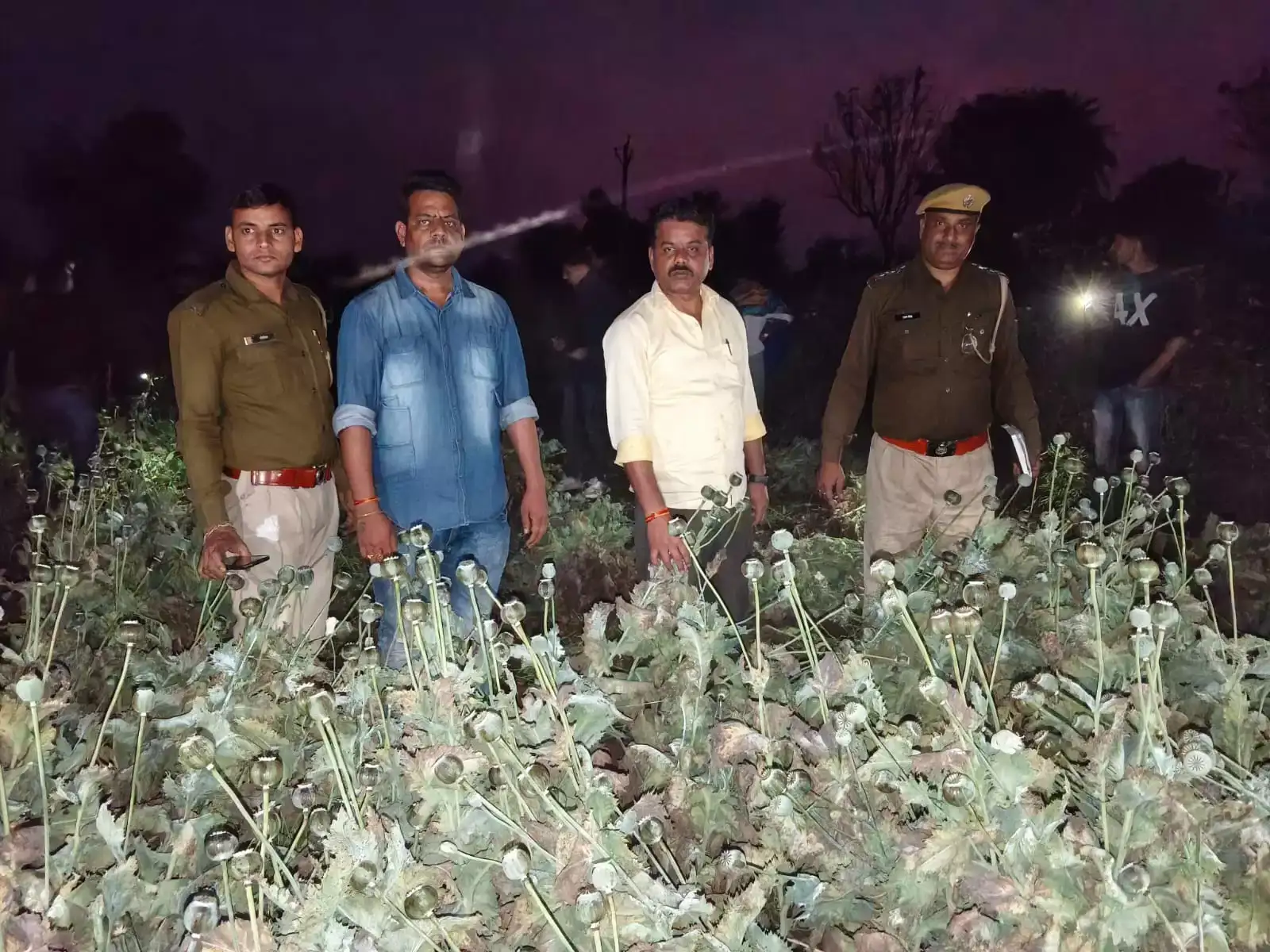

Rashmi CI Ratan Singh said that acting on the directions of Superintendent of Police Manish Tripathi, a police team conducted the operation following a tip-off about illegal opium cultivation in Lukri village under the police station limits. On verification, illegal opium crops were found in two fields.
Police reached the village with a team and found that Pappu, son of Bhairulal Jat, and his nephew Thakar Lal, son of Kalulal Jat, both residents of Lukri village, had illegally cultivated opium. Both accused were arrested and cases have been registered against them under the NDPS Act.
At the spot, 3,531 opium plants sown by Pappu Jat between cotton and mustard crops were seized. In a separate field, 113 opium plants illegally cultivated by Thakar Lal were also confiscated.
A case against Pappu, son of Bhairulal Jat, was registered at Rashmi police station on the report of CI Ratan Singh. A separate case against Thakar Lal was registered on the report of Sadas SHO and current camp officer Azad Patel at Rashmi. The FIR was registered around 2 am on Thursday night.
During the operation, the Gram Panchayat Patwari was called to the spot for measurement of the land, and senior officials were informed. Constable Vinod from Pahuna police outpost and Constable Ramesh from Rashmi police station played an important role in the action.
No Licence Found
CI Ratan Singh said villagers were also called to the spot during the operation, and verification was conducted regarding licence for opium cultivation. It was found that neither of the accused possessed any valid licence. The cultivation was completely illegal.
Police sources said the operation required significant effort as the illegal crop was sown deep inside the forest area. The accused reportedly own around 40 to 50 bighas of land. The opium plants were grown between mustard crops within cotton fields, with wheat sown around the outer area, making it difficult to detect the illegal cultivation at first glance.

Bhupendra Singh Chundawat is a seasoned technology journalist with over 22 years of experience in the media industry. He specializes in covering the global technology landscape, with a deep focus on manufacturing trends and the geopolitical impact on tech companies. Currently serving as the Editor at Udaipur Kiran, his insights are shaped by decades of hands-on reporting and editorial leadership in the fast-evolving world of technology.