

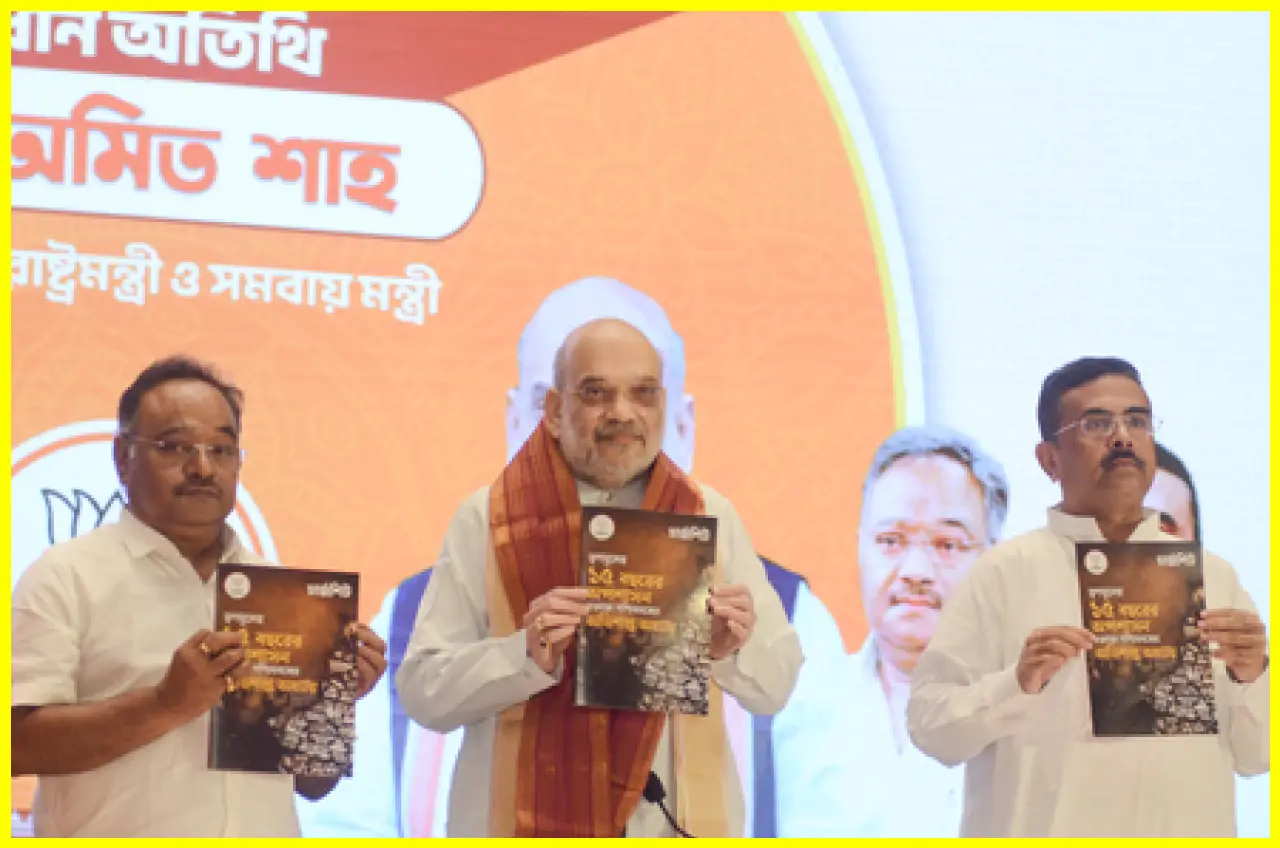

Kolkata, March 28: Union Home Minister Amit Shah released a 35-page white paper on Saturday, highlighting serious concerns regarding the 15-year rule of the Trinamool Congress (TMC) in West Bengal. The report raises five major issues, including infiltration, corruption in the system, institutional weaknesses, economic and industrial decline, and the deterioration of law and order.
The white paper claims that 569 kilometers of the 2,216.7-kilometer international border with Bangladesh remain unfenced, contributing to increased infiltration due to delays in land acquisition by the state government. It alleges that the TMC has run syndicates to provide fake identity cards to infiltrators to create a “vote bank,” adversely affecting national security and population balance.
Regarding corruption and institutional weaknesses, the report states that widespread corruption and a culture of “cut-money” have impacted the services available to the public. It mentions that around 2 million government employees have not received dearness allowances, and the seventh pay commission has not been implemented, leading to dissatisfaction among them.
The report also highlights disruptions in the voter list amendment process and the neglect of directives from the Supreme Court of India, worsening the situation. Since 2016, over 300 political murders and more than 13,000 attempted murders have been reported, alongside incidents of communal tension in various areas of the state, creating an atmosphere of fear.
Concerns over crimes against women are also raised, with the report indicating that 34,738 cases were registered in 2023. Additionally, accusations of suspending the opposition leader in the assembly and suppressing the voices of opposition legislators have weakened the democratic framework.
Under the economic and industrial decline section, the report claims that 6,688 companies have left the state, and 18,450 small industries have shut down over the past 15 years, resulting in significant capital loss. It also notes that over 4 million youths have left the state due to unemployment, with a postgraduate unemployment rate of 47.6 percent.
The agricultural sector is also in crisis, with issues faced by potato and rice farmers, allegations of extortion in fisheries and dairy sectors, and the neglect of around 500,000 tea garden workers in North Bengal mentioned in the white paper.
The report indicates that following a Supreme Court order, 26,000 teaching and non-teaching staff positions had to be canceled in state schools due to irregularities in appointments.
Allegations of decline in the health sector are also made, stating that the state has not implemented the Ayushman India scheme and that cases of fake medicine scams have emerged. Furthermore, there are reports of inadequate facilities in super-specialty hospitals.
Urban issues are highlighted, with deteriorating infrastructure in Kolkata, including illegal constructions, incidents of flyover collapses, and frequent fire outbreaks.

Bhupendra Singh Chundawat is a seasoned technology journalist with over 22 years of experience in the media industry. He specializes in covering the global technology landscape, with a deep focus on manufacturing trends and the geopolitical impact on tech companies. Currently serving as the Editor at Udaipur Kiran, his insights are shaped by decades of hands-on reporting and editorial leadership in the fast-evolving world of technology.