

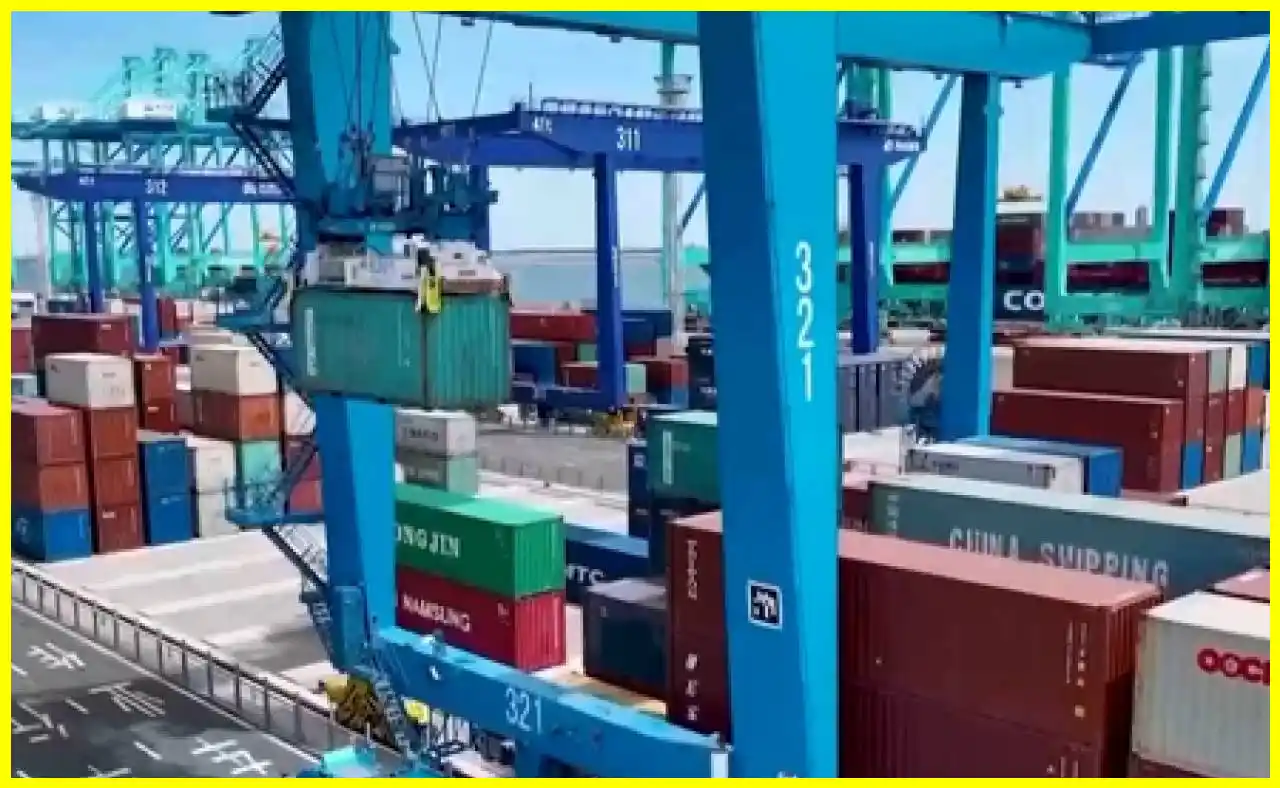

Beijing, June 6: The Chinese Ministry of Transport’s Planning Research Institute recently released a report on the development of the port economy in China for the year 2025. The report indicates that the growth of the port economy in Chinese port cities is expected to reach 70 trillion yuan, accounting for 13.6 percent of the total economic output of these cities. The widespread use of AI is significantly transforming the traditional shipping industry towards a more intelligent and efficient direction.
For instance, the Tianjin port has begun utilizing a new generation of container terminal operating systems, resulting in a 10 percent increase in single-bridge operational efficiency and an 8 percent reduction in energy consumption.
The report highlights a shift in the shipping industry from “operating physical assets” to “operating data and computing power.” The maritime department of Tianjin has relied on AI’s big models for digital upgrades, enabling early warning and assessment of maritime traffic risks. This transition is moving the industry from “experience-based” operations to “intelligent decision-making.”
Additionally, this year, the Ministry of Transport, along with three other departments, has released the Smart Shipping 2030 Action Plan. With the rapid development of AI, more intelligent applications are expected to be implemented in key areas of shipping in the future, further impacting the port economy.

Bhupendra Singh Chundawat is a seasoned technology journalist with over 22 years of experience in the media industry. He specializes in covering the global technology landscape, with a deep focus on manufacturing trends and the geopolitical impact on tech companies. Currently serving as the Editor at Udaipur Kiran, his insights are shaped by decades of hands-on reporting and editorial leadership in the fast-evolving world of technology.