

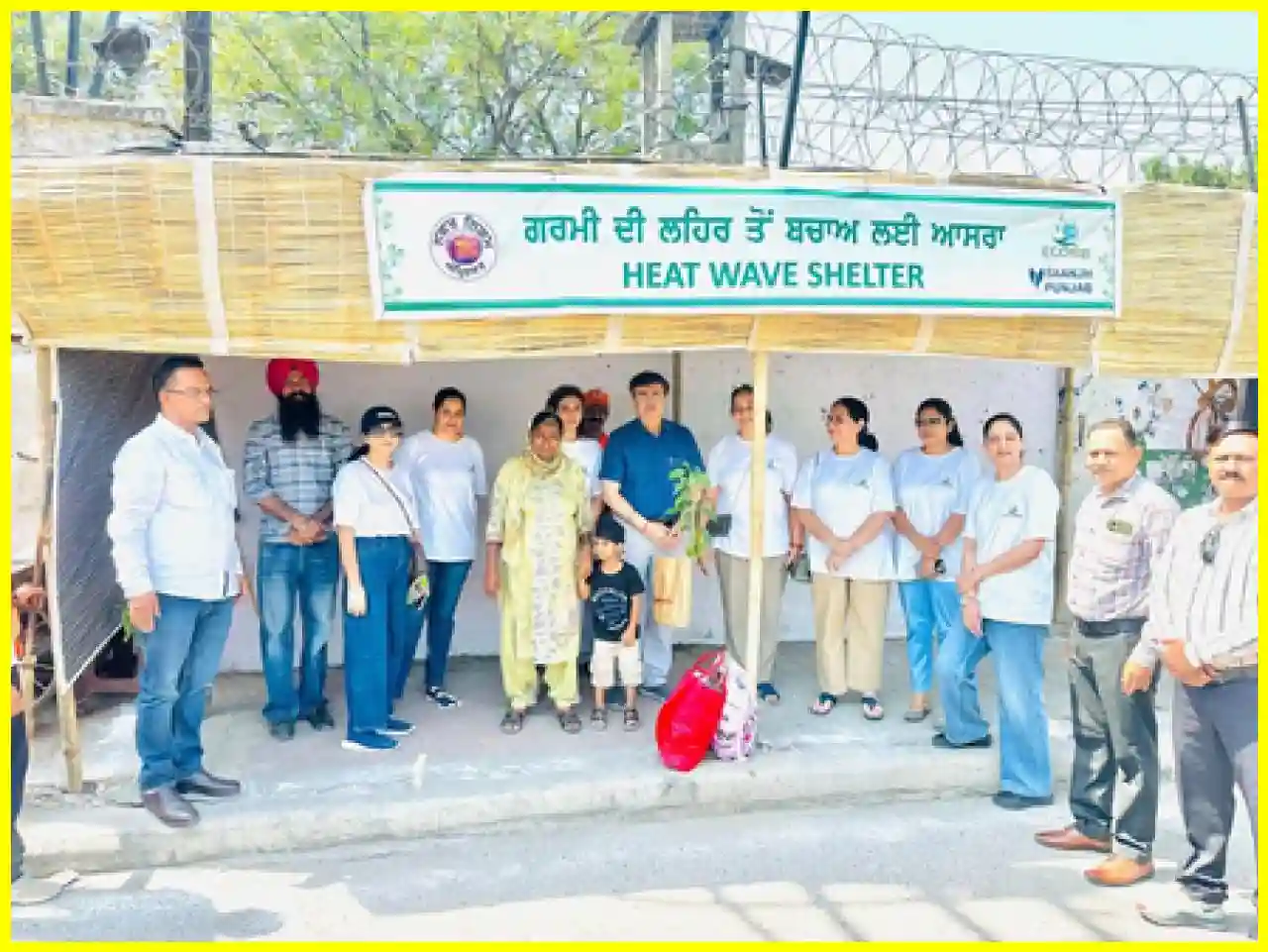

Chandigarh, June 8: Amid rising temperatures and the increasing threat of heatwaves, several non-governmental organizations, along with social and religious groups, have collaborated to establish a network of community cooling zones and shelters for daily wage workers, travelers, and the general public affected by the extreme heat across Punjab.
Initiated by organizations such as Sanjha Punjab, Eco Seva, the Central Sikh Assembly, and Gurudwara Sahib in Patiala, this initiative aims to provide accessible locations where individuals can find relief, shade, drinking water, and temporary respite from the sweltering heat.
The organizers hope that this model will encourage greater collaboration among communities, religious institutions, civil society organizations, and government agencies to enhance the capacity to cope with extreme heat.
As part of this initiative, the Amritsar Municipal Corporation, Eco Seva, and Sanjha Punjab jointly inaugurated a heat shelter at Sadar Chowk in Amritsar. The shelter, opened by Medical Officer of Health Yogesh Arora, features an eco-friendly bamboo structure and provides shade for pedestrians and commuters.
The Jagdev Kalan Gram Panchayat in Amritsar district has also established a heat shelter. Attendees from Eco Seva included Nidhi Sindhwani, Meenakshi Khanna, Riddhi Khanna, Smriti Kapoor, Manik Chhina, Jasmine Gill, Harveen, and Deepti Khanna.
In Chandigarh, additional cooling and resting areas have been set up at the Central Shri Guru Singh Sabha office in Sector 28, providing shaded seating and drinking water for staff, visitors, and the general public.
Similar facilities have been created at Gurudwara Parmeshwar Dwaar in Sheikhupura, Patiala, with plans for more cooling areas in Patiala and Amritsar in the coming weeks.
Sanjha Punjab, a civic network working on agriculture, climate change, and environmental sustainability, is promoting collaboration among the community groups and institutions involved in this initiative.
Gurpreet Singh from the Central Shri Guru Singh Sabha emphasized the Sikh tradition of ‘seva’ (service) and caring for humanity. He stated that as the intensity of heat increases, providing drinking water, shade, and resting places is a practical way to safeguard people’s health and dignity.
Nidhi Sindhwani from Eco Seva echoed this sentiment, asserting that environmental initiatives should directly benefit people. She explained that heat shelters, tree planting, and public cooling zones are simple measures that can make cities more livable and help communities adapt to rising temperatures.
Gurpreet Kaur from Clean Air Punjab highlighted that one of the most severe climate risks facing people in Punjab is extreme heat. She noted that community cooling zones are a low-cost yet effective solution to reduce heat stress and protect vulnerable populations.

My name is Ganpat Singh Choughan. I am an experienced content writer with 8 years of expertise in the field. Currently, I contribute to Udaipur Kiran & Daily Kiran, creating engaging and informative content across a variety of categories including technology, health, travel, education, and automobiles. My goal is to deliver accurate, insightful, and captivating information through my words to help readers stay informed and empowered.