

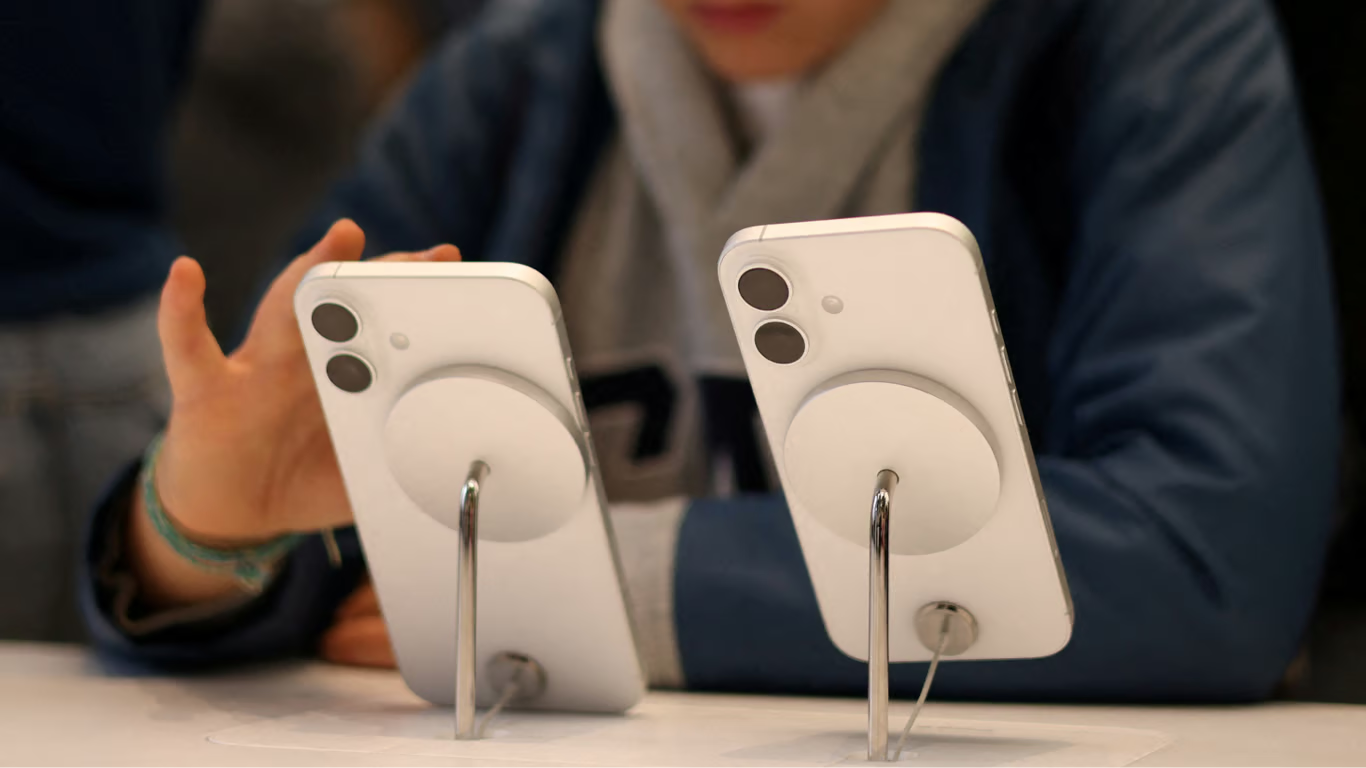

Apple’s Long-Rumored Port-Less iPhone Could Finally Become a Reality
For years, speculation about a wireless-only iPhone has swirled in tech circles. Reports dating back to 2019 suggested that Apple was actively exploring the idea of a port-less smartphone, eliminating wired charging and data transfer altogether. However, concerns over European Union (EU) regulations reportedly put those plans on hold—until now.
According to a statement from European Commission press officer Federica Miccoli, the EU’s universal charging rules do not apply to devices that only support wireless charging. This revelation clears a major regulatory hurdle, potentially setting the stage for Apple to finally release a port-less iPhone in the near future.
Apple’s iPhone 17 Air: A Step Closer to a Wireless Future?
Bloomberg’s Mark Gurman recently reported that Apple considered making the iPhone 17 Air its first port-less device but ultimately decided to retain the USB-C port—for now. Allegedly, Apple was concerned that a fully wireless phone might violate EU regulations, given the bloc’s push for universal USB-C charging on portable devices.
That concern, however, appears to have been unnecessary.
In a statement to 9to5Mac, Miccoli confirmed that devices relying solely on wireless charging are fully compliant with EU regulations:
“Since such radio equipment cannot be recharged via wired charging, it does not need to incorporate the harmonized (wired) charging solution.”
This clarification confirms that USB-C is only mandatory for devices that support wired charging. If a product removes wired charging entirely, it is not required to include a USB-C port under the EU’s rules.
The EU’s Wireless Charging Standardization Efforts
Interestingly, the same EU regulation that mandated USB-C as the standard wired charging port also acknowledges the need to standardize wireless charging.
The European Commission has stated that it will actively promote harmonization in wireless charging technology to prevent fragmentation, improve interoperability, and boost energy efficiency. The Commission will monitor all types of wireless charging technologies, ensuring that future standards do not create unnecessary waste or compatibility issues for consumers.
At present, Qi is the dominant wireless charging standard, with Qi2 serving as a backwards-compatible upgrade. Notably, Qi2 is heavily based on Apple’s MagSafe technology, with the Wireless Power Consortium (WPC) incorporating magnetic alignment for better efficiency.
With Qi2 emerging as the industry standard, Apple already has the foundation needed to transition to a completely wireless iPhone—when it decides the time is right.
What This Means for Future iPhones
While the iPhone 17 Air is expected to retain a USB-C port, the iPhone 18 Air could go fully wireless, marking a radical shift in smartphone design. If Apple proceeds with a port-less iPhone, it would fundamentally change how users charge their devices, transfer data, and connect accessories.
✔ Charging: MagSafe (Qi2) would become the sole method of charging, with no wired option available.
✔ Data Transfer: AirDrop and iCloud would replace wired data transfers, pushing users further into Apple’s wireless ecosystem.
✔ Accessories: Wired accessories, including USB-C headphones and external drives, would no longer be compatible without adapters.
Apple’s ultimate vision has long been a seamless, fully wireless device, and with regulatory barriers now out of the way, the company is closer than ever to making that vision a reality.

Deependra Singh Chundawat is a Senior Sub-Editor at Udaipur Kiran, specializing in a wide range of technology topics including mobile phones, applications, gaming, PCs, and wearables. Along with covering the latest tech news, he also creates engaging web stories. Passionate about emerging technologies, he stays up to date with the newest trends and enjoys reading and writing about the latest mobile launches and digital innovations.