

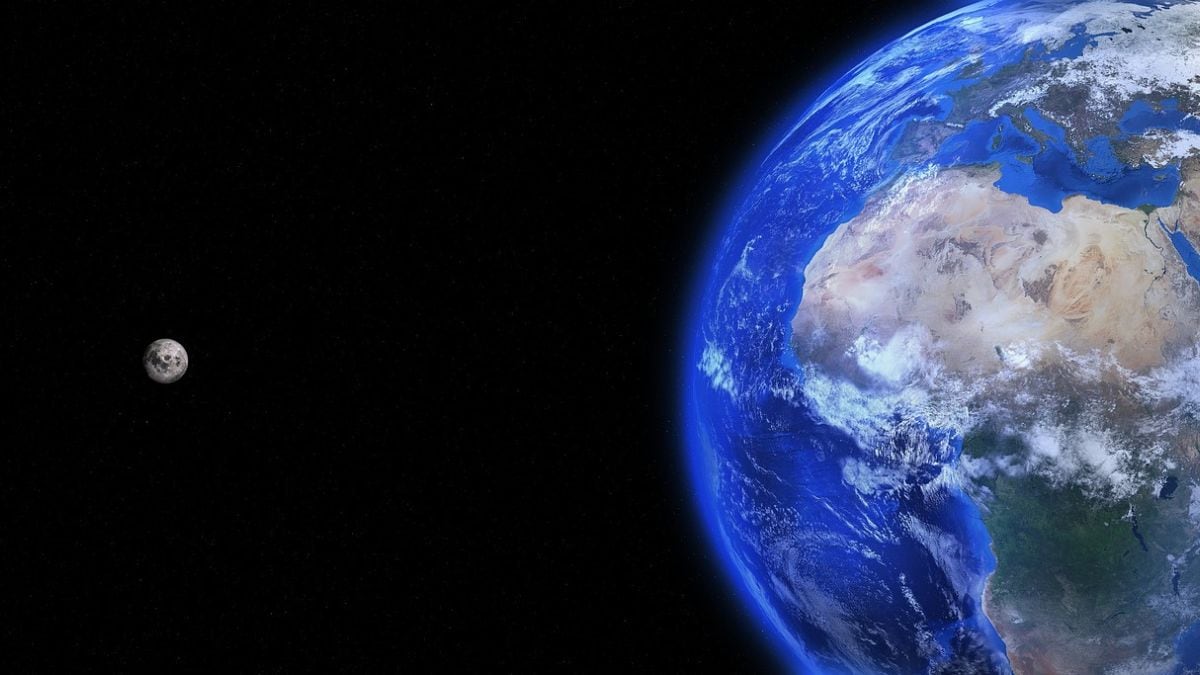

Recently, Earth caught a small asteroid called 2024 PT5, temporarily making it a second moon. The occurrence was confirmed by astronomers from the Massachusetts Institute of Technology (MIT) and the Complutense University of Madrid. It offered a glimpse into these elusive “mini-moons” that Earth sometimes holds in its orbit. However, Earth’s new companion is not here to stay. In about a month or so, mid-November, 2024 PT5 will leave Earth’s orbit and travel into interstellar space toward the sun.
How Scientists Discovered 2024 PT5
The asteroid was first discovered on 7 August 2024, by NASA’s Asteroid Terrestrial-impact Last Alert System in Hawaii at Haleakala Observatory. More observations of the small satellite were made using a powerful telescope operated from the Complutense University based in Sutherland, South Africa. Although this kind of temporary moons had appeared before, their appearance and size make it really difficult to find and confirm such a thing.
According to Richard Binzel, a professor of astronomy at MIT, these transients are much easier to see with modern telescopes now. “We’re just beginning to observe these little objects with enough frequency that we can learn more,” he said. And according to Earth.com, the formation of 2024 PT5 has further sparked the interest of astronomers in the study of near-Earth objects in details more.
Why Mini-Moons Matter
While our main moon measures an impressive 2,159 miles in diameter, 2024 PT5 measures just 37 feet across — meaning it’s invisible without a telescope of at least 30 inches in diameter. This restricted visibility of mini-moons gives us an idea of why seeing them might be tough. According to the Director of the Planetarium and also an Astronomy Instructor at Mt. Hood Community College, “each mini-moon provides a new opportunity for discovery.” For him, learning from small objects, scientists can get the refinements of better ways to track Earth-threatening asteroids.
Potential Future Exploration
Though the chance to mine these asteroids remains decades away, Blackmore looks forward to probes or satellites that might observe such periodic visitors in the near future. Mini-moons like 2024 PT5 may one day provide the stepping stone for asteroid capture, a step to help safeguard Earth.

Bhupendra Singh Chundawat is a seasoned technology journalist with over 22 years of experience in the media industry. He specializes in covering the global technology landscape, with a deep focus on manufacturing trends and the geopolitical impact on tech companies. Currently serving as the Editor at Udaipur Kiran, his insights are shaped by decades of hands-on reporting and editorial leadership in the fast-evolving world of technology.