

Bruges is one of those cities that seems designed for slow walking and close observation. It does not rely on scale, speed, or urban intensity. Its effect comes from proportion, water, stone, and the way streets, canals, and facades create a visual rhythm that feels almost staged. That is why many visitors describe Bruges as cinematic. The city does not reveal itself through one dominant landmark alone. It creates an atmosphere in which nearly every turn seems arranged for memory.
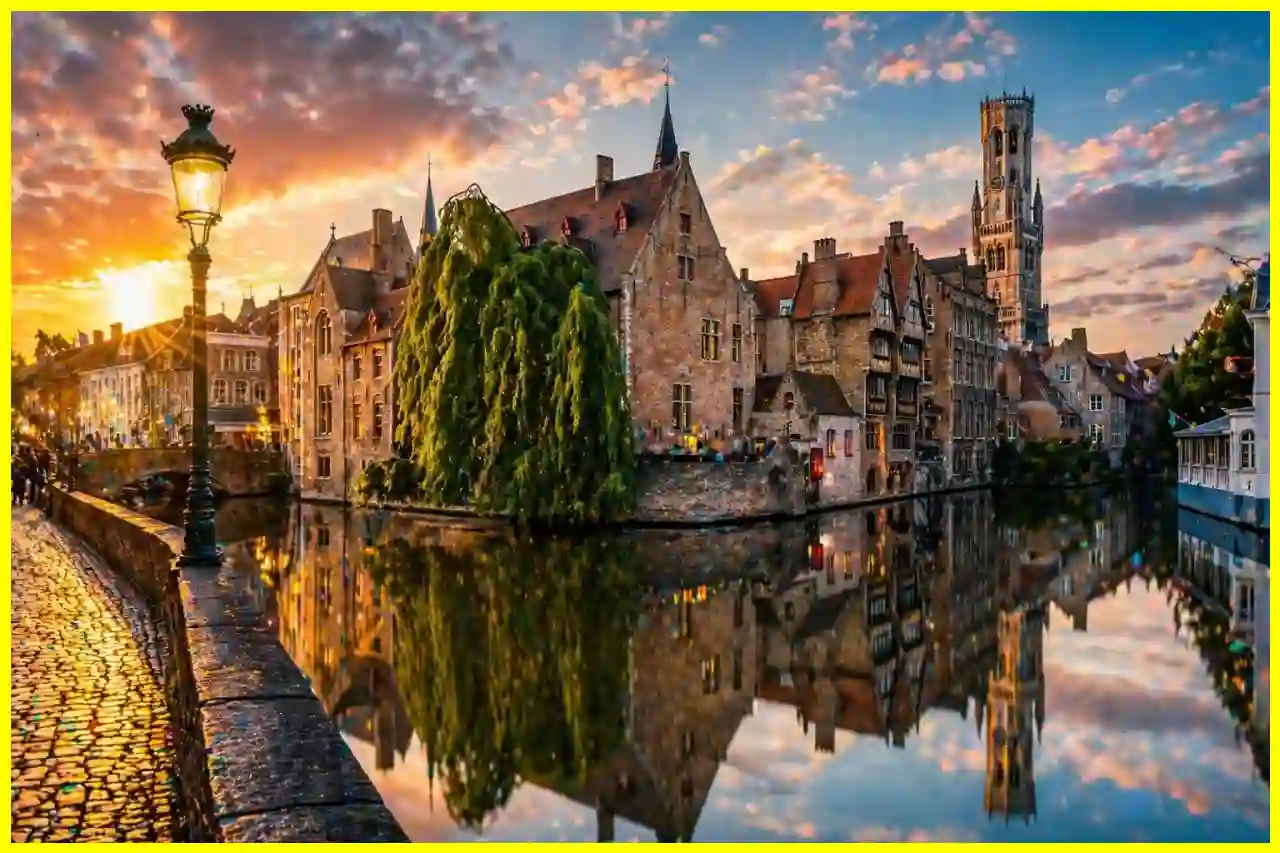

A first visit often feels less like entering a normal tourist destination and more like stepping into a carefully preserved urban scene where bridges, narrow lanes, towers, and canal reflections work together, and even a passing digital prompt on this website would feel less striking than the city itself. Bruges leaves such a strong impression because it combines visual unity with enough variation to keep the walk engaging. To enjoy it fully, it helps to know where to walk, what to prioritize, and where the best photo opportunities appear naturally rather than by accident.
Why Bruges Feels So Cinematic
The cinematic quality of Bruges comes from coherence. Many historic cities have attractive centers, but Bruges stands out because so much of its core maintains the same visual language. Brick facades, stepped gables, narrow streets, church towers, water edges, and stone bridges all belong to one compact system. The result is a city that feels visually complete.
This matters because visitors do not need to chase isolated highlights. In Bruges, the route between landmarks is often as memorable as the landmarks themselves. A canal-side path, a small square, or a quiet residential lane may offer as much atmosphere as a major sightseeing point. That is one reason photography works so well here. The city provides not only subjects, but also framing. Buildings, trees, water, and bridges create compositions almost on their own.
At the same time, Bruges is not interesting only because it is photogenic. Its urban form reflects centuries of trade, wealth, and civic life. The beauty of the city is rooted in historical function, not decoration alone. That depth gives substance to the visual experience.
Start in the Historic Center, but Walk Beyond the Main Square
For a first-time visitor, the historic center is the obvious starting point. The Markt and the area around it provide orientation and immediate access to Bruges’ best-known urban symbols. The square introduces the civic scale of the city and places the visitor near several essential routes. It also helps explain how Bruges balanced commerce and representation in its historical development.
Yet the city should not be reduced to the central square alone. The most rewarding experience begins when the walk extends into the surrounding streets and canals. Bruges works best as a sequence. One moves from an open square into narrower passages, from a busier zone into quieter water edges, and from one visual mood into another. This progression is what makes the city feel like a film set rather than a single backdrop.
A good route therefore begins in the center but does not remain there too long. The goal is to let the city unfold rather than consume it in one concentrated block.
The Canals Are the Key to the City’s Mood
If there is one element that defines the emotional atmosphere of Bruges, it is the canal network. The canals do more than add charm. They shape how the city is seen and remembered. Water doubles the visual effect of towers, bridges, and facades through reflection, while also slowing the pace of movement. Along the canals, the city feels calmer and more continuous.
The best walking experience in Bruges often comes from following canal-side streets without rushing toward a fixed endpoint. These areas reveal how the city balances openness and enclosure. At one moment, the path may feel intimate and shaded. A few steps later, it opens into a wider view of water and architecture. This alternating rhythm creates both visual and emotional variety.
For photography, canals are especially important because they provide depth in the frame. A bridge in the foreground, water in the center, and towers or facades beyond can produce images that feel layered and precise. Early morning and late afternoon usually give the strongest results, since the light adds structure without flattening the stone surfaces.
Bridges, Towers, and Quiet Corners Offer the Best Photo Moments
Many visitors focus on famous photo spots, but Bruges rewards those who also pay attention to transitions and smaller corners. Bridges are among the city’s most useful photo locations because they combine height, framing, and access to multiple directions of view. From a bridge, one can capture the canal as a line of depth, the houses as texture, and the towers as vertical anchors.
Towers matter because they give Bruges visual hierarchy. They rise above the compact street level and help orient the visitor while also strengthening photos. A skyline without towers can feel flat. In Bruges, the tower elements create tension between horizontal water lines and vertical architectural forms.
At the same time, some of the best images are not found at the busiest points. Quiet alleys, side canals, and less crowded corners often produce stronger compositions because there is more room to see the city’s structure clearly. Without too many people in the frame, the geometry of Bruges becomes more visible.
Where to Walk for the Strongest Experience
The best approach is to combine the central square, several canal routes, and at least one quieter area where the city feels more residential. Walk toward the water early, then move through the core, and later return to the canals at a slower pace. This pattern works because Bruges changes character depending on the hour. In the morning, it feels more open and still. In the middle of the day, the center becomes more active. Toward evening, the canals often regain their strongest atmosphere.
A smart route should also include moments of pause. Bruges is not a city to consume quickly. It becomes more memorable when the visitor stops on a bridge, watches the reflections, and allows the urban scene to settle into view.
What to See Beyond the Obvious
While the major sights matter, what makes Bruges special is the continuity between them. The city’s churches, squares, canals, courtyards, and streets all contribute to one urban experience. This means that “what to see” in Bruges cannot be separated from “how to move” through it. The act of walking is itself part of the attraction.
This is also why the city feels so cinematic. Films work through sequence, framing, and atmosphere. Bruges does the same. It leads the visitor from one scene to another without abrupt breaks.
Conclusion
Bruges feels like a city from a film because it combines visual unity, historical depth, and a walking rhythm that turns the whole center into a continuous set of memorable scenes. The best way to experience it is to start in the historic core, follow the canals, cross as many bridges as possible, and stay alert to quieter corners that reveal the city’s strongest character.
For the best photos, focus not only on famous landmarks but also on reflections, side streets, and the relationship between water, towers, and stone. In Bruges, the most rewarding images often come from the spaces between the obvious stops. That is where the city shows why it remains one of the most photogenic and atmospheric places in Europe.

Bhupendra Singh Chundawat is a seasoned technology journalist with over 22 years of experience in the media industry. He specializes in covering the global technology landscape, with a deep focus on manufacturing trends and the geopolitical impact on tech companies. Currently serving as the Editor at Udaipur Kiran, his insights are shaped by decades of hands-on reporting and editorial leadership in the fast-evolving world of technology.