A significant number of astronauts spending extended time aboard the International Space Station (ISS) have reported changes in vision, posing a critical challenge for future deep-space missions. Studies indicate that nearly 70% of astronauts who spend six to twelve months in microgravity experience ocular changes, linked to a condition known as Spaceflight-Associated Neuro-Ocular Syndrome (SANS).
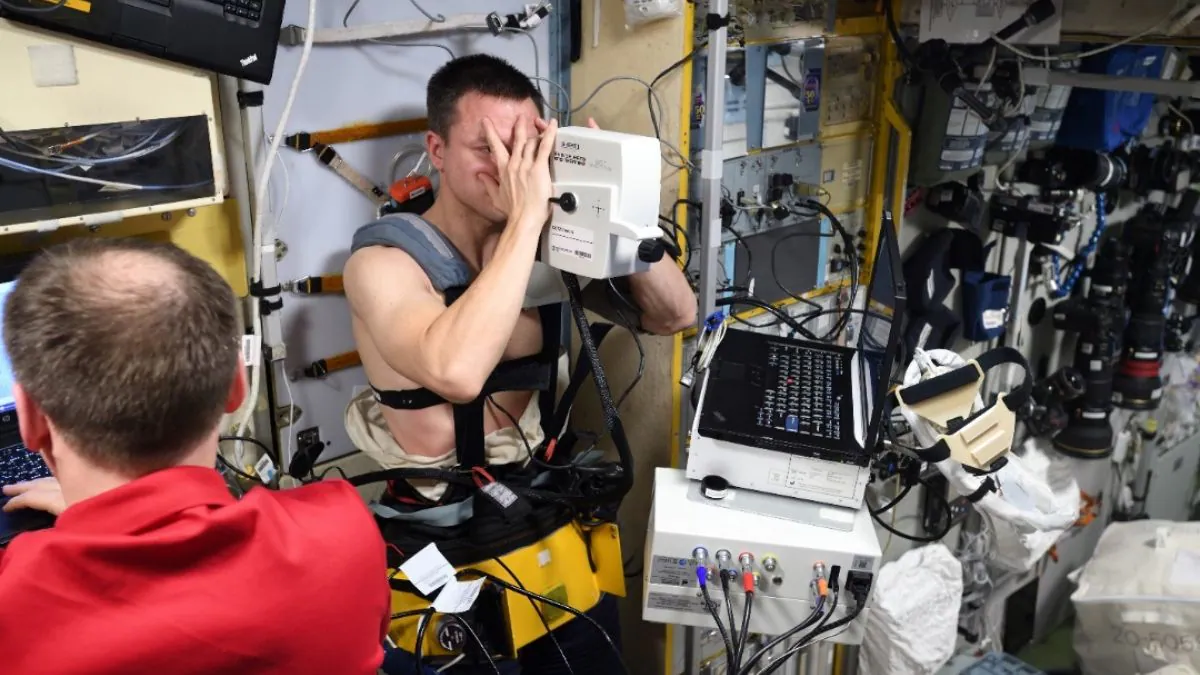

Symptoms include:
- Swelling of the optic nerve
- Flattening of the back of the eye
- Blurred or impaired vision
The primary cause is believed to be fluid redistribution in microgravity, which increases pressure on ocular structures. While many astronauts recover upon returning to Earth, the long-term effects remain uncertain, making vision health a key concern for missions beyond low Earth orbit, including Mars exploration.
Key Findings from Research
A study published in Microgravity, led by Santiago Costantino at the Université de Montréal, analyzed 13 astronauts who spent five to six months on the ISS. The participants, with an average age of 48, represented space agencies from the United States, Europe, Japan, and Canada.
The research measured changes in:
- Ocular rigidity (declined by 33%)
- Intraocular pressure (reduced by 11%)
- Ocular pulse amplitude (dropped by 25%)
- Choroidal thickness, which increased beyond normal levels in some cases
These findings confirm that extended space travel significantly alters ocular physiology, underscoring potential risks for long-duration missions.
SANS and Its Impact on Space Missions
First documented in the early 2000s, SANS has been observed in both NASA astronauts and Russian cosmonauts aboard the Mir space station. NASA officially classified it as a medical condition in 2011.
What Causes SANS?
Bodily fluid shifts in microgravity are believed to be the primary factor, though the exact mechanisms remain under investigation.
Potential Risks for Mars Missions
- Long-duration exposure (Mars missions could last two to three years)
- Lack of immediate medical intervention in deep space
- Cumulative effects on vision, potentially impairing astronaut performance
Countermeasures and Future Research
Efforts are underway to develop solutions to mitigate SANS-related vision issues. Potential countermeasures include:
- Negative pressure devices to regulate fluid shifts
- Pharmaceutical treatments to control intraocular pressure
- Nutritional interventions to support ocular health
According to Space.com, Costantino’s research suggests that changes in the mechanical properties of the eye could serve as biomarkers for SANS, aiding in early detection and targeted intervention.
Preparing for Deep-Space Exploration
With planned manned missions to Mars and beyond, space agencies are prioritizing solutions to protect astronaut vision. Understanding how microgravity affects the human body—especially ocular health—will be crucial for ensuring astronaut safety and mission success in the next era of space exploration.

Bhupendra Singh Chundawat is a seasoned technology journalist with over 22 years of experience in the media industry. He specializes in covering the global technology landscape, with a deep focus on manufacturing trends and the geopolitical impact on tech companies. Currently serving as the Editor at Udaipur Kiran, his insights are shaped by decades of hands-on reporting and editorial leadership in the fast-evolving world of technology.