

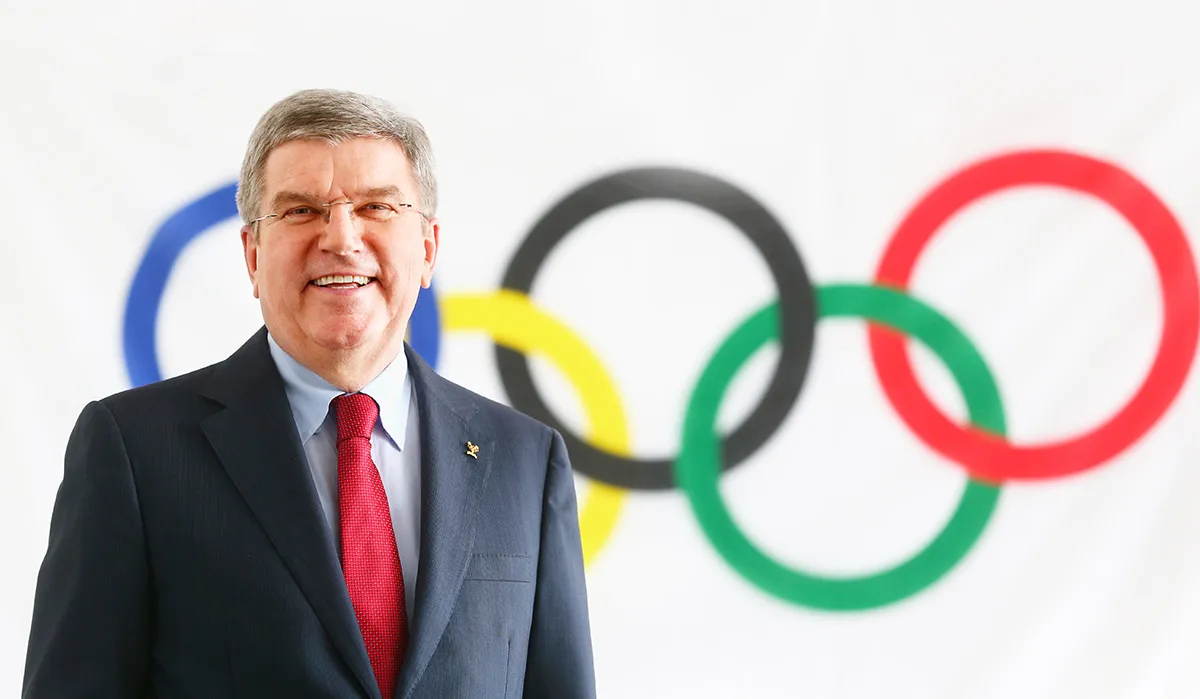
Historic Announcement at the 144th IOC Session
Costa Navarino, Greece, March 20: In a landmark decision, the International Olympic Committee (IOC) has named Thomas Bach as its Honorary President for Life. The announcement was made on the opening day of the 144th IOC Session, as Bach prepares to step down in June after 12 years of transformative leadership.
The unanimous approval from IOC members was met with a standing ovation as Bach, 71, took the stage to accept the prestigious honor. Expressing his gratitude, Bach remarked:
“I accept this great honor with deep humility. This is not just an individual achievement but a collective success. If we had not stood united for Olympic values, we would not have reached this point. This recognition is as much yours as it is mine.”
A Legacy of Reform and Progress
A former Olympic gold medalist, Bach reflected on his journey in sports and leadership, emphasizing that his time at the IOC was never a sacrifice, but a privilege.
“Some may say these 12 years were challenging and required sacrifice, but I never saw it that way. My Olympic gold medal was a life-changing moment, and as IOC President, I had the opportunity to change the lives of others.”
As his tenure officially concludes on June 23—Olympic Day, the IOC will elect its 10th President, marking a new chapter for the organization.
Key Reforms Under Thomas Bach’s Leadership
Bach’s presidency was defined by the principle: “Change or be ready for change.” His administration introduced three major strategic roadmaps, reshaping the future of the Olympic movement:
🔹 Olympic Agenda 2020 (2014) – Focused on innovation, sustainability, and cost-effectiveness.
🔹 Olympic Agenda 2020+5 (2021) – Extended the reform plan, emphasizing governance and athlete welfare.
🔹 Olympic AI Agenda (2024) – Integrating artificial intelligence into sports administration and athlete performance.
These initiatives modernized the Olympic Games, enhanced global engagement, and redefined sustainability in mega sporting events.
A Transformative Era for the Olympics
During the IOC session, a 30-minute documentary showcased the impact of these reforms, featuring testimonials from athletes, officials, and stakeholders. Bach described the transformation as:
“The most comprehensive reform program in Olympic history. It was not just for the IOC, but for the entire Olympic movement—a journey of collaboration, modernization, and determination.”
The reforms significantly impacted 10 key areas, including:
✔ Athlete empowerment
✔ Gender equality
✔ Sustainable development
✔ Financial stability
✔ Digitalization of the Olympics
According to the IOC Finance Commission, these changes strengthened the financial position of the IOC, with commercial revenue increasing by 60% since 2012.


Bhupendra Singh Chundawat is a seasoned technology journalist with over 22 years of experience in the media industry. He specializes in covering the global technology landscape, with a deep focus on manufacturing trends and the geopolitical impact on tech companies. Currently serving as the Editor at Udaipur Kiran, his insights are shaped by decades of hands-on reporting and editorial leadership in the fast-evolving world of technology.