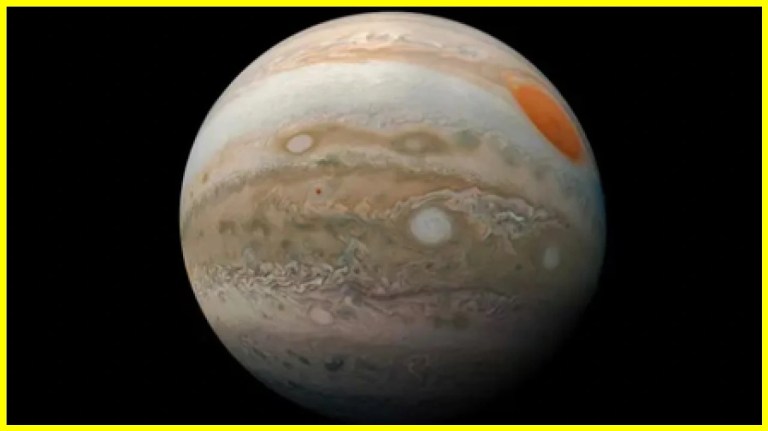
NASA’s Europa Clipper Mission Set for October Launch to Explore Jupiter’s Icy Moon


NASA’s highly anticipated Europa Clipper mission is scheduled for launch on October 10, with the goal of exploring Jupiter’s icy moon, Europa. Scientists believe Europa may hold one of the most promising environments for discovering life beyond Earth. The spacecraft will journey 1.8 billion miles (2.9 billion kilometers) to investigate whether a vast ocean exists beneath Europa’s icy surface, potentially harboring life-supporting conditions.
Mission Preparations and Challenges
The Europa Clipper will be launched aboard a SpaceX Falcon Heavy rocket from Kennedy Space Center, Florida. Despite concerns over defective transistors on the spacecraft, the mission remains on track. The spacecraft is expected to reach Jupiter in April 2030, where it will conduct 49 flybys of Europa, collecting data on the moon’s environment.
A significant challenge facing the mission is the intense radiation around Jupiter, which could damage the spacecraft. According to Jordan Evans, Project Manager at NASA’s Jet Propulsion Laboratory (JPL), the radiation exposure during each flyby is equivalent to millions of chest X-rays. To mitigate this, engineers have developed a flight path to minimize the spacecraft’s radiation exposure while ensuring its mission objectives are met.
Exploring Europa’s Icy Crust and Subsurface Ocean
Europa Clipper will carry a range of scientific instruments designed to estimate the thickness of the moon’s icy crust and study surface features for signs of geological activity. Ann Allen, Deputy Project Scientist at NOAA, stated that the spacecraft will search for organic compounds, though it will not directly look for life. Instead, it aims to identify the ingredients necessary for life beneath Europa’s ice.
The mission, expected to last four years, could provide crucial insights into Europa’s subsurface ocean, paving the way for future exploration of one of the solar system’s most intriguing moons.

Bhupendra Singh Chundawat is a seasoned technology journalist with over 22 years of experience in the media industry. He specializes in covering the global technology landscape, with a deep focus on manufacturing trends and the geopolitical impact on tech companies. Currently serving as the Editor at Udaipur Kiran, his insights are shaped by decades of hands-on reporting and editorial leadership in the fast-evolving world of technology.