

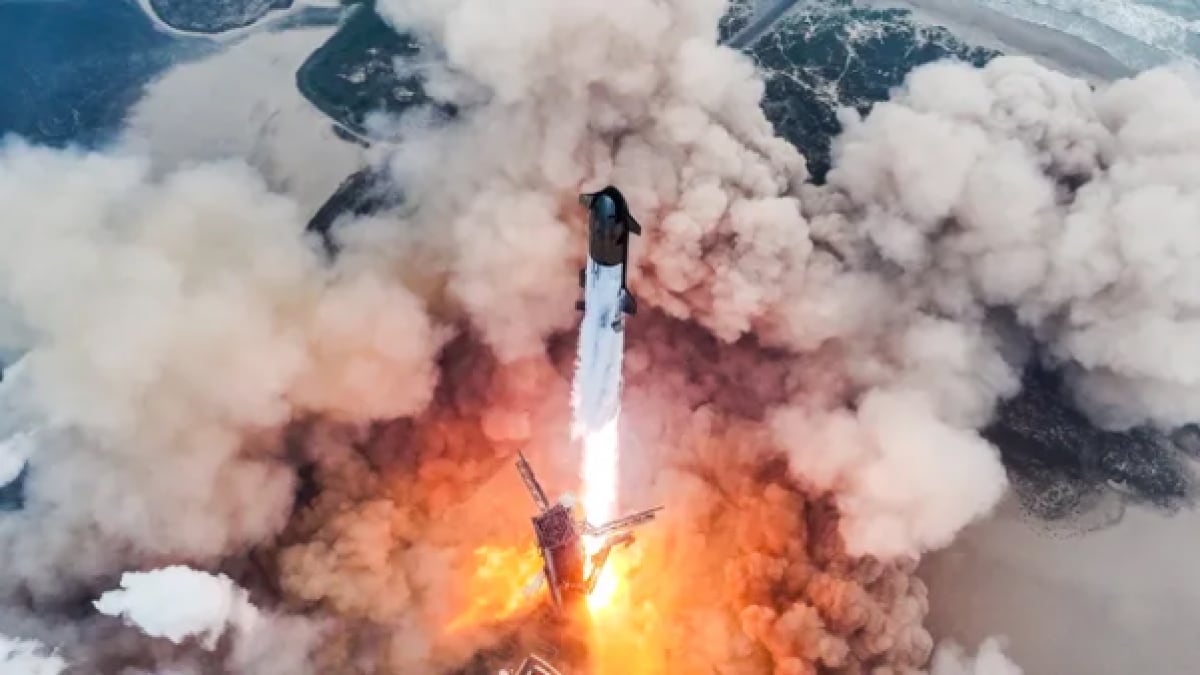

SpaceX founder and CEO Elon Musk announced that the company plans to launch spacecraft missions to Mars in 2026. These first missions are unmanned and are intended to test the reliability of a safe landing on Mars. If these test flights are successful, the first manned flights could begin four years later. The goal is to pave the way for self-sustaining cities on Mars within 20 years, which Musk believes is essential to the long-term survival of human consciousness beyond Earth.
Spaceship: A revolutionary rocket
The Starship rocket is made of stainless steel and consists of two parts: a super-heavy first stage booster and a 165-foot-tall upper stage spacecraft. Stack rockets stand approximately 400 feet tall and are the largest and most powerful rockets ever built. At launch, it will generate 16.7 million pounds of thrust, nearly twice as much as NASA’s Space Launch System (SLS), part of the Artemis lunar program.
While SLS is designed for single use, Starship is completely reusable. SpaceX plans to land the super-heavy launch vehicle on the launch pad after each launch to allow for quick inspection and return for future flights. This reusability is seen as key to bringing Mars colonization to life and bringing Musk’s long-held vision of interplanetary settlements within reach.
Mars mission timeline
The first unmanned mission in 2026 will be an important step towards Musk’s ultimate goal of building a city on Mars. If everything goes according to plan, SpaceX plans to significantly increase the number of missions in the next few years. Each flight improves on the last and preparations are underway for Starship’s fifth test flight. SpaceX promises an exciting next chapter in space exploration as it looks to use the tower’s “stick” arms to land its super-heavy launch vehicle on the launch pad.

Bhupendra Singh Chundawat is a seasoned technology journalist with over 22 years of experience in the media industry. He specializes in covering the global technology landscape, with a deep focus on manufacturing trends and the geopolitical impact on tech companies. Currently serving as the Editor at Udaipur Kiran, his insights are shaped by decades of hands-on reporting and editorial leadership in the fast-evolving world of technology.