India’s First Factory-Fitted CNG Scooter from TVS to Deliver 84 km Mileage — Costs Just 90 Paise per km
New Delhi, October 26 (Udaipur Kiran): The wait for India’s first factory-fitted CNG scooter is almost over. TVS Motor Company is gearing up to launch its upcoming TVS Jupiter CNG, which was first showcased at the Bharat Mobility Global Expo 2025. Though presented as a concept, the model appeared nearly production-ready, with only minor refinements required before market entry.
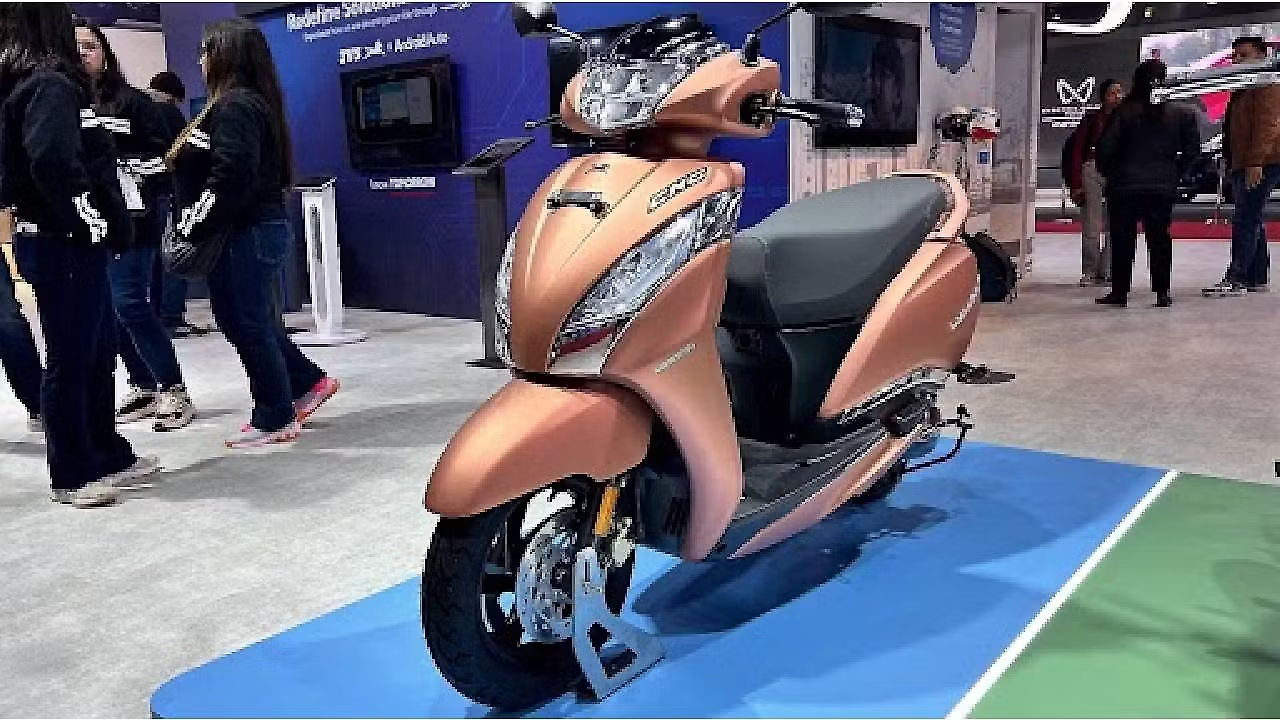

According to reports, the TVS Jupiter CNG could debut around February 2026, making it the company’s first scooter to come equipped with a dual-fuel system (CNG + Petrol). This follows Bajaj Auto’s launch of India’s first factory-fitted CNG motorcycle last year.
Mileage and Cost Efficiency
The highlight of the TVS Jupiter CNG is its exceptional mileage — up to 84 km per kg of CNG. Considering Delhi’s current CNG price of ₹76 per kg, the running cost comes to just ₹0.90 per km, making it one of the most economical two-wheelers in India.
For comparison, conventional petrol scooters deliver around 45–50 km per litre, which makes the Jupiter CNG nearly twice as fuel-efficient and far more cost-effective for daily commuting.
Performance and Range
Powering the scooter is a 124.8cc single-cylinder engine that produces 5.3 kW of power and 9.4 Nm of torque. The scooter can run on both CNG and petrol, offering a combined range of up to 226 km.
-
CNG Tank Capacity: 1.4 kg
-
Petrol Tank Capacity: 2 litres
-
Top Speed: 80.5 km/h
A dedicated switch allows riders to seamlessly toggle between CNG and petrol modes.
Design and Features
The TVS Jupiter CNG will feature:
-
Segment’s largest seat for improved comfort
-
Max metal body for durability
-
External fuel lid
-
Front mobile charger port
-
Semi-digital speedometer
-
Body balance technology for stability
-
ET-Fi and IntelliGO technologies for enhanced efficiency
-
All-in-one lock system
-
Side-stand indicator with engine inhibitor
-
Dedicated fuel mode switch (Petrol ⇄ CNG)

Bhupendra Singh Chundawat is a seasoned technology journalist with over 22 years of experience in the media industry. He specializes in covering the global technology landscape, with a deep focus on manufacturing trends and the geopolitical impact on tech companies. Currently serving as the Editor at Udaipur Kiran, his insights are shaped by decades of hands-on reporting and editorial leadership in the fast-evolving world of technology.