13 Terrorists Killed, 80 Passengers Rescued in Pakistan Train Attack
The recent attack on Jaffar Express in Pakistan’s Balochistan region has once again highlighted the security challenges facing the country. The Balochistan Liberation Army (BLA) claimed responsibility for the attack, stating that they derailed the train and took over 100 hostages, including security personnel. However, Pakistan’s security forces launched a swift counter-operation, successfully eliminating 13 terrorists and rescuing 80 passengers.
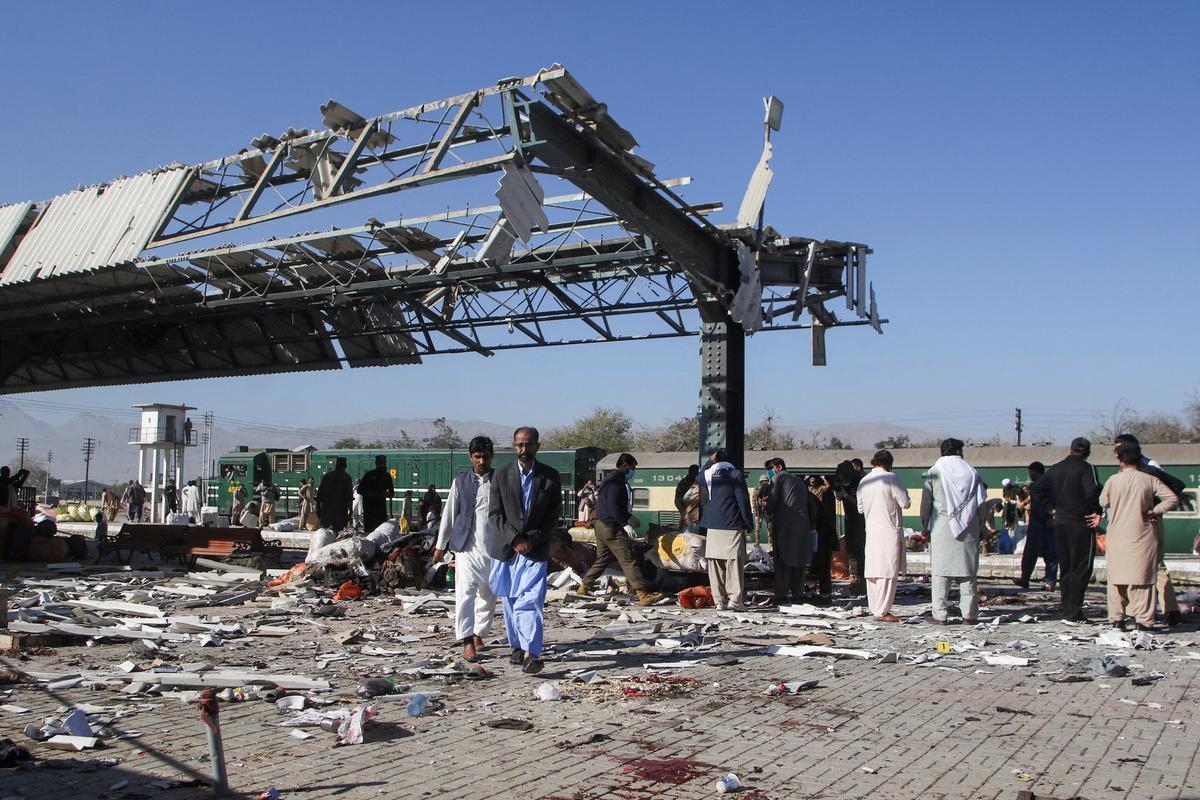

Train Attack in Balochistan: A Terrorist Insurgency
On Tuesday, suspected Baloch militants opened fire at a passenger train, severely injuring multiple people and forcing the train to a halt. The Jaffar Express, carrying around 500 passengers, was en route from Quetta to Peshawar when the attack occurred in a tunnel between Gudalaar and Piru Koneri.
Security forces engaged in a fierce gun battle with the attackers, ultimately killing 13 terrorists while rescuing 80 passengers, including 43 men, 26 women, and 11 children. Despite these efforts, over 400 passengers remained trapped inside the tunnel during the siege.
Conflicting Reports on Casualties and Rescue Operation
While official sources confirmed the death of 13 terrorists, Pakistani media outlets, including Geo News and The Express Tribune, reported that 16 attackers were eliminated and 104 passengers were successfully rescued. The list of rescued passengers reportedly includes 58 men, 31 women, and 15 children.
The BLA, a separatist militant group banned in Pakistan, the UK, and the US, claimed responsibility for the attack. They threatened to execute all hostages if Pakistan’s military launched a full-scale operation against them.
Tactical Challenges Faced by Security Forces
Security personnel described the rescue mission as complex due to the rugged terrain and the tunnel’s strategic location. The railway tracks in the region have frequently been targeted by Baloch insurgents, using remote-controlled bombs and rocket launchers. Railway officials confirmed that the train driver suffered serious injuries, prompting authorities to dispatch an emergency relief train to the site.
Shahid Rind, spokesperson for the Balochistan government, stated that security personnel acted with great caution as women and children were being used as human shields. Meanwhile, Interior Minister Mohsin Naqvi condemned the attack, stating that terrorists targeting innocent passengers deserve no leniency.
Government’s Response and State of Emergency
Authorities declared an emergency in local hospitals, preparing to receive injured victims. Rana Muhammad Dilawar, a senior police officer, stated that while the security forces had secured the tunnel, militants took some hostages to mountainous hideouts nearby.
Pakistan’s Minister of State for Interior, Talal Chaudhry, confirmed that several government officials and their families were aboard the train, intensifying the urgency of the rescue operation.
In response to the incident, Khyber Pakhtunkhwa Chief Minister Ali Amin Khan Gandapur condemned the attack, calling it a cowardly and brutal act that jeopardized innocent lives.
The Balochistan Insurgency: A Growing Threat
Balochistan has long been plagued by a violent insurgency, with Baloch nationalist groups launching frequent attacks against Pakistani security forces and infrastructure. These militant groups, including the BLA, demand greater autonomy and claim that Balochistan’s resources are being unfairly exploited by the central government.
Over the years, railway lines, military installations, and government buildings have been prime targets of separatist attacks. In October 2024, Pakistan Railways resumed its Quetta-Peshawar train services after an extended suspension due to security threats. However, the recent Jaffar Express attack raises concerns over the safety of rail transport in the region.
Security Measures and Counterterrorism Efforts
Pakistan’s security forces have vowed to continue the counterterrorism operation until all militants are neutralized. Officials stated that efforts were ongoing to clear the area, ensuring the safe evacuation of remaining passengers.
The Pakistani military has been engaged in anti-terror operations in Balochistan for decades, but the BLA’s resurgence presents a renewed challenge. Recent attacks indicate that militants are adopting more sophisticated tactics, such as derailing trains, hostage-taking, and targeting vital infrastructure.
International Condemnation and Future Security Strategy
The international community, including the United Nations and human rights organizations, has condemned the attack. Countries such as China and the US have expressed concern, as Balochistan plays a key role in China’s Belt and Road Initiative (BRI).
Pakistan’s government is now under pressure to enhance security protocols, particularly in Balochistan’s remote areas. Experts have suggested increasing intelligence surveillance, drone monitoring, and rapid-response counterterror units.

Bhupendra Singh Chundawat is a seasoned technology journalist with over 22 years of experience in the media industry. He specializes in covering the global technology landscape, with a deep focus on manufacturing trends and the geopolitical impact on tech companies. Currently serving as the Editor at Udaipur Kiran, his insights are shaped by decades of hands-on reporting and editorial leadership in the fast-evolving world of technology.