

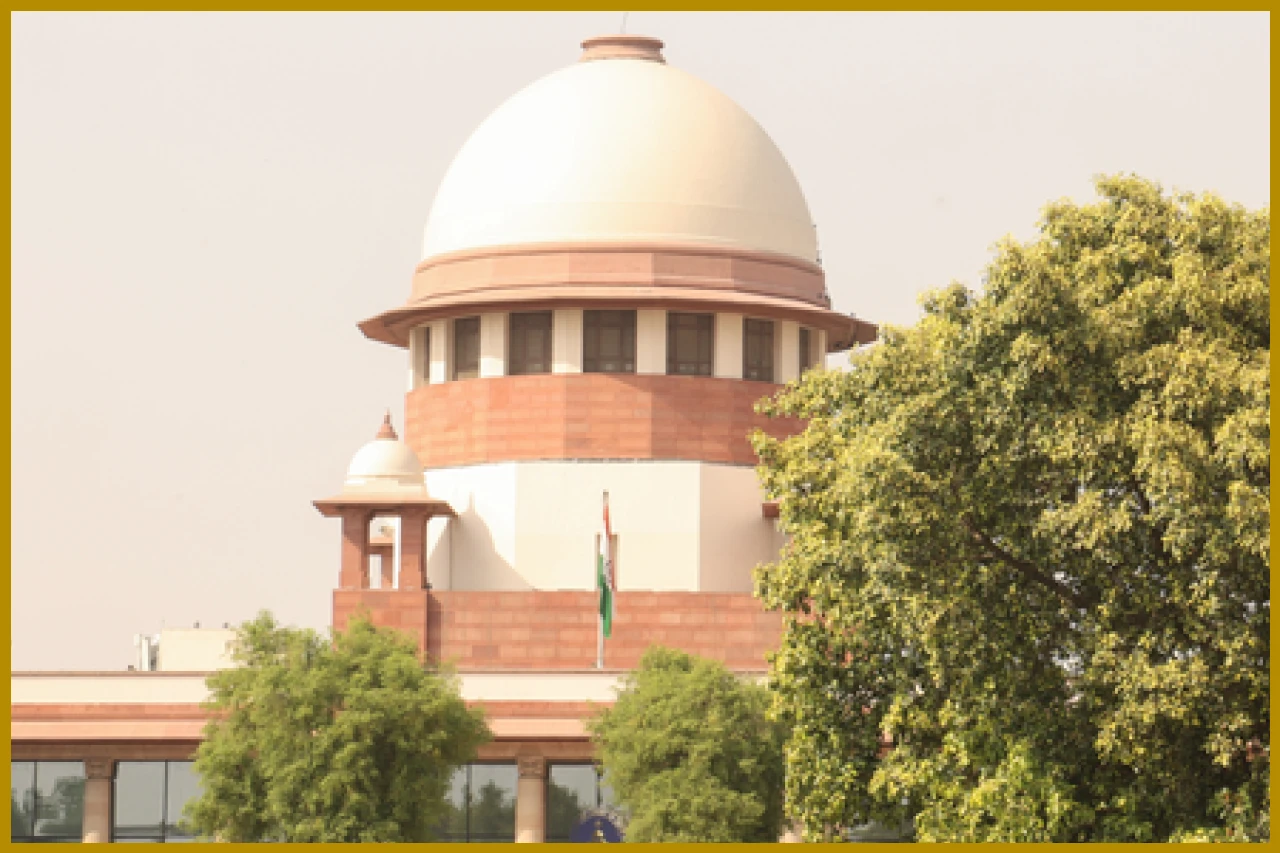

New Delhi, February 13: The Supreme Court has emphasized that frequent changes to solid waste management rules will not lead to improvements on the ground unless authorities strengthen the waste management infrastructure in accordance with the upcoming Solid Waste Management Rules, 2026.
This remark came from a bench comprising Justice Pankaj Mithal and Justice SVN Bhatti while hearing appeals filed by the Bhopal Municipal Corporation challenging hefty environmental compensation imposed by the National Green Tribunal (NGT) in its central regional bench.
The Green Tribunal had directed the municipal body to pay environmental compensation of ₹1.80 crore and ₹121 crore through its controversial orders dated July 31, 2023, and August 11, 2023, respectively.
In its order, the Supreme Court noted the evolving legal framework governing municipal waste management, highlighting that the Municipal Solid Waste (Management and Handling) Rules, 2000 were replaced by the Solid Waste Management Rules, 2016, which will now be superseded by the Solid Waste Management Rules, 2026, set to come into effect on April 1, 2026. However, the bench expressed concerns over the existing shortcomings in ground-level implementation.
The order stated, “The court believes that due to several factors at the ground level, the legal mechanism is not yielding the desired results.”
Welcoming the introduction of the new rules as a “positive step,” the apex court warned that mere notification of the new rules will not suffice unless preliminary work is completed in a timely manner.
The bench remarked, “The introduction of new rules is a welcome step, but authorities are expected to complete the necessary work before the effective date; otherwise, the 2026 rules will not bring about improvements on the ground.”
After hearing the arguments of the parties’ lawyers in detail, the bench proposed broadening the scope of proceedings by directing the appellant corporation to include senior officials from the central and Madhya Pradesh government as respondents in both appeals.
It instructed that the Secretary of the Ministry of Environment, Forest and Climate Change, the Secretary of the Ministry of Housing and Urban Affairs, the Secretary of the Ministry of Panchayati Raj, the Chief Secretary of Madhya Pradesh, the Additional Chief Secretary of the Urban Development and Housing Department of Madhya Pradesh, and the Principal Secretary of the Housing and Environment Department of Madhya Pradesh be added as respondents.
The Supreme Court ordered, “The appellant is directed to amend and submit the revised cause title on or before the next hearing day.” The appellant’s lawyer was also permitted to submit copies of the appeals to the central agency section of the Union of India. The next hearing in the case is scheduled for February 19.

Deependra Singh Chundawat is a Senior Sub-Editor at Udaipur Kiran, specializing in a wide range of technology topics including mobile phones, applications, gaming, PCs, and wearables. Along with covering the latest tech news, he also creates engaging web stories. Passionate about emerging technologies, he stays up to date with the newest trends and enjoys reading and writing about the latest mobile launches and digital innovations.