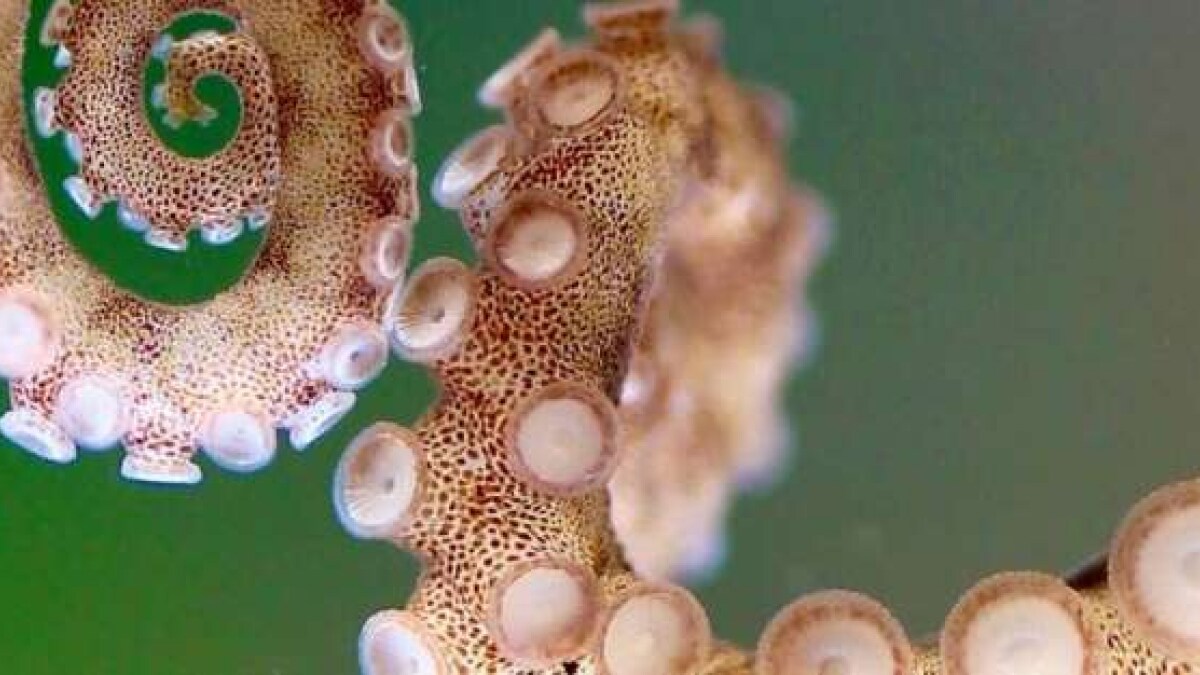

Researchers at San Francisco State University (SF State) have made a groundbreaking discovery in marine biology by creating detailed three-dimensional maps of the complex nervous system within octopus arms. This research sheds new light on how these fascinating creatures perform intricate tasks, such as opening jars or using tools, with limited direct control from their central brain.
Independent Arm Functionality
Unlike humans, whose brain directly controls all motor functions, octopus arms appear to function semi-independently. Each arm is capable of executing complex behaviors almost autonomously, suggesting that octopus arms may operate as if each possesses its own “spinal cord.”
Advanced Mapping and Key Discoveries
The research team, led by Robyn Crook, Associate Professor and Associate Chair of the SF State Biology Department, utilized advanced 3D imaging techniques to create these maps. Postdoctoral fellow Gabrielle Winters-Bostwick and graduate student Diana Neacsu were instrumental in revealing new insights into the structural and molecular organization of the arms:
- Molecular Mapping: Winters-Bostwick’s work revealed that neurons located at the tips of octopus arms are significantly different from those near the central brain, highlighting unique neural functions throughout the arm.
- Structural Insights: Neacsu used 3D electron microscopy to uncover repeating nerve patterns and ganglia, which play a crucial role in the independent movement of octopus arms.
Role of Advanced Imaging Technology
This significant progress was made possible by SF State’s advanced imaging resources, particularly the Leica STELLARIS microscope at the University’s Cellular and Molecular Imaging Centre (CMIC). Crook noted that much of this research would not have been possible without the cutting-edge technology provided by the university.
Implications for Future Research
The insights gathered from these maps are poised to revolutionize the understanding of octopus physiology, providing valuable tools for future studies in cephalopod neuroscience. Researchers now aim to delve deeper into how octopus arms respond to stimuli and explore the evolutionary origins behind their complex nervous systems.
With this new knowledge, scientists could further investigate not just how octopuses interact with their environments, but also the broader implications for neural autonomy in other species.

Bhupendra Singh Chundawat is a seasoned technology journalist with over 22 years of experience in the media industry. He specializes in covering the global technology landscape, with a deep focus on manufacturing trends and the geopolitical impact on tech companies. Currently serving as the Editor at Udaipur Kiran, his insights are shaped by decades of hands-on reporting and editorial leadership in the fast-evolving world of technology.