Railway Minister Announces State-Wise Railway Budget Allocation and Development Plans
Significant Progress in Electrification and Infrastructure Expansion Since 2014
New Delhi, February 3 – Union Railway Minister Ashwini Vaishnaw has outlined the budgetary allocations for railway projects across various states in the 2025-26 financial year, emphasizing the significant progress Indian Railways has made since 2014. He stated that before 2014, railway development was progressing at a slow pace, but since then, historic advancements have been achieved in infrastructure, electrification, and modernization.
Speaking through video conferencing with journalists and senior officials from different railway zones and divisions, Vaishnaw highlighted key achievements, including:
✔ 100% railway electrification in states such as Bihar, Madhya Pradesh, Chhattisgarh, and Delhi.
✔ Implementation of the ‘Kavach’ safety system across the entire rail network within the next six years.
✔ Manufacturing of 100 Amrit Bharat, 50 Namo Bharat, and 200 Vande Bharat trains over the next 2-3 years.
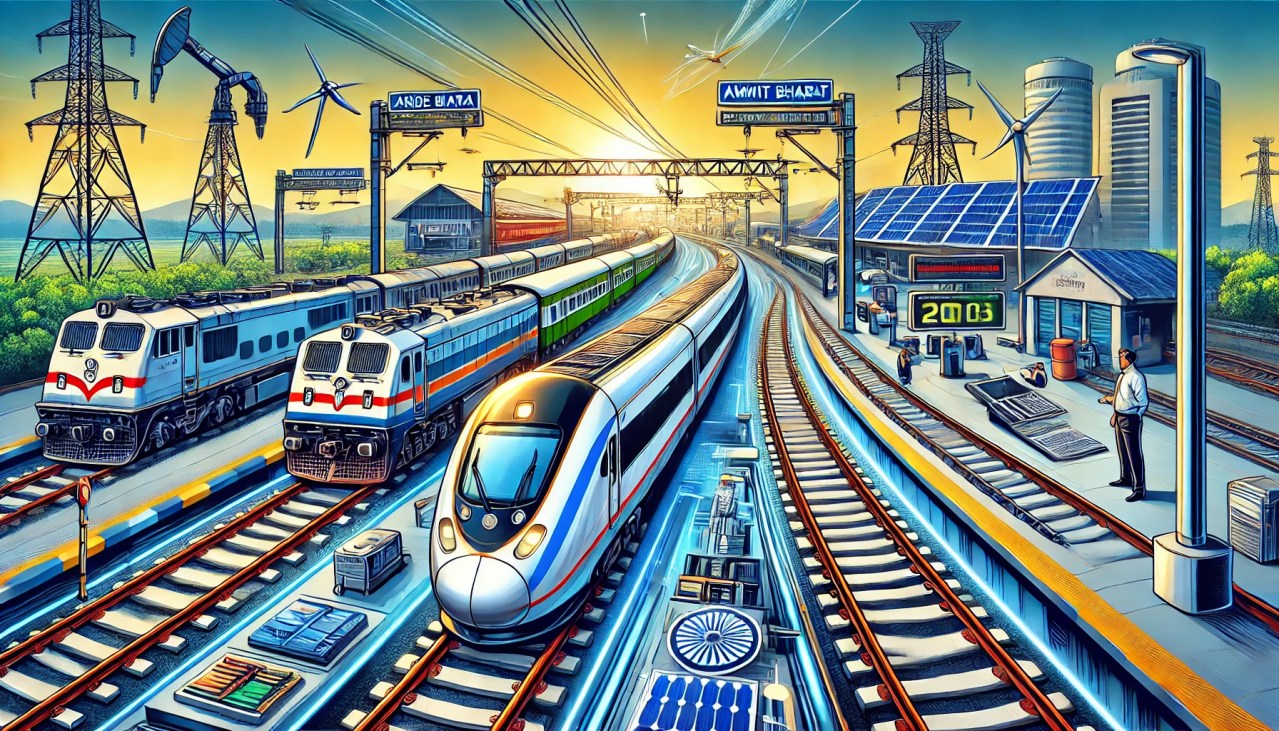

State-Wise Railway Budget Allocation and Major Projects
1️⃣ Delhi – ₹2,593 Crore
📌 13 stations to be redeveloped under the Amrit Bharat scheme.
📌 50 new Namo Bharat trains to be introduced.
📌 100 Amrit Bharat trains and 200 Vande Bharat trains to enhance connectivity.
📌 Railway track upgrades, safety enhancements, flyovers, and underpasses in mission mode.
2️⃣ Himachal Pradesh – ₹2,716 Crore
📌 4 stations to be upgraded under the Amrit Bharat scheme.
📌 Introduction of Namo Bharat, Amrit Bharat, and Vande Bharat trains.
3️⃣ Punjab – ₹5,421 Crore
📌 30 stations to undergo modernization under the Amrit Bharat scheme.
📌 Expansion of Vande Bharat and Namo Bharat trains for improved connectivity.
4️⃣ Uttar Pradesh – ₹19,858 Crore
📌 157 railway stations to be transformed under the Amrit Bharat scheme.
📌 Introduction of new rail corridors, modern trains, and infrastructure projects.
5️⃣ Uttarakhand – ₹4,641 Crore
📌 11 stations to be redeveloped under the Amrit Bharat scheme.
📌 Expansion of rail network and improved track infrastructure.
6️⃣ Jammu & Kashmir – ₹844 Crore
📌 4 railway stations to be modernized.
📌 Enhanced railway infrastructure to boost connectivity in the region.
7️⃣ Bihar – ₹10,066 Crore
📌 98 railway stations to be redeveloped.
📌 86,458 crore investment in multiple railway projects.
📌 12 Vande Bharat trains covering 15 districts.
📌 Over 1,832 km of new railway tracks laid in the past decade.
8️⃣ West Bengal – ₹13,955 Crore
📌 101 stations to be upgraded under Amrit Bharat.
📌 Massive ₹68,000 crore investment for rail modernization.
📌 9 operational Vande Bharat trains, with plans to introduce more Amrit Bharat trains.
📌 1,290 km of railway tracks laid in the past 10 years.
📌 Minister urges the West Bengal government to expedite land acquisition to facilitate railway projects.
Railways to Procure Solar Energy from Madhya Pradesh
The Railway Ministry has also decided to sign a Memorandum of Understanding (MoU) with the Madhya Pradesh government, under which the railway sector will purchase approximately 145 MW of solar energy. This move aligns with the Indian Railways’ goal of achieving carbon neutrality and expanding the use of renewable energy.
Historic Progress in Railway Development Since 2014
Highlighting the pace of railway expansion in the past decade, Minister Vaishnaw compared past and present development figures:
- Bihar’s railway track expansion increased from 64 km per year (before 2014) to 167 km per year.
- Electrification targets in multiple states have been achieved ahead of schedule.
- Introduction of Kavach safety technology to be implemented across the entire Indian Railways network within six years.

Bhupendra Singh Chundawat is a seasoned technology journalist with over 22 years of experience in the media industry. He specializes in covering the global technology landscape, with a deep focus on manufacturing trends and the geopolitical impact on tech companies. Currently serving as the Editor at Udaipur Kiran, his insights are shaped by decades of hands-on reporting and editorial leadership in the fast-evolving world of technology.