

NASA’s Swift Satellite Re-enters Atmosphere Over Indonesia After 22 Years
NASA's Swift satellite telescope re-entered Earth's atmosphere over Indonesia, burning up after 22 years of studying cosmic phenomena.

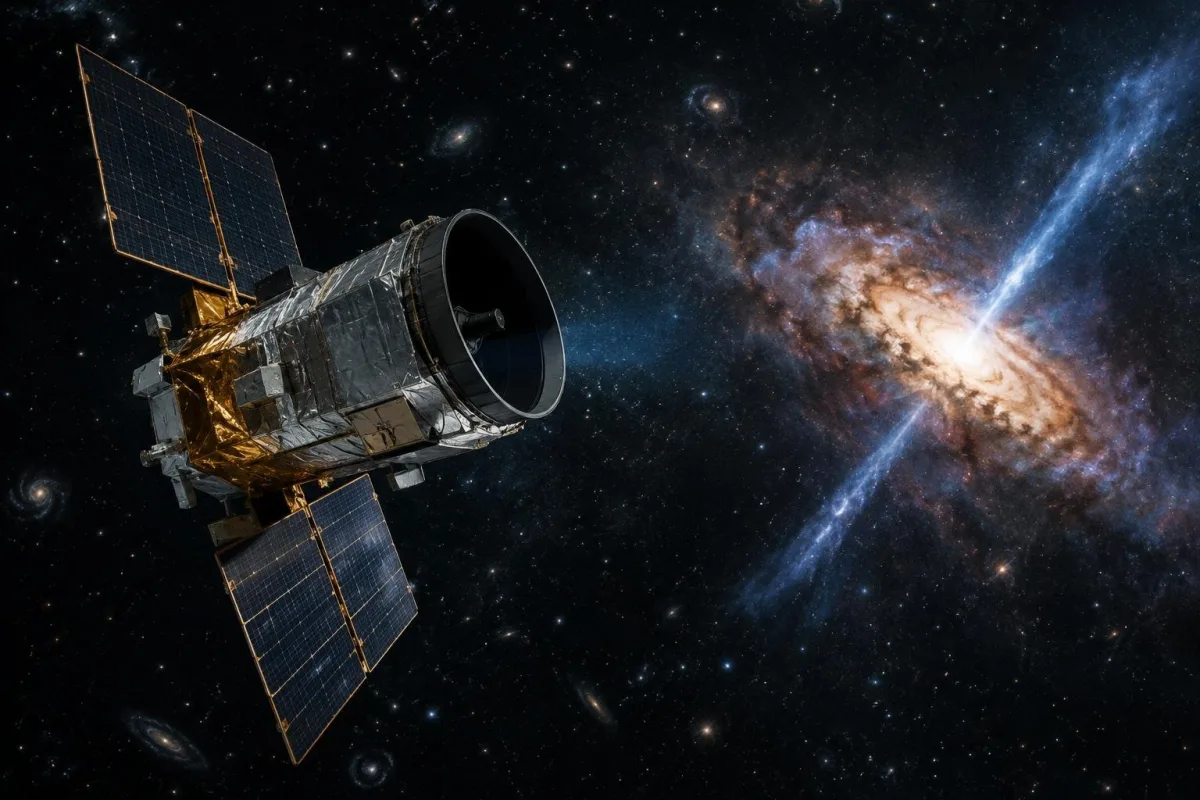
INDONESIA, Nov 6: NASA’s Neil Gehrels Swift Observatory re-entered Earth’s atmosphere on November 4, 2026, after 22 years of scientific exploration. The satellite fell uncontrolled over North Sumatra, Indonesia, at approximately 7:39 a.m. EST, according to the U.S. Space Force.
During its mission, Swift studied gamma-ray bursts—known as the universe’s most powerful explosions—and other cosmic events. NASA expected the satellite to burn up upon re-entry, estimating that most components would disintegrate before reaching the ground. The agency assessed the risk of debris injuring anyone on the ground as very low, approximately one chance in 2,100.
NASA officials noted that videos on social media claimed to show the satellite’s fiery descent, though these have not been independently verified. Aerospace engineer Dean Sladen said only small fragments of the satellite would survive the re-entry.
Launched in 2004, Swift weighed around 3,200 pounds and significantly exceeded its original two-year design life, contributing to about 7,000 scientific publications on cosmic phenomena, including supernovae and black holes.
Swift’s decline began after it lost the ability to maintain its orbit. In July 2026, NASA launched a rescue vehicle called LINK to extend its life, but the mission encountered operational issues shortly after deployment.
NASA’s Shawn Domagal-Goldman praised Swift’s contributions to astrophysics, saying, “Swift delivered an incredible, lasting return on investment for the nation. It played a major role in advancing our understanding of the changing universe.”
Sources

My name is Kuldeep Singh Chundawat. I am an experienced content writer with several years of expertise in the field. Currently, I contribute to Daily Kiran, creating engaging and informative content across a variety of categories including technology, health, travel, education, and automobiles. My goal is to deliver accurate, insightful, and captivating information through my words to help readers stay informed and empowered.