

ESA’s Hera Spacecraft Reveals Giant Crater on Asteroid Dimorphos
Images from ESA's Hera show a stadium-sized crater on asteroid Dimorphos, altered by NASA's DART impact.

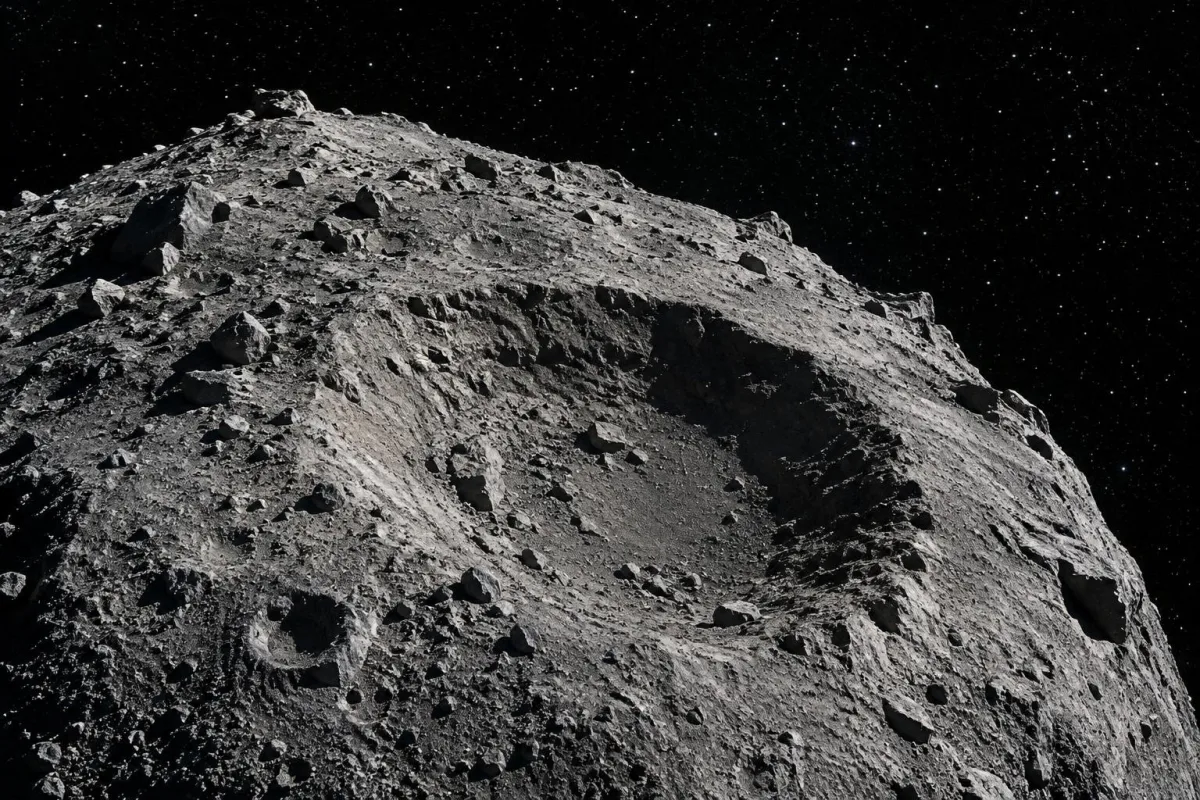
NEW DELHI, Nov 26: Images from the European Space Agency’s (ESA) Hera spacecraft have revealed a significant crater on Dimorphos, the asteroid impacted by NASA’s DART spacecraft in 2022. This crater, nearly the size of a stadium, indicates a dramatic change in the asteroid’s shape and behavior.
Dimorphos, approximately 495 feet (151 meters) wide, was struck during DART’s mission to test planetary defense techniques. The collision altered the asteroid’s orbit around its larger companion, Didymos, by about 33 minutes, with Dimorphos now tumbling chaotically in space.
Michael Kueppers, ESA’s Hera mission scientist, commented, “The side impacted is now completely covered by a crater, with the visual impression that a piece of the asteroid was cut off by the impact.” While the surface area affected by the impact shows noticeable alteration, other regions of Dimorphos remain largely unchanged, a surprising finding noted by Kueppers.
The Hera spacecraft, roughly the size of a small car, is currently monitoring the asteroid pair from approximately 15 to 19 miles (25 to 30 km) away and is set to approach even closer in the coming months. In January, Hera plans to deploy two small CubeSats to conduct further investigations.
During a presentation at the Museum für Naturkunde in Berlin, the mission team discussed the importance of understanding asteroid impacts, drawing parallels to Earth’s historical asteroid events. Ian Carnelli, Hera’s mission manager, stated, “Sixty-six million years ago, an asteroid impact changed the course of life on Earth.”
Hera’s mission is not just about observing the aftermath of the DART impact; it aims to gather crucial data that may assist in future planetary defense strategies. This investigation includes measuring the mass of Dimorphos to gauge the effectiveness of the impact.
Patrick Michel, ESA’s principal investigator for the Hera mission, remarked on the mission’s significance, emphasizing that understanding what happened during the collision could inform efforts to deflect potentially hazardous asteroids in the future.
The Hera mission exemplifies international collaboration in space exploration, building on NASA’s DART success. Both missions contribute important insights into planetary defense, with Hera providing detailed scientific data necessary for developing effective strategies against potential asteroid threats.