

NASA Advances Nuclear-Powered Spacecraft for 2028 Mars Mission
NASA has locked in key design elements for its nuclear-fission-powered spacecraft, SR-1 Freedom, aimed at a 2028 launch to Mars.

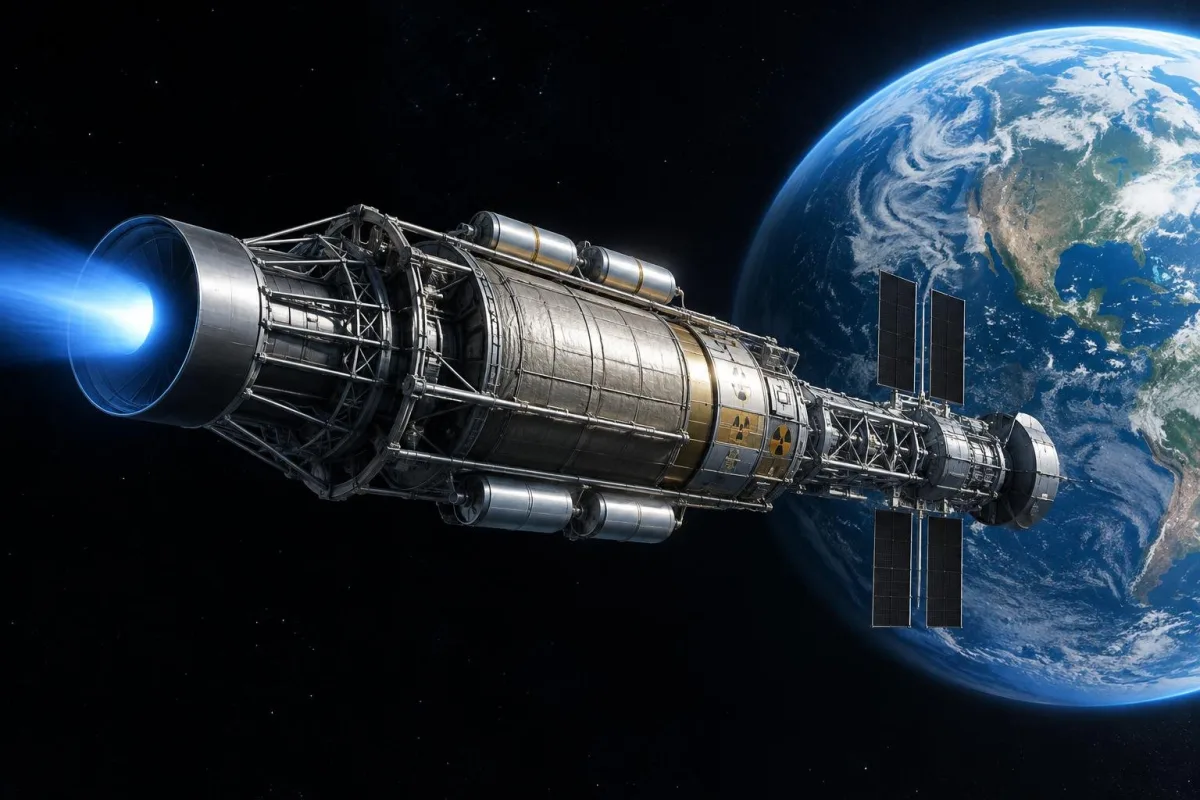
WASHINGTON, Nov 26: NASA has confirmed significant design advancements for its Space Reactor-1 (SR-1) Freedom spacecraft, which is slated to launch in late 2028. This mission aims to be the first to use nuclear fission propulsion beyond Earth’s orbit.
During a review meeting at NASA’s Glenn Research Center in October, experts finalized key design elements for the spacecraft. SR-1 Freedom will deliver a capsule named SkyFall, which will carry three helicopters to Mars. Once on the Martian surface, these helicopters will conduct geological studies and search for subsurface ice.
Steve Sinacore, the program director for SR-1 Freedom, indicated, “SR-1 marks a step in how we travel through the solar system,” signifying its potential impact on future exploration.
Among the design changes is a reduction in the length of the boom that separates the nuclear reactor from the main spacecraft. NASA now believes improved shielding allows for this adjustment, helping to minimize weight and streamline assembly without compromising the safety of electronic instruments. The spacecraft will also feature larger X-band antennas to enhance communication with Earth.
NASA has awarded a $39.3 million contract to Johns Hopkins University’s Applied Physics Laboratory to develop a heat rejection system crucial for the spacecraft’s nuclear power module. This system will manage the excess heat produced by the reactor, ensuring safe and efficient operation during the mission.
The spacecraft will initially rely on nuclear propulsion after leaving Earth orbit, gathering and sending performance data back to Earth. Following this phase, it will switch to solar power as it travels to Mars. Upon reaching Martian orbit, the reactor will be reactivated to collect additional data before ultimately shutting down post-mission.
The SR-1 Freedom program is seen as a foundational step toward achieving reliable and efficient transportation in deep space. Future missions will lean heavily on the lessons learned from this initiative to explore more distant regions of the solar system.