

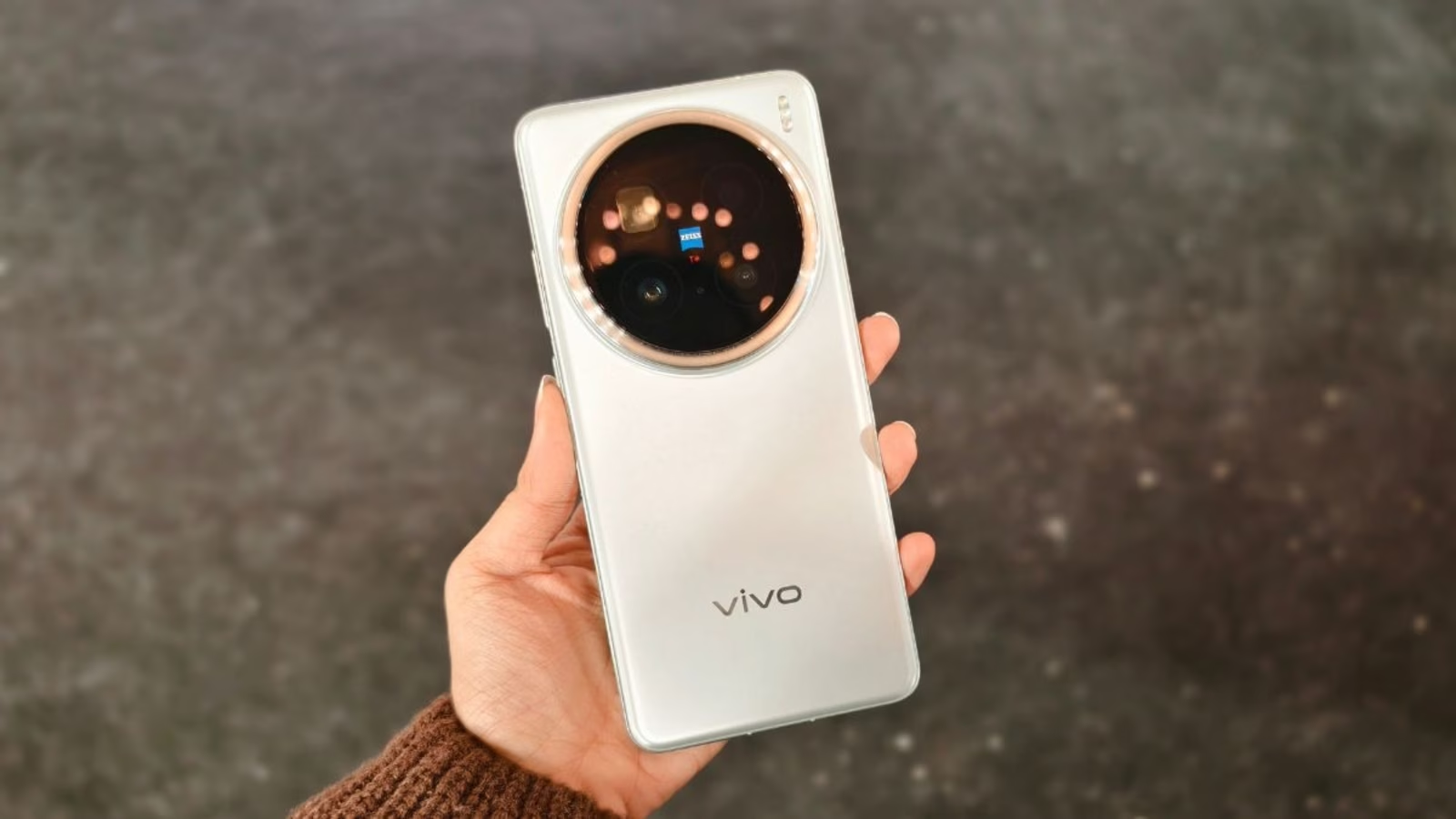
vivo’s new flagship, the X200 Ultra, picks up the torch from one of last year’s most acclaimed cameraphones—the vivo X100 Ultra. But instead of playing it safe, vivo took a bold leap, reinventing its camera system with fresh focal lengths, upgraded sensors, and a daring new perspective on mobile photography. Here’s how the two Ultra phones stack up in an in-depth camera battle.
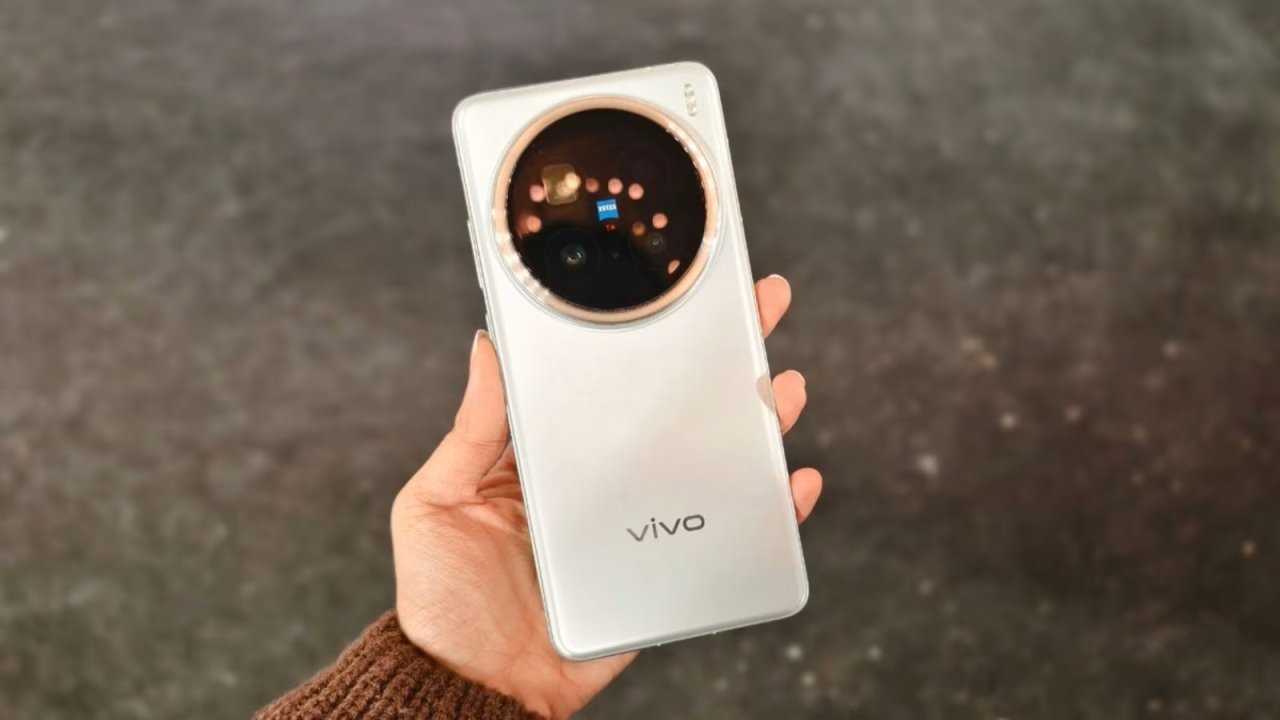

Main Camera: From 23mm to 35mm – A Shift in Vision
Gone is the 1-inch 23mm main sensor that gave the X100 Ultra its distinct wide-angle punch. In its place, the X200 Ultra introduces a 35mm f/1.7 lens paired with a 1/1.28-inch sensor, aimed squarely at photo enthusiasts who prefer a more natural perspective.
While the 23mm focal length on the X100 Ultra provided a broader view, it often introduced distortion—especially for close subjects. The 35mm lens on the X200 Ultra captures images with a tighter, more intimate composition, making it ideal for portraits and people photography. The shift may divide users—some will mourn the wider field of view, while others will welcome the more classic, reportage-style 35mm look.
What’s not up for debate is image quality. The new 35mm shooter delivers superior per-pixel sharpness, more natural detail, and significantly reduced digital oversharpening compared to the older 1-inch sensor. Color rendering is also more neutral and less saturated, which pros may appreciate.
Ultrawide: A Quiet Revolution
Perhaps the biggest leap is in the ultrawide department. The X100 Ultra’s 14mm camera used a modest 1/2.0-inch sensor and an f/2.2 lens. The X200 Ultra, however, swaps that for a massive 1/1.28-inch sensor and a slightly brighter f/2.0 lens—essentially a main camera-grade ultrawide.
The results speak volumes. The X200 Ultra’s ultrawide images rival main camera quality, capturing fine detail, dynamic range, and colors with incredible fidelity. Grass, shadows, and complex textures are resolved naturally, whereas the X100 Ultra often produced muddy, smeared results.
If you’re a fan of wide-angle shots, the X200 Ultra currently offers the best ultrawide experience on a smartphone—period.
Telephoto: Sharper, Brighter, and Still Stellar
The beloved 85mm periscope zoom from the X100 Ultra makes a return in the X200 Ultra, now with a brighter f/2.27 lens (compared to f/2.67 before). While performance in bright light is nearly identical, the new lens helps in low-light scenarios by keeping ISO levels lower. However, both cameras maintain excellent clarity and minimal noise, even in the dark.
Versatility: Can One Lens Replace Another?
With the removal of the native 23mm sensor, vivo fans may wonder if the 14mm ultrawide can digitally crop to 23mm, or if the 35mm lens can replace the versatility of the older main camera. The short answer: not quite.
While cropped 14mm images at 23mm look acceptable on social media, they lack the richness and clarity of a native lens. Conversely, cropping the 23mm from the X100 Ultra to 35mm doesn’t match the sharpness and character of the X200 Ultra’s native 35mm lens either.
Each focal length has its own identity, and the X200 Ultra clearly leans into a more premium, focused photographic approach with distinct roles for each sensor.
Night Photography: Both Are Brilliant
Nighttime performance on both phones is top-tier. The X200 Ultra’s 35mm sensor continues to shine, with balanced exposure, minimal noise, and excellent dynamic range. The same holds for the ultrawide and zoom sensors, both of which handle low-light scenarios with finesse.
The brighter lens on the new zoom module offers subtle improvements, but overall, both devices are extremely capable in the dark.
Verdict: A Bold New Direction
The vivo X200 Ultra isn’t just an iterative upgrade—it’s a reimagining of mobile photography. While the removal of the 1-inch 23mm sensor may initially seem like a step back, vivo has more than compensated with a masterfully tuned 35mm main camera, a revolutionary ultrawide, and an enhanced telephoto system.
This new trio—14mm, 35mm, and 85mm—offers flagship-grade quality across the board, creating a phone that feels like it was made for true photographers.
If you’re looking for a phone that treats each camera as more than just a checkbox, the vivo X200 Ultra is the most compelling imaging tool on the market today.

Bhupendra Singh Chundawat is a seasoned technology journalist with over 22 years of experience in the media industry. He specializes in covering the global technology landscape, with a deep focus on manufacturing trends and the geopolitical impact on tech companies. Currently serving as the Editor at Udaipur Kiran, his insights are shaped by decades of hands-on reporting and editorial leadership in the fast-evolving world of technology.