

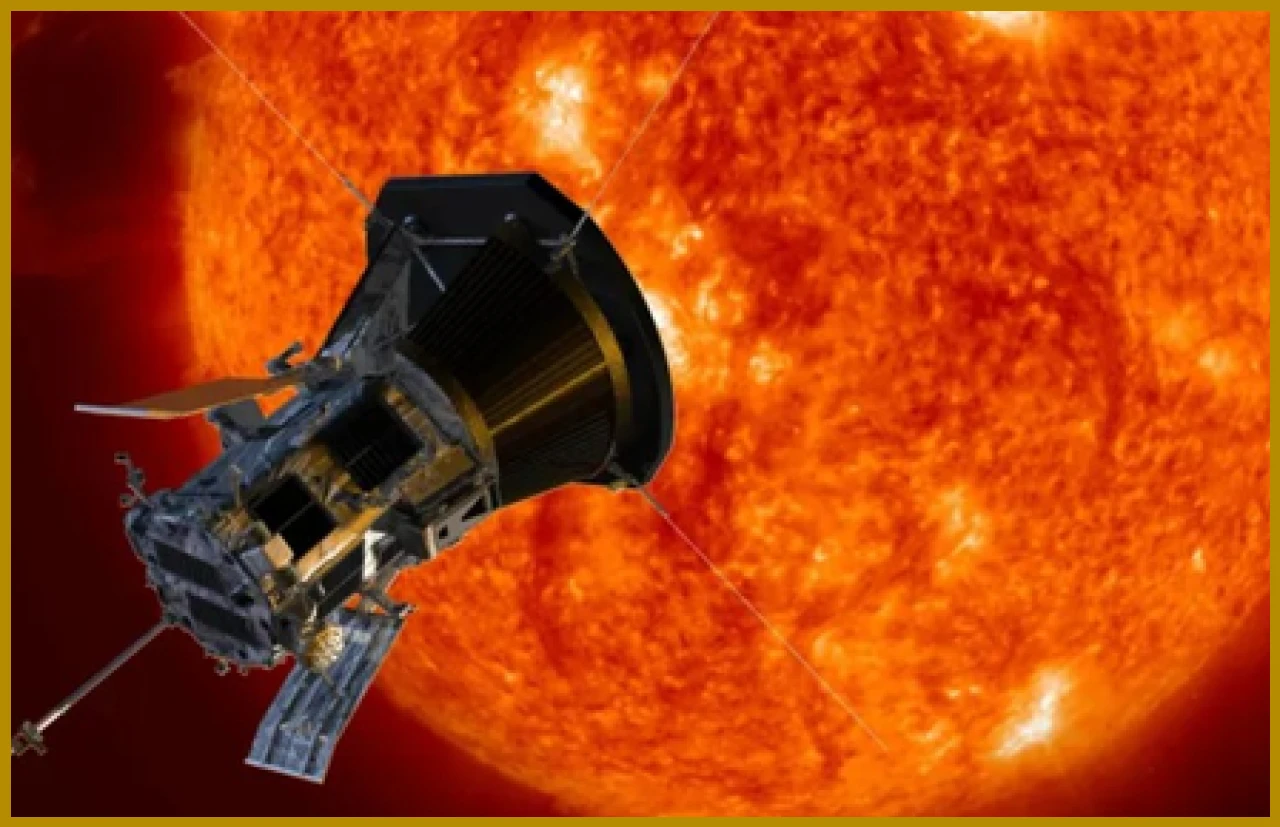

New Delhi, February 15: As winter gradually bids farewell, the scorching summer is on the horizon, bringing with it the familiar challenges of rising temperatures and heat waves. But have you ever pondered the nature of the sun, the very source of this heat?
The sun, approximately 4.5 billion years old, is a colossal celestial body filled with mysteries. Its temperature, structure, and energy continue to be subjects of scientific study. Classified as a “yellow dwarf,” the sun is primarily composed of hydrogen and helium gases, forming an intensely hot and luminous sphere. It serves as the center of our solar system, with all planets, including Earth, revolving around it.
The average distance from Earth to the sun is about 93 million miles, or 150 million kilometers. It is the only star in our solar system and the foundation of life on Earth. Without the energy received from the sun, neither light nor life would be possible.
According to NASA, while the sun appears stable, it is a dynamic star that constantly changes and emits energy into space. The study of the sun and its effects on the solar system is known as heliophysics. The sun is the largest object in our solar system, with a diameter of approximately 865,000 miles, making it 109 times larger than Earth. If hollow, it could contain 1.3 million Earths. Its gravitational force keeps planets, asteroids, and comets in orbit.
Despite its significance to Earth, the sun is considered an ordinary star in the universe. There are stars that are 100 times larger, and many systems contain two or more stars, which scientists study to understand distant stars. The sun’s core is the hottest part, with temperatures exceeding 27 million degrees Fahrenheit (15 million degrees Celsius).
The visible surface of the sun is known as the photosphere, with a temperature of 10,000 degrees Fahrenheit (5,500 degrees Celsius). This “light sphere” is where most of the sun’s light is emitted. However, the sun’s greatest mystery lies in its corona. The further one moves away from the surface, the hotter it becomes, reaching temperatures of 3.5 million degrees Fahrenheit (2 million degrees Celsius). The mystery of “corona heating” remains unsolved.
The sun has a radius of 700,000 kilometers, with its closest neighbor, Proxima Centauri, located 4.24 light-years away. The sun resides in the Orion Spur arm of the Milky Way galaxy and orbits the galaxy’s center at a speed of 400,000 miles per hour, completing a full orbit every 230 million years. It rotates on its axis approximately every 25 days, taking 36 days at the poles. Notably, the sun is not solid, causing different parts to rotate at varying speeds.
Every 11 years, the sun undergoes a solar cycle, affecting the space environment. This solar activity can impact satellites, GPS, and power grids, prompting alerts from the NOAA Space Weather Prediction Center. The sun is the cornerstone of life on Earth, providing warmth and energy essential for sustaining life.

My name is Ganpat Singh Choughan. I am an experienced content writer with 8 years of expertise in the field. Currently, I contribute to Udaipur Kiran & Daily Kiran, creating engaging and informative content across a variety of categories including technology, health, travel, education, and automobiles. My goal is to deliver accurate, insightful, and captivating information through my words to help readers stay informed and empowered.