

Asteroid KY26 Too Warm to Be a Comet, Confounds Astronomers
Asteroid KY26 is defying expectations with unusual acceleration, leading scientists to question its classification as a comet.

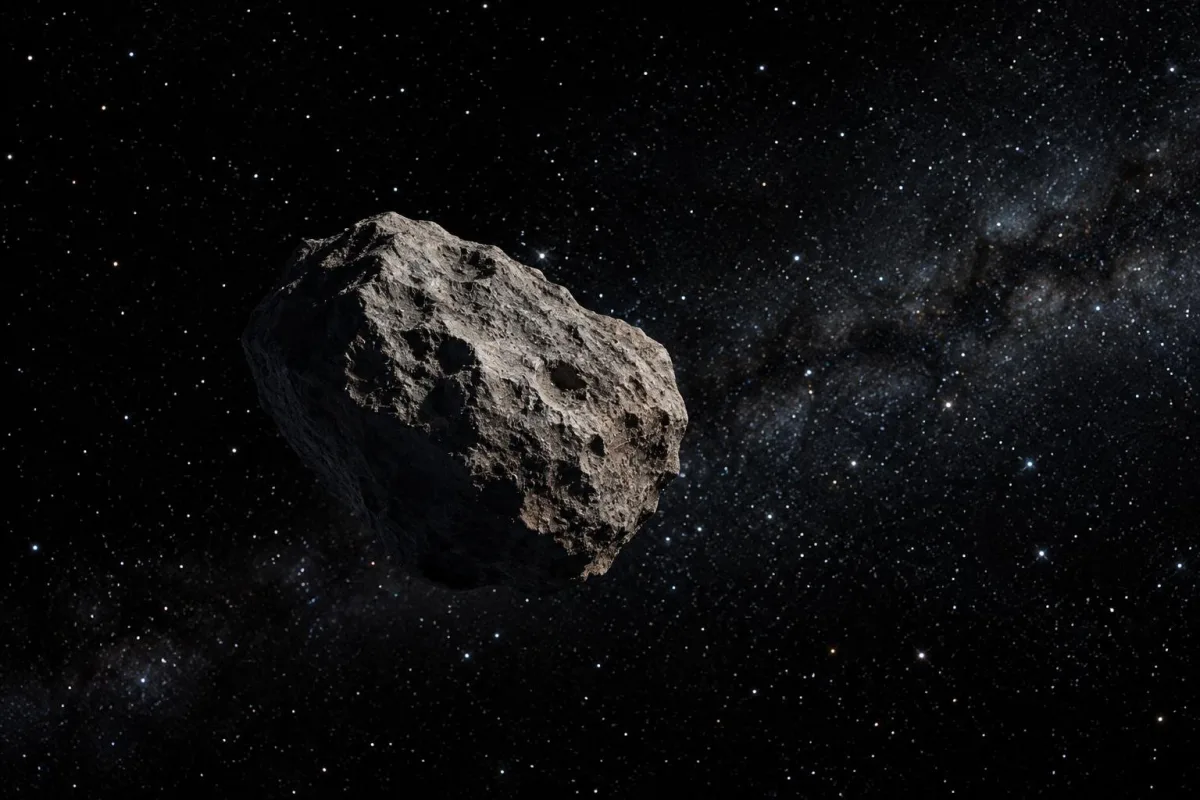
NEW DELHI, Nov 10: Astronomers are puzzled by asteroid KY26, which is exhibiting unexpected acceleration, raising questions about its classification. Research indicates that KY26 is too warm to retain the ice typically found in comets, according to aerospace engineers from the Georgia Institute of Technology.
The 11-meter (36-foot) asteroid rotates every 5.35 minutes and is currently located 186 million miles from Earth. Its acceleration appears to exceed what gravitational forces would typically influence. Possible explanations include the asteroid being a ‘dark comet’ or some other unidentified object.
Korbin Hansen and Masatoshi Hirabayashi, who authored a paper published in the journal Icarus, noted that their temperature models suggest the surface of KY26 is consistently warmer than necessary to sustain buried ice. “Our temperature model results indicate that the water outgassing rate on 1998 KY26 would be too high to maintain buried ice,” they explained.
For ice to endure over long periods, temperatures must stay below approximately -128 degrees Celsius (-198 degrees Fahrenheit). However, even the coldest areas of KY26 average about -61 degrees Celsius (-78 degrees Fahrenheit), meaning that any potential ice reserves would have vanished in as little as 62 years.
The anomaly has led to other theories, including that sunlight could be exerting a sufficient force to account for the asteroid’s peculiar movement. The researchers conclude that KY26 is likely a dehydrated asteroid that lost its water sources long ago.
Future investigations are expected, as the Japanese space agency’s Hayabusa2 spacecraft is scheduled to rendezvous with KY26 in July 2031. This mission aims to gather more data using advanced imaging and altimetry instruments, which could help clarify the capabilities and history of this enigmatic object.
Sources

My name is Kuldeep Singh Chundawat. I am an experienced content writer with several years of expertise in the field. Currently, I contribute to Daily Kiran, creating engaging and informative content across a variety of categories including technology, health, travel, education, and automobiles. My goal is to deliver accurate, insightful, and captivating information through my words to help readers stay informed and empowered.