

WHO Confirms New COVID-19 Variant PJ.2.1 Detected Globally
The World Health Organization reports that the COVID-19 variant PJ.2.1 is spreading globally, exhibiting symptoms similar to the common cold and influenza.

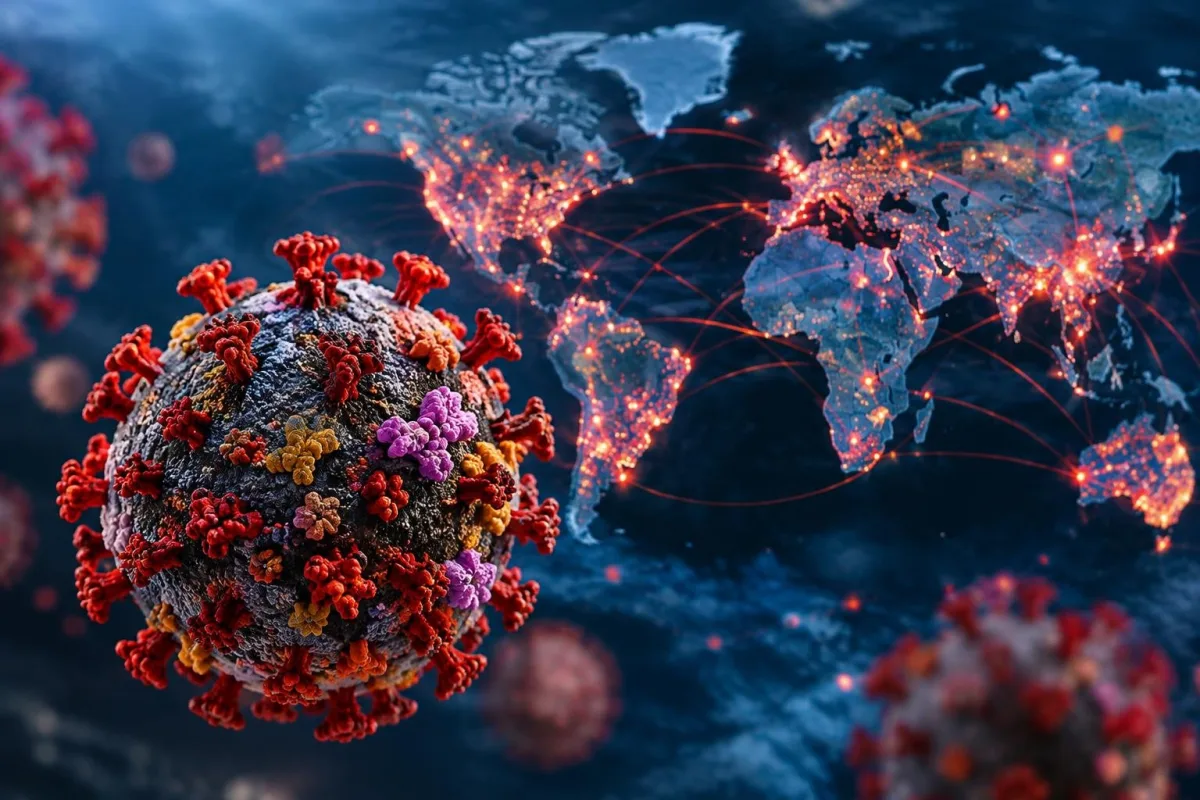
MOSCOW, Nov 10: The World Health Organization (WHO) has confirmed that the new COVID-19 variant PJ.2.1 is spreading globally, with symptoms that closely resemble those of cold and flu. The WHO is monitoring the variant’s spread and its implications for public health.
PJ.2.1 was first identified in Ontario, Canada, on May 2, 2026. Since then, it has been reported in several other Canadian provinces, various U.S. states, and countries including Spain, France, Israel, Singapore, Australia, and New Zealand.
Experts from the WHO have stated that currently, there is no evidence that PJ.2.1 leads to more severe illness compared to earlier variants. “Current laboratory and clinical data show no clear or significant difference in the severity of the disease associated with the PJ.2.1 variant,” said officials from the organization.
Despite concerns over rising transmission rates in North America and Europe, WHO officials emphasize that increased prevalence does not necessarily mean the variant causes more severe symptoms or necessitates heightened hospitalization rates. However, they recognize that vulnerable groups, including the elderly and those with chronic health conditions, may face higher risks.
Symptoms of PJ.2.1 include fever, cough, sore throat, blocked or runny nose, headache, muscle aches, and fatigue, similar to seasonal influenza. The overlapping nature of these symptoms can complicate diagnosis without appropriate testing. The WHO has advised that diagnostic testing remains crucial in determining the specific cause of illness, as symptoms alone are insufficient for identification.
In a related study, scientists found that the spike protein of PJ.2.1 has several mutations that could affect its interaction with human cells. This might explain the variant’s spread, although laboratory findings do not guarantee similar results in real-world transmission. Researchers also noted that the neutralization of PJ.2.1 by antibodies might be lower compared to some earlier strains, but it was not significantly reduced compared to others.
As the situation evolves, WHO will provide updated recommendations on vaccine composition in December 2026 based on the analysis of various COVID-19 variants, including PJ.2.1. Meanwhile, officials stress the importance of adhering to public health guidelines and seeking vaccination, especially for high-risk individuals.
Sources

My name is Kuldeep Singh Chundawat. I am an experienced content writer with several years of expertise in the field. Currently, I contribute to Daily Kiran, creating engaging and informative content across a variety of categories including technology, health, travel, education, and automobiles. My goal is to deliver accurate, insightful, and captivating information through my words to help readers stay informed and empowered.