

SpaceX’s Starship Achieves Historic Catch in Latest Test Flight
SpaceX's Starship completed a historic catch of its upper stage, marking a significant milestone in its reusable rocket development.

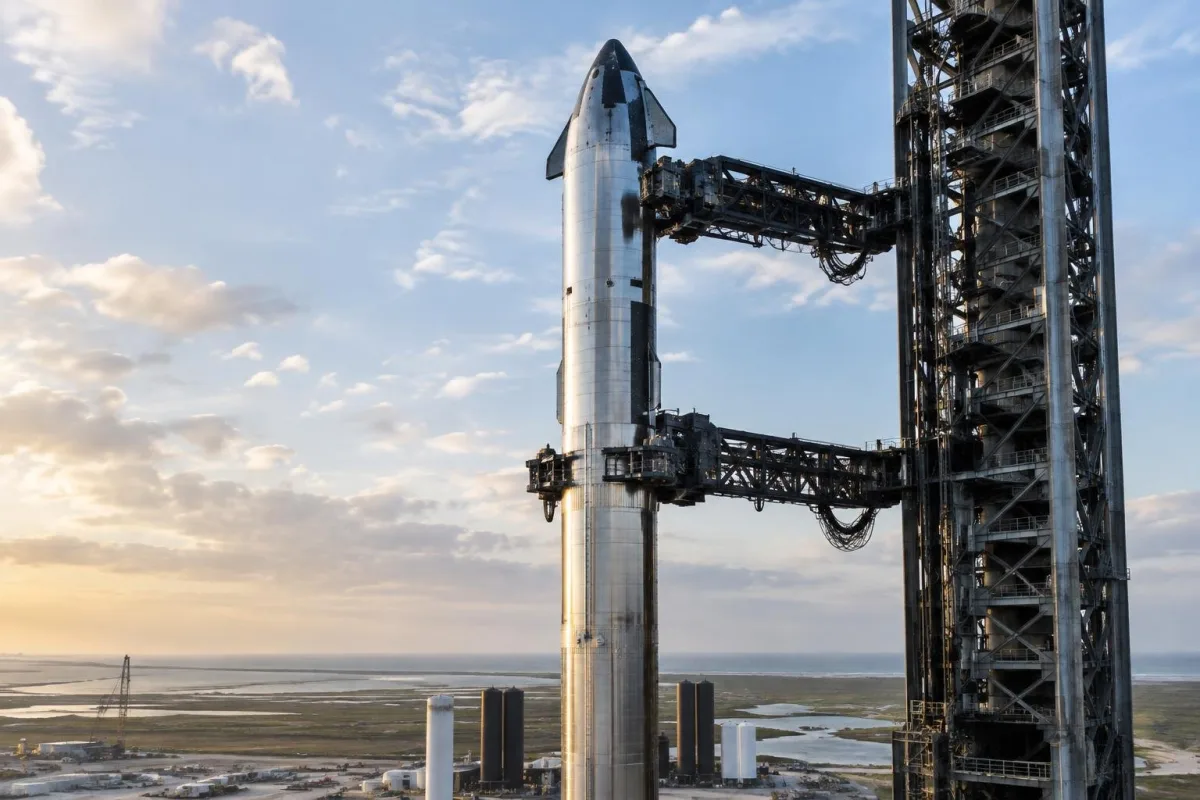
TEXAS, Nov 16: SpaceX’s Starship spacecraft successfully returned to its launch tower in Texas after its 15th test flight, marking a significant achievement for the company. The upper stage of the rocket, known as Ship, was captured using mechanical arms called ‘chopsticks’ on Saturday afternoon, 22.5 hours after its launch. This marked the first time SpaceX has captured the Ship stage, though the Super Heavy booster failed to return safely, opting instead for a splashdown in the Gulf of Mexico.
SpaceX’s spokesperson, Dan Huot, expressed excitement about the successful catch, stating, “That was the holy grail of spaceflight.” The attempt to simultaneously capture both the Super Heavy and the Ship during this flight represents a substantial step towards developing a fully reusable rocket system, crucial for minimizing spaceflight costs.
The test flight saw the Starship orbit Earth 14 times and successfully deploy 26 Starlink satellites. This capability is essential for expanding SpaceX’s satellite internet service, which remains a key revenue source for the company.
The success with the Ship contrasts with the booster’s recovery, which ended in failure after its engines stopped firing prematurely, prompting a self-destruction protocol. Engineers are currently investigating the cause of this issue.
SpaceX aims to increase its launch frequency significantly, targeting 10,000 missions per year by 2030. This ambitious plan includes deploying a vast network of new Starlink satellites and supporting NASA’s Artemis program, which involves landing astronauts on the Moon.
NASA administrator Jared Isaacman remarked on the significance of the event, stating, “It was almost magic” when discussing the successful capture of the Ship. SpaceX is also making progress on installing crew accommodations and life-support systems for future lunar missions. The first crewed lunar landing using Starship is planned for Artemis IV, expected to launch in 2028.
Achieving reliable and rapid reusability for Starship is a priority as SpaceX prepares for future missions, which may also require off-Earth refueling capabilities. While awaiting the next series of tests, space enthusiasts are encouraged to monitor further developments in the Starship program.