

SpaceX Catches Starship Upper Stage in Historic Texas Landing
SpaceX's Starship upper stage was caught midair by its launch tower after a successful mission orbiting Earth.

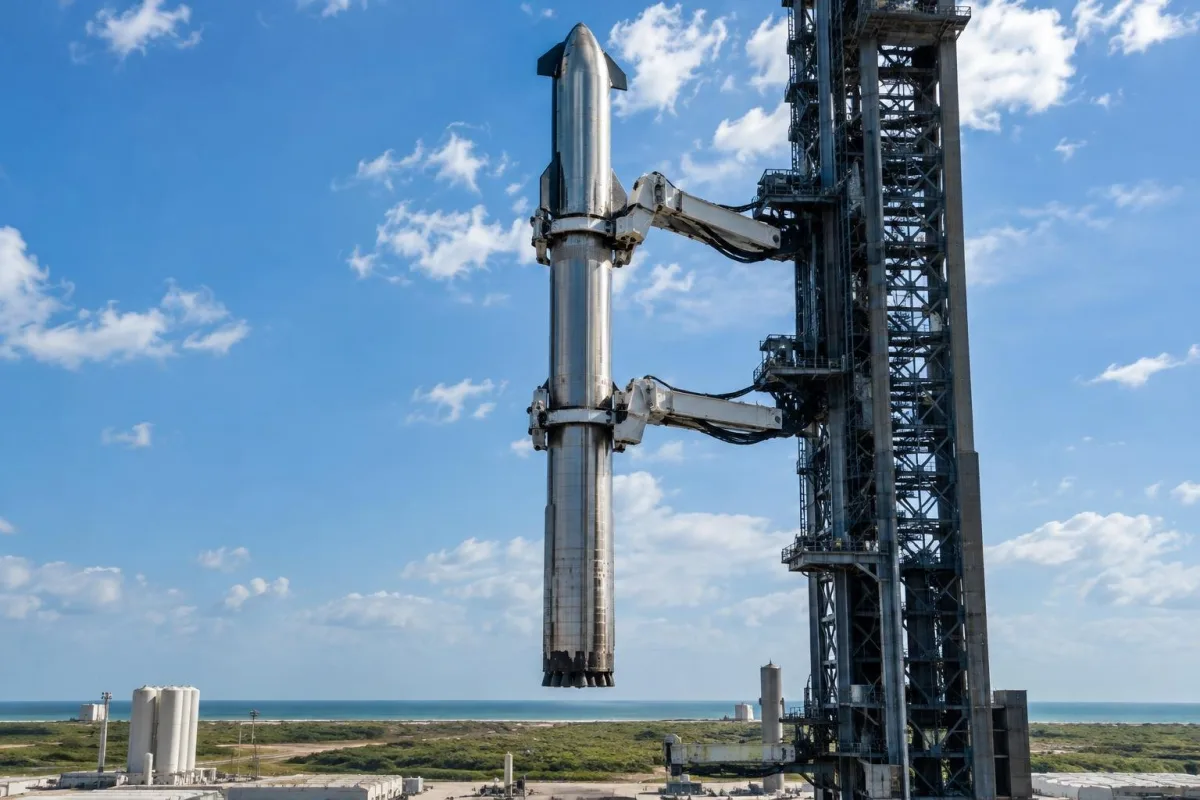
STARBASE, TEXAS, Nov 15: SpaceX’s Starship upper stage made a historic landing on Saturday, successfully caught midair by mechanical arms at its Texas launch site. This marked the first time a Starship returned from space and was captured by its launch tower, following a 22-hour mission that included 14 orbits around Earth.
The event occurred at Starbase, Texas, when the rocket, part of SpaceX’s plan for rapid reusability, descended after deploying 26 Starlink satellites. Elon Musk, the company’s CEO, praised his team’s accomplishment, calling it an incredible achievement.
The mission was impacted by the failure of the Starship’s first-stage booster, which exploded shortly after liftoff due to a detected deviation in its trajectory. SpaceX spokesperson Dan Huot said the booster was lower on fuel than expected, leading to its destruction over the Gulf of Mexico. “It was doing what it was supposed to do,” he said about the booster’s guidance systems.
NASA also reacted positively to the upper stage’s landing. Administrator Jared Isaacman described the moment as “almost magic,” expressing excitement about advancements in reusable rocket technology.
SpaceX has significantly expanded its capabilities over recent years. With the ability to produce a Starship upper stage every three weeks, the company aims to increase flight frequency, aspiring to conduct 135 missions annually in the near future. This development is crucial as SpaceX prepares for its role in NASA’s Artemis program, which plans to return astronauts to the Moon.
Following the upper stage’s successful landing, SpaceX officials noted that all systems, including the critical heat shield, performed well during the mission. The firm is now focused on refining its reusability processes, essential for reducing the costs of space travel and enabling further exploration efforts, including plans for Mars.
As the aerospace community looks towards a future of more routine space travel, SpaceX’s success may change public perception of rocket recovery and reuse, making what once seemed extraordinary an everyday reality.