

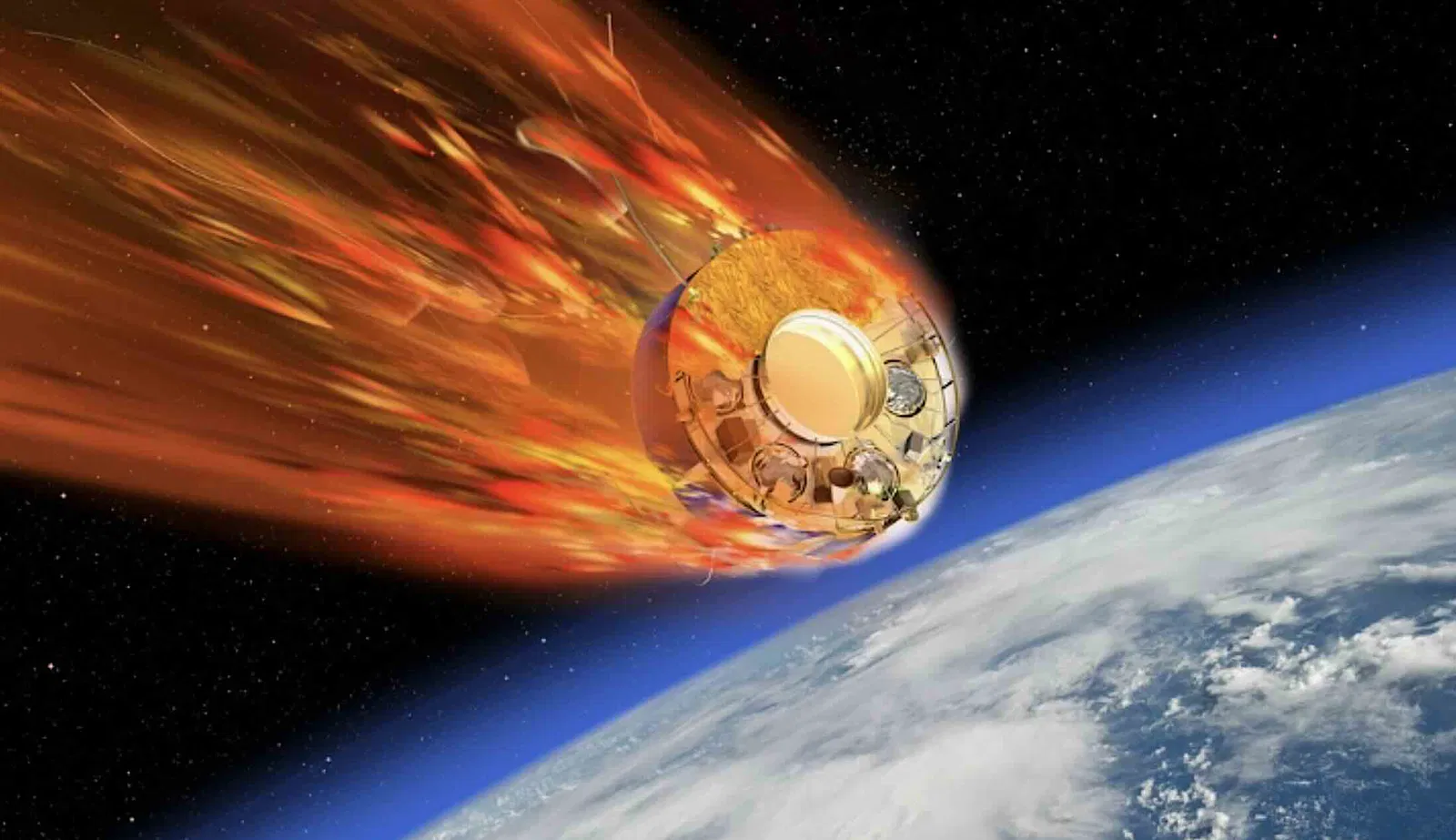
Jakarta | May 14, 2025 – After spending over five decades circling Earth, the Soviet Venus lander Kosmos 482 has finally plunged back into the atmosphere, ending its unintended orbital journey that began in 1972. The spacecraft, originally part of the USSR’s Venera programme, re-entered Earth’s atmosphere on May 10 at 2:24 a.m. ET (0624 GMT). Russia’s space agency Roscosmos confirmed the descent over the Indian Ocean, west of Jakarta, Indonesia.
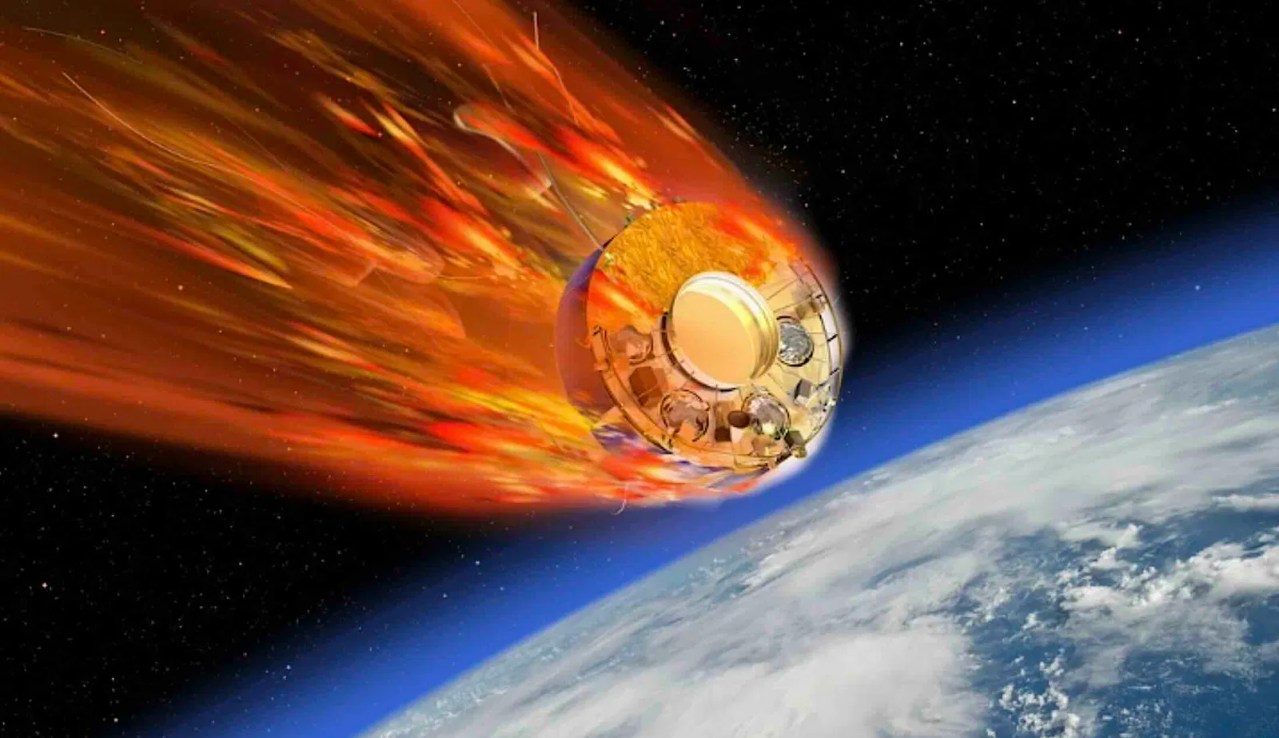

Launched during the Cold War space race, Kosmos 482 was meant to explore Venus, but a launch failure left it stranded in an elliptical Earth orbit. Its return has rekindled concerns about space junk and the growing hazards associated with uncontrolled reentries of aging satellites and debris.
A Probe Designed for Venus, Not Earth
Weighing in at 495 kilograms, Kosmos 482 was built to withstand Venus’s crushing atmosphere, raising the possibility that parts of the probe may have survived reentry intact. Satellite tracker Marco Langbroek noted that if the spacecraft reached Earth’s surface in one piece, it could have impacted at 150 mph, carrying the energy of a mid-sized meteorite.
During one of its final orbits, astronomer Gianluca Masi from the Virtual Telescope Project captured a composite image of the spacecraft streaking across the sky over Rome, appearing as a dashed trail of light — a dramatic prelude to its fiery fall.
Space Junk Threat in the Spotlight
While Kosmos 482’s fall didn’t cause any known damage, its reentry has amplified global concern over space debris. According to the European Space Agency (ESA), an average of three significant pieces of space debris enter Earth’s atmosphere each day. Most burn up harmlessly, but as the number of orbiting satellites grows, so does the risk.
With mega constellations such as SpaceX’s Starlink and Amazon’s Project Kuiper planning to launch tens of thousands of satellites, the frequency of uncontrolled reentries is expected to rise. Experts warn that, although the chance of human injury remains low, the environmental and cumulative impact of these returns could become more serious over time.
ESA scientists have also highlighted potential atmospheric damage, including ozone depletion and climate implications, from the chemicals and materials released during high-speed reentries.
Legacy of a Bygone Era
Kosmos 482’s unplanned five-decade orbit and eventual descent tell the story of a bygone era of space exploration — but also serve as a timely reminder of the long-term consequences of failed missions left adrift in space.
As nations and companies ramp up their presence in Earth orbit, international regulation and debris mitigation strategies are becoming more crucial than ever.

Bhupendra Singh Chundawat is a seasoned technology journalist with over 22 years of experience in the media industry. He specializes in covering the global technology landscape, with a deep focus on manufacturing trends and the geopolitical impact on tech companies. Currently serving as the Editor at Udaipur Kiran, his insights are shaped by decades of hands-on reporting and editorial leadership in the fast-evolving world of technology.