

Researchers Exceed X-Ray Energy Limits Using Helium Atoms
An international team of researchers has generated X-rays with higher energies than traditional theories predict by using helium atoms and laser technology.

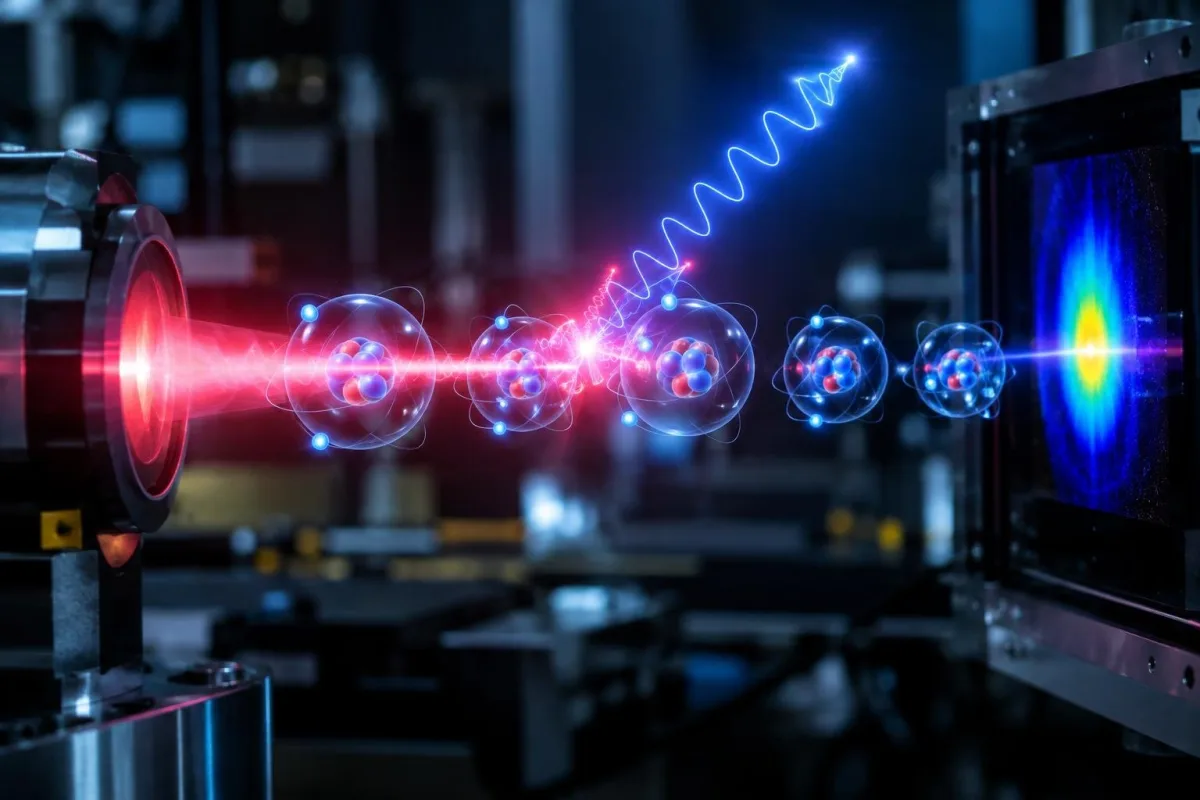
Researchers from TU Wien and the University of California San Diego have produced X-ray photons with energy levels that exceed conventional theoretical limits, according to findings published in Nature Photonics.
In their experiment, the team directed intense ultraviolet laser pulses at helium atoms, releasing both electrons of the atom sequentially. This approach allowed the electrons to return to the atom simultaneously, resulting in combined energy emitted as a single, higher-energy X-ray photon.
A standard approach in laser physics involves a single electron being freed and accelerated by the electric field of the laser, generating light at frequencies much higher than the laser beam. However, this traditional method has an upper energy limit that weakens emissions beyond a certain point.
Prof. Tenio Popmintchev from TU Wien said, “The mechanism behind short X-ray pulses has been well known for a long time.” The new findings demonstrate that this limit can be surpassed by leveraging the interaction of two electrons instead of one.
Dimitar Popmintchev, a postdoctoral researcher involved in the study, noted that the coordinated release of energy from both electrons allows for the generation of photons that exceed conventional expectations. This was evidenced by a second region of sustained emission in the spectrum of the emitted radiation.
The researchers found that this unexpected behavior occurred only with helium atoms, not with others like argon and neon, highlighting helium’s stronger electron correlations. This unique interaction between the electrons could provide insights into their behavior in quantum systems.
The discovery could serve as a powerful tool for studying electron interactions on extremely short timescales, measuring processes that occur over attoseconds. The researchers suggest this breakthrough may extend beyond individual helium atoms to include more complex molecules and materials with strong electron interactions.
Sources

Bhupendra Singh Chundawat is a seasoned technology journalist with over 22 years of experience in the media industry. He specializes in covering the global technology landscape, with a deep focus on manufacturing trends and the geopolitical impact on tech companies. Currently serving as the Editor at Udaipur Kiran, his insights are shaped by decades of hands-on reporting and editorial leadership in the fast-evolving world of technology.