

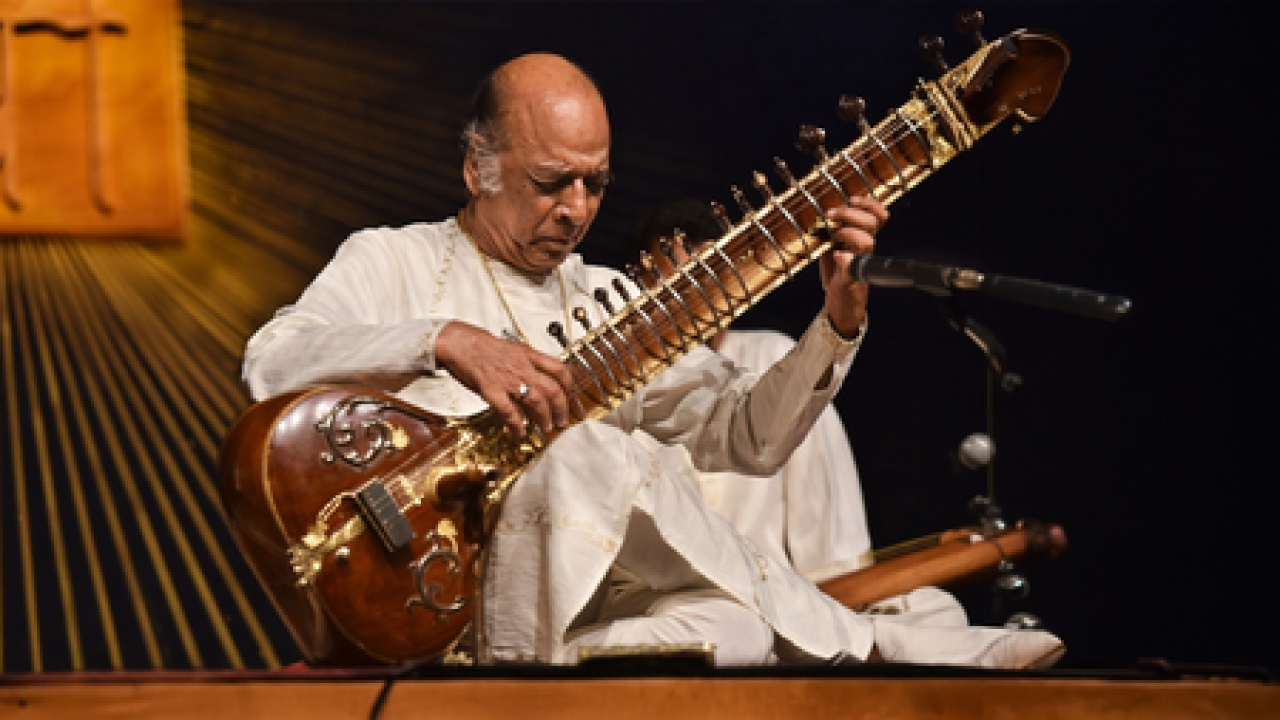

New Delhi, August 27: August 28 is not just a date on the calendar; it marks the birth of Ustad Vilayat Khan in 1928, a man for whom playing the sitar was not merely a form of entertainment but a spiritual pursuit. His name continues to be revered in the world of Indian classical music.
He was honored with the title ‘Aftab-e-Sitar,’ a recognition earned through his exceptional artistry. The melodies emanating from his sitar were so rich and profound that listeners often felt as if a voice was singing, rather than just an instrument playing.
Born into a family steeped in musical tradition, Vilayat Khan was the son of Ustad Enayat Khan and the grandson of Ustad Imdad Khan, both renowned sitar players of their time. The musical heritage that had been passed down through generations found a new expression in Vilayat Khan, who not only preserved it but also carved out his unique identity.
From a young age, Vilayat Khan was drawn to music. The sitar was not just an instrument for him; he sought emotions within its notes. This philosophy later became the hallmark of his famous ‘Gayaki Ang’ style. He translated the nuances of vocal music into his sitar playing, making the notes feel like they were speaking, even without words.
He beautifully captured the essence of vocal techniques like Meend, Gamak, and Bol on the strings of the sitar, evoking deep emotions in his listeners. This was the reason his style redefined sitar playing; he did not merely play ragas but gave them a voice.
However, the journey to this pinnacle was fraught with challenges. It was marked by hours of rigorous practice. Stories of his dedication to practice are legendary, with accounts of his fingers moving so swiftly over the strings that they would sometimes bleed. For many, such pain would be a reason to stop, but not for Vilayat Khan. He believed that if he paused to rest after injuring his finger amidst thousands of notes, it would disrupt his entire practice. Thus, he continued, driven by an unwavering passion that was evident in his art.
Vilayat Khan’s influence extended beyond India. In the early years of independent India, he showcased Indian classical music internationally. His performance in England in 1951 is particularly noteworthy. He later took Indian music and the sitar’s melodies to various parts of the world, spending several months abroad each year and considering New Jersey his second home.
His popularity also reached the film industry, with his sitar music adding a unique flavor to films like Satyajit Ray’s acclaimed ‘Jalsaghar.’ His performances struck a balance between the seriousness of classical music and the emotional resonance that appealed to general audiences.
Known for his candid nature, Vilayat Khan declined the Padma Shri award in 1964 and the Padma Vibhushan in 1968, believing that his art and contributions had not received the respect they deserved. In 2000, he was again offered the Padma Vibhushan, but he declined it once more.
Former President Fakhruddin Ali Ahmed was an admirer of his art and honored him with the title ‘Aftab-e-Sitar’ during his tenure. His sons, Shujaat Hussain Khan and Hidayat Khan, have continued the legacy of sitar playing.
Ustad Vilayat Khan passed away on March 13, 2004. However, like many great artists, his departure did not signify the end of his art. His sons continue to carry forward the tradition of sitar playing.

My name is Ganpat Singh Choughan. I am an experienced content writer with 8 years of expertise in the field. Currently, I contribute to Udaipur Kiran & Daily Kiran, creating engaging and informative content across a variety of categories including technology, health, travel, education, and automobiles. My goal is to deliver accurate, insightful, and captivating information through my words to help readers stay informed and empowered.