

NASA’s Swift Telescope to Fall to Earth After Failed Rescue Mission
NASA's Swift Observatory is on the verge of re-entry following a failed rescue attempt, marking the end of its 22-year mission.

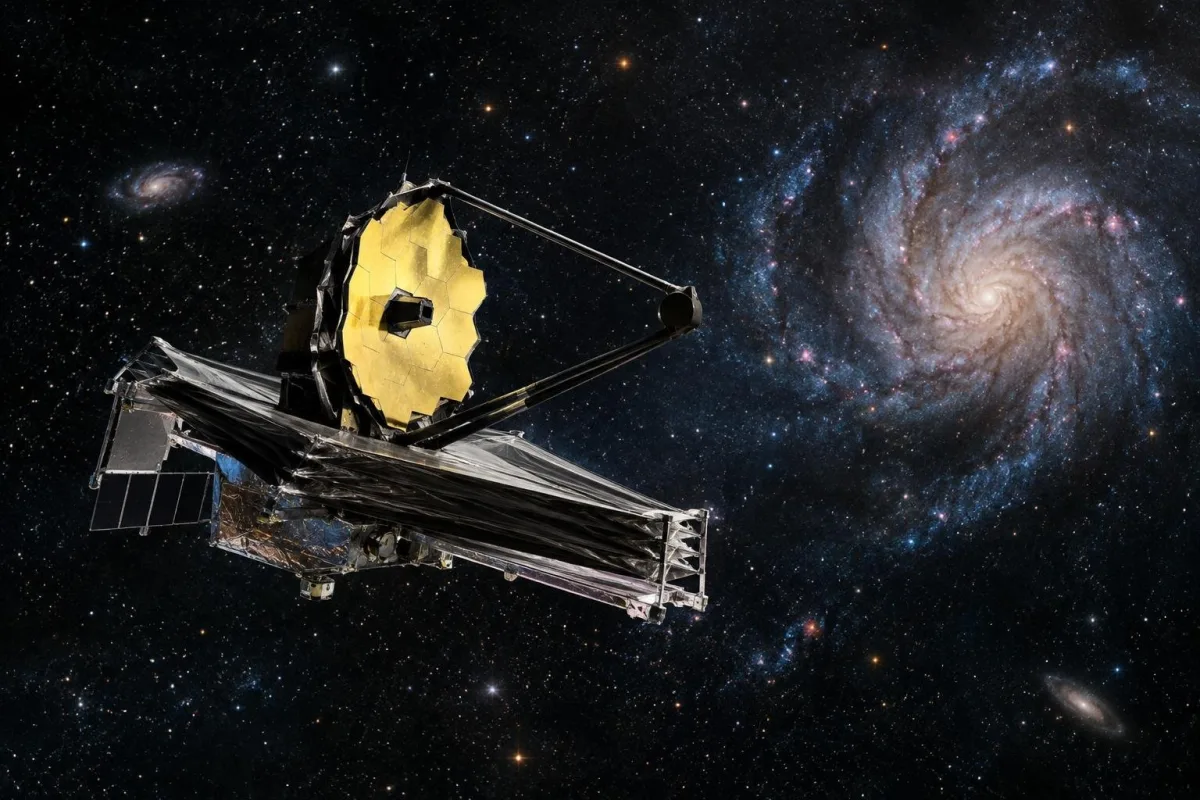
CAPE CANAVERAL, Nov 1: An aging NASA telescope, the Neil Gehrels Swift Observatory, is expected to fall back to Earth within days after a failed rescue mission. According to the U.S. Space Force, the telescope is predicted to re-enter the atmosphere around Friday.
Swift has spent over 22 years studying gamma-ray bursts and supernovas, but its orbit has been declining rapidly due to intense solar activity and a failed attempt to boost its altitude with a privately hired spacecraft. NASA’s mission chief scientist, Brad Cenko, noted that while most of the 1.5-ton telescope will likely burn up on re-entry, some dense parts, like tungsten and mirrors, could survive.
The potential re-entry corridor is vast, covering regions of Africa, Australia, India, Southeast Asia, and parts of Central and South America. The exact landing spot for any debris remains uncertain, as small shifts in atmospheric conditions can lead to significant alterations in the descent trajectory.
The failed rescue mission involved a robotic spacecraft known as Link, which was supposed to approach Swift and assist in raising its orbit. However, Link encountered technical issues and fell back to Earth in September, leaving Swift on a downward trajectory. The telescope has been steadily losing altitude due to atmospheric drag, exacerbated by increased solar activity over recent years.
Launched on November 20, 2004, Swift was initially intended for a two-year mission, yet it outlasted expectations by more than a decade. Throughout its operational life, it provided critical data, contributing to about 7,000 scientific papers and detecting over 2,000 gamma-ray bursts.
Scientists had hoped to use Swift’s observations to advance understanding of high-energy cosmic events. Its rapid response capabilities allowed it to pivot quickly toward emerging events, making it a vital asset in modern astrophysics. “Swift played a major role in advancing our understanding of the changing universe,” Cenko stated.
Sources
- ABC News – Breaking News, Latest News and Videos
- Live Science
- Science News
- Newsweek

My name is Kuldeep Singh Chundawat. I am an experienced content writer with several years of expertise in the field. Currently, I contribute to Daily Kiran, creating engaging and informative content across a variety of categories including technology, health, travel, education, and automobiles. My goal is to deliver accurate, insightful, and captivating information through my words to help readers stay informed and empowered.