

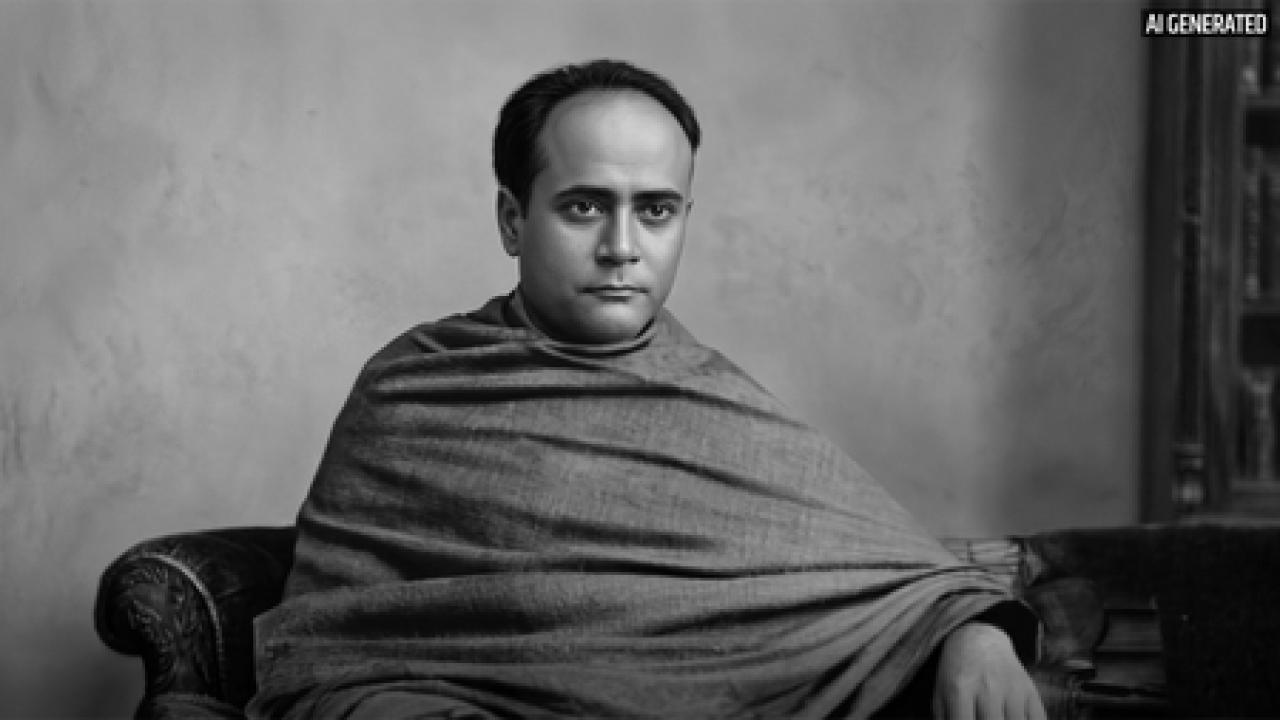

Medinipur, September 25 (Udaipur Kiran) : Ishwar Chandra Vidyasagar, born on September 26, 1820, in Medinipur, Bengal, was not just a scholar but a transformative figure in Indian society. His contributions to education and social reform laid the groundwork for India’s future.
Growing up in poverty, Vidyasagar’s determination was unyielding. Despite the challenges, he pursued knowledge with fervor, often studying under streetlights due to a lack of resources at home. His academic excellence earned him numerous scholarships, and he worked part-time as a teacher to support his family.
In 1839, Vidyasagar successfully passed the Sanskrit law examination and took on the role of head of the Sanskrit department at Fort William College in 1841. He later became an assistant secretary at Sanskrit College in 1846, where he proposed significant reforms to the existing education system. However, his progressive ideas led to conflicts with the college administration, resulting in his resignation in 1849.
A prominent advocate of the Bengali Renaissance, Vidyasagar championed widow remarriage, filing petitions in the legislative council despite facing severe opposition. His efforts culminated in the passage of the Hindu Widow Remarriage Act in 1856, with Lord Dalhousie’s support. He also played a crucial role in the enactment of the Age of Consent Act in 1891, which raised the minimum marriage age to 12 years.
Vidyasagar simplified Bengali prose, making it accessible to the masses, and his book “Barnaparichay” revolutionized Bengali language education. He established several schools, including the Metropolitan College in Kolkata, and promoted girls’ education, opening doors for non-Brahmin students as the principal of Sanskrit College.
In the latter part of his life, disillusioned with societal selfishness, Vidyasagar dedicated his last 18 years to the welfare of tribal communities in Jharkhand’s Jamtara. He founded the country’s first formal girls’ school for Santhal girls and set up a free homeopathy clinic. His literary contributions, comprising 52 works, including 17 in Sanskrit and five in English, left an indelible mark on Indian literature.
Ishwar Chandra Vidyasagar passed away on July 29, 1881, leaving behind a legacy of simplicity, courage, and unwavering commitment to social service.

My name is Ganpat Singh Choughan. I am an experienced content writer with 8 years of expertise in the field. Currently, I contribute to Udaipur Kiran & Daily Kiran, creating engaging and informative content across a variety of categories including technology, health, travel, education, and automobiles. My goal is to deliver accurate, insightful, and captivating information through my words to help readers stay informed and empowered.