

A strong 6.8-magnitude earthquake struck the lower part of New Zealand’s South Island early Monday afternoon, triggering widespread tremors and prompting emergency alerts across coastal regions. Authorities have advised residents to stay away from beaches as they assess potential tsunami risks linked to the seismic activity.
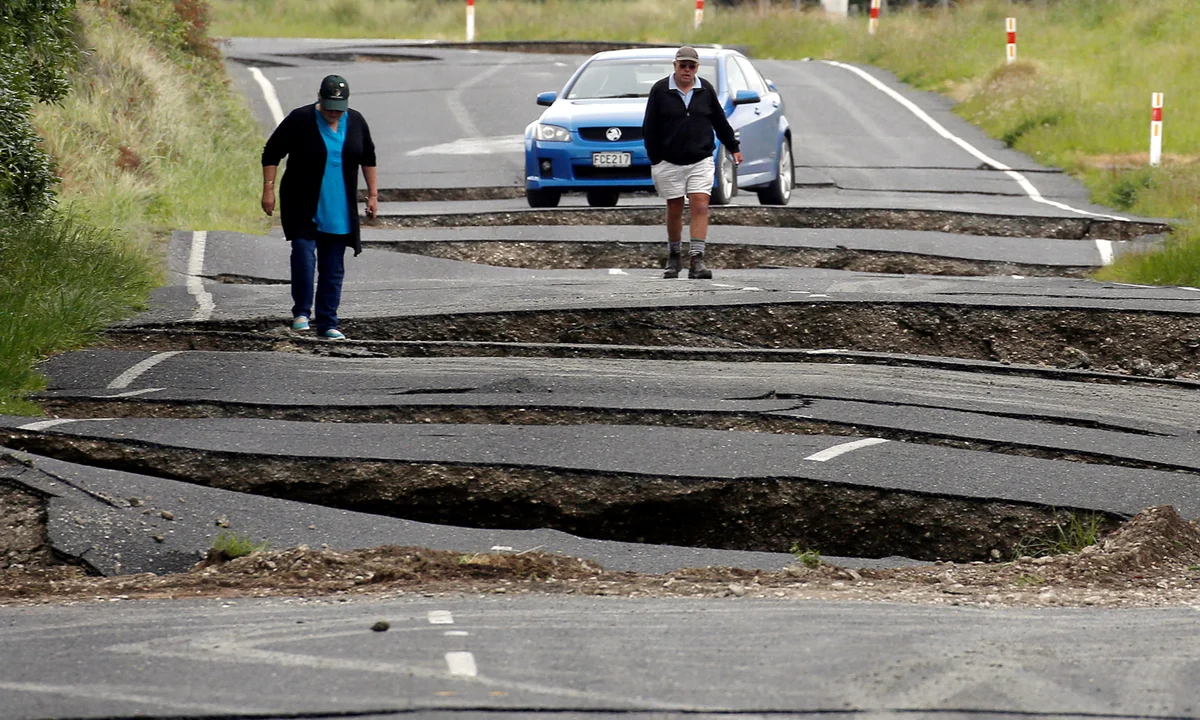

The quake occurred at 2:43 PM local time, with its epicenter located approximately 160 kilometers northwest of the island and a depth of 33 kilometers, according to official geological data.
Over 4,700 Residents Report Tremors
According to GeoNet, New Zealand’s official seismic monitoring agency, more than 4,700 people reported feeling the earthquake. The tremor was particularly intense near the boundary of the Australian and Pacific tectonic plates, an area already known for its seismic volatility.
The National Emergency Management Agency (NEMA) has urged residents in Southland and Fiordland to avoid the coastline due to the possibility of unusual sea currents, which could pose hazards even in the absence of a full-scale tsunami.
Scientists Warn of Underestimated Seismic Risk
Dr. Finn Illsley-Kemp, a seismologist at Victoria University, emphasized that the Fiordland region has been understudied and underestimated in terms of seismic risks. Despite this, it has a history of significant earthquakes, including the 2009 Fiordland quake (magnitude 7.8), which released energy equivalent to 25,000 times the Hiroshima atomic bomb and was powerful enough to bend the South Island’s landmass.
Illsley-Kemp added that geologists and researchers will closely examine the focal mechanism of Monday’s quake to understand whether it could lead to further tectonic activity.
Historical Context: Earth’s Most Powerful Quake and Its Link to New Zealand
In a related study, researchers from the University of Southampton recently uncovered evidence of the world’s most powerful recorded earthquake, a magnitude 9.5 event that struck northern Chile around 3,800 years ago. That ancient quake generated a tsunami that reached as far as New Zealand, altering coastal landscapes and impacting human settlements.
Archaeological findings along New Zealand’s Chatham Islands suggest massive rocks, believed to have been displaced by the tsunami, date back to the same era. Professor James Goff, co-author of the study, noted that the tsunami’s impact was so severe it delayed re-settlement of affected coastal areas by nearly 1,000 years.

Bhupendra Singh Chundawat is a seasoned technology journalist with over 22 years of experience in the media industry. He specializes in covering the global technology landscape, with a deep focus on manufacturing trends and the geopolitical impact on tech companies. Currently serving as the Editor at Udaipur Kiran, his insights are shaped by decades of hands-on reporting and editorial leadership in the fast-evolving world of technology.