

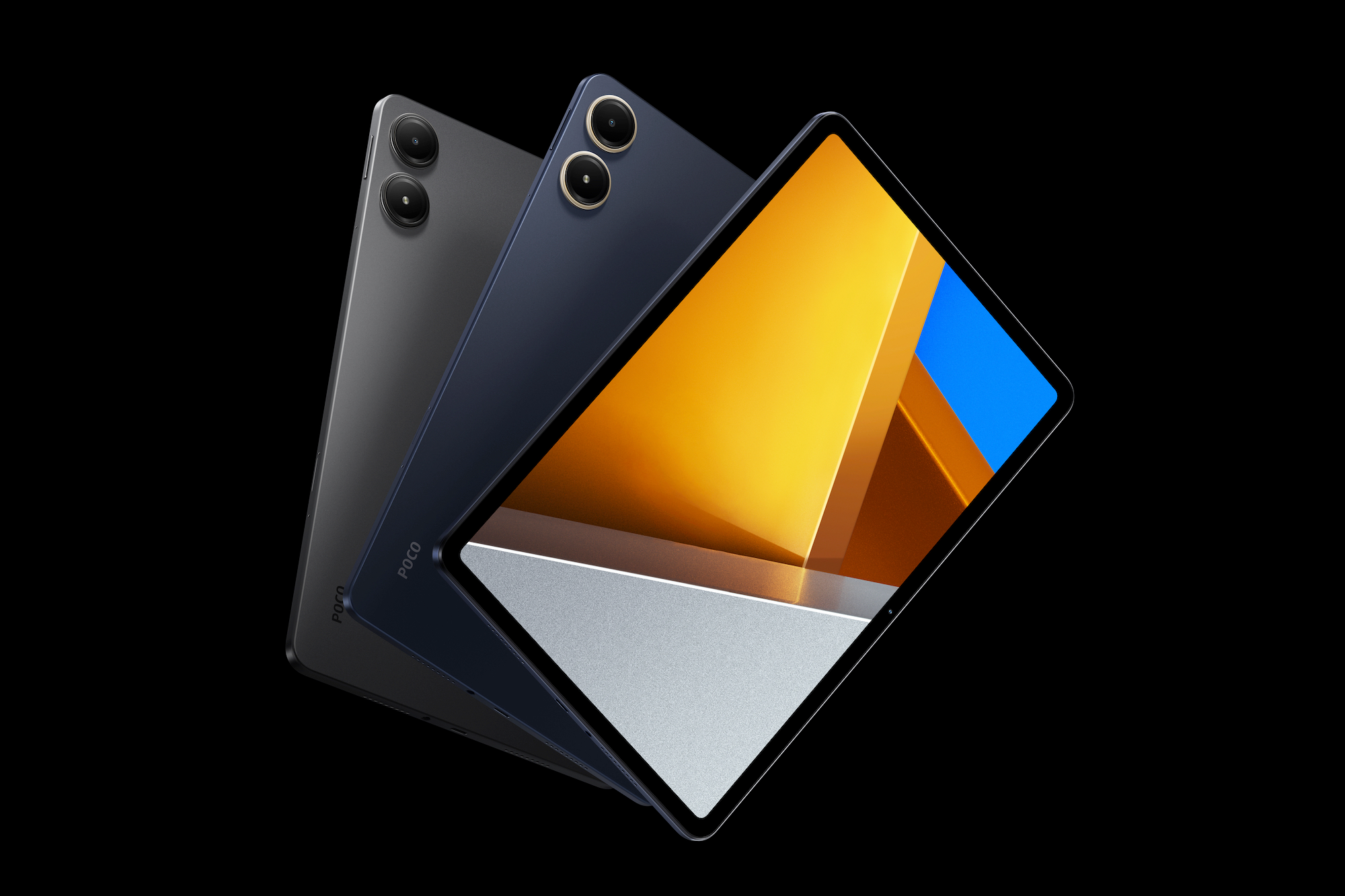
The Poco Pad launched globally on Thursday, May 23, alongside the Poco F6 and Poco F6 Pro. The tablet is powered by a Qualcomm Snapdragon 7s Gen 2 chipset and has a 10,000mAh battery with support for fast wired charging. It has four speakers with Dolby Audio support and a 12.1-inch 120Hz 2.5K display with Dolby Vision. This tablet has 8-megapixel cameras on the front and back. Available in two color options and one RAM and storage configuration. The Poco tablet is launched in India.
Poco pad price
The Poco Pad is priced at $329 (roughly Rs. 27,400) for the 8GB + 256GB option only, but can be purchased for $299 (roughly Rs. 24,900) under the first discount offer. Available in blue and gray.
Poco has listed a number of optional accessories for the tablet that customers can purchase. The base case costs $20 (roughly Rs. 1,700), while the Poco Smart Pen costs $60 (roughly Rs. 5,000) and $80 (roughly Rs. 6,700). Keyboard


Poco Pad Specifications and Features
The Poco Pad features a 12.1-inch 2.5K (2560 x 1600 pixels) display with an adaptive refresh rate of 120 Hz, touch sampling rate of 240 Hz, maximum brightness of 600 nits, aspect ratio of 16:10 and a TÜV Rhein Low Blue Light rating. Certified with Corning Gorilla Glass 3 protection.
The Poco Pad comes with a 4nm octa-core Snapdragon 7s Gen 2 chip with Qualcomm Adreno GPU, 8GB LPDDR4x RAM and 256GB UFS 2.2 internal storage. It runs out of the box with HyperOS based on Android 14.
When it comes to optics, the Poco Pad has 8-megapixel sensors on the front and back. This device comes with quad speakers with Dolby Atmos support and aims to provide users with a movie-quality audio experience.
The Poco Pad is powered by a 10,000mAh battery and supports 33W fast wired charging via the USB Type-C port. It also supports Wi-Fi 6 and Bluetooth 5.2 connectivity. The weight of this tablet is 571 grams and the dimensions are 280 x 181.85 x 7.52 mm.

Bhupendra Singh Chundawat is a seasoned technology journalist with over 22 years of experience in the media industry. He specializes in covering the global technology landscape, with a deep focus on manufacturing trends and the geopolitical impact on tech companies. Currently serving as the Editor at Udaipur Kiran, his insights are shaped by decades of hands-on reporting and editorial leadership in the fast-evolving world of technology.