

NASA’s Swift Observatory to Reenter Earth Uncontrolled on November 4
NASA's Swift telescope will re-enter Earth's atmosphere on November 4 after nearly 22 years in orbit.

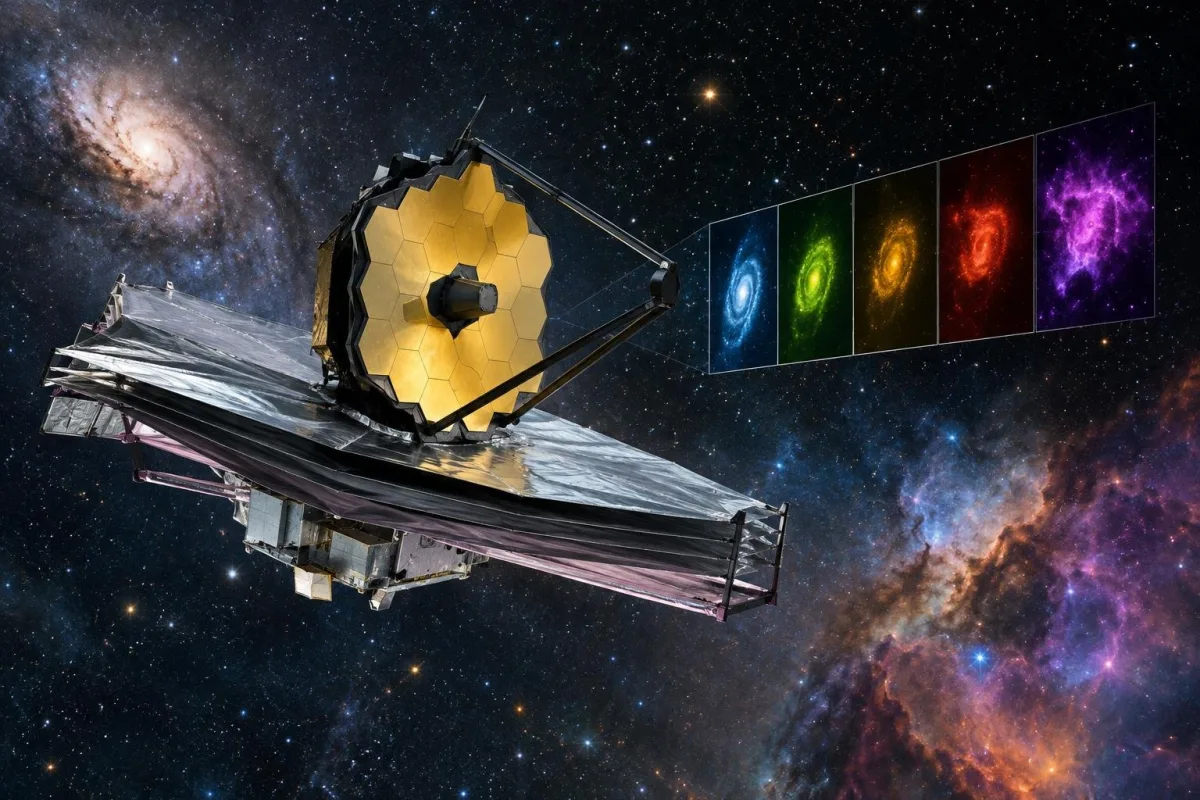
NEW DELHI, Nov 3: NASA’s Neil Gehrels Swift Observatory is set for an uncontrolled return to Earth on November 4, approximately 22 years after its launch.
Originally designed for a two-year mission, Swift launched in November 2004 to study gamma-ray bursts and other cosmic phenomena. As of October 20, 2026, the observatory could not counteract increasing atmospheric drag, leading to a significant decrease in its orbital altitude.
The spacecraft is predicted to re-enter the atmosphere around 3:30 a.m. EST, according to the U.S. Space Force, with an uncertainty of about 11 hours. Most of Swift is expected to burn up during reentry, although some parts may survive and reach Earth.
Researchers are closely monitoring Swift’s descent, but the exact location of any surviving debris remains uncertain. Swift’s trajectory mainly passes over oceans and populated regions in Africa, South Asia, and Latin America.
“The risk of harm to anyone on Earth is unlikely,” NASA stated, estimating it at about 1 in 2,100. Most of the spacecraft’s materials will likely disintegrate upon reentry, except for robust components like titanium and steel.
Before it concludes its mission, Swift contributed significantly to astronomy, observing over 2,000 gamma-ray bursts, recording more than 1,400 supernovae, and documenting black hole tidal disruption events. Its extensive multiwavelength data has supported around 7,000 scientific publications.
NASA attempted to extend Swift’s mission through a robotic servicing operation intended to raise its orbit, but the effort failed due to technical issues. Consequently, the observatory’s operations team ended scientific activities just before its reentry.
While no formal risk assessment for Swift’s fall has been released, it follows international liability conventions that generally hold the U.S. responsible for damage caused by space debris. “NASA’s orbital debris requirements state that the risk of human casualty from surviving debris shall not exceed one in 10,000,” said aerospace engineer Dean Sladen.
As Swift prepares for its final descent, experts highlight the increasing frequency of uncontrolled reentries due to the growing number of objects in low Earth orbit. The descent of the Swift telescope marks the end of a significant mission and raises important questions about space debris management.
Sources

Bhupendra Singh Chundawat is a seasoned technology journalist with over 22 years of experience in the media industry. He specializes in covering the global technology landscape, with a deep focus on manufacturing trends and the geopolitical impact on tech companies. Currently serving as the Editor at Udaipur Kiran, his insights are shaped by decades of hands-on reporting and editorial leadership in the fast-evolving world of technology.