

NASA Ends 22-Year Mission of Neil Gehrels Swift Observatory
NASA's Swift Observatory has concluded its mission after over 20 years of studying cosmic phenomena, with re-entry to Earth's atmosphere expected soon.

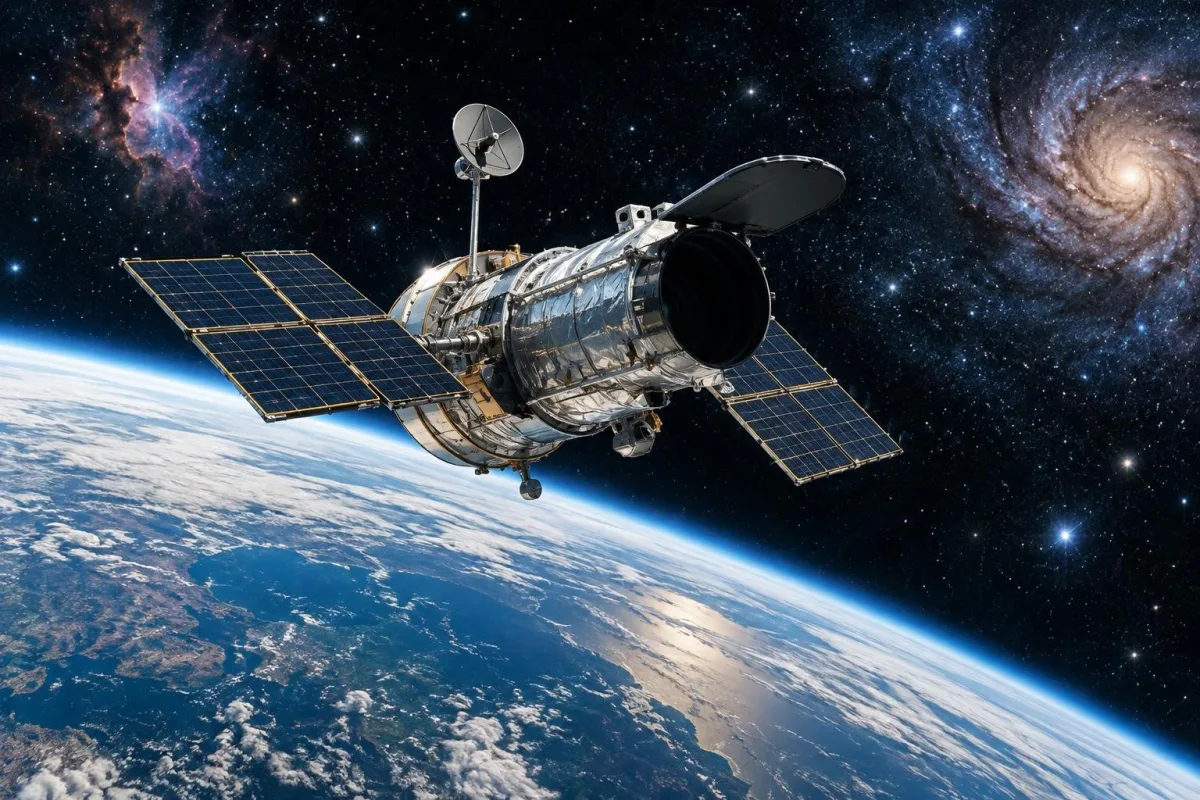
NEW DELHI, Oct 27: NASA has officially ended the mission of its Neil Gehrels Swift Observatory, which sent its final observations on October 20. Launched in 2004, the telescope was initially set for a two-year mission but operated for over 20 years, studying gamma-ray bursts and other cosmic events.
Shawn Domagal-Goldman, director of the Astrophysics Division at NASA Headquarters, said Swift advanced our understanding of the universe. He stated, “Swift leaves us with an extraordinary archive of multiwavelength observations that will fuel new discoveries for decades more.”
The observatory quickly detected gamma-ray bursts, among the most powerful explosions in the universe. During its lifetime, Swift observed over 2,000 gamma-ray bursts and studied more than 1,400 supernovae, while also monitoring black holes, asteroids, and comets.
The mission concluded as the spacecraft experienced increased atmospheric drag, leading to a rapid descent. NASA had attempted a rescue mission with Katalyst Space Technologies to boost its orbit, but this effort failed. The spacecraft is now expected to re-enter Earth’s atmosphere within weeks.
Though Swift’s scientific operations have ended, it created an extensive archive of nearly 12 terabytes, which will remain accessible for future research. The discoveries made by Swift will continue to inform and inspire astronomers for years to come.

Bhupendra Singh Chundawat is a seasoned technology journalist with over 22 years of experience in the media industry. He specializes in covering the global technology landscape, with a deep focus on manufacturing trends and the geopolitical impact on tech companies. Currently serving as the Editor at Udaipur Kiran, his insights are shaped by decades of hands-on reporting and editorial leadership in the fast-evolving world of technology.