

Mars Meteorite Teghaza 001 Found in Sahara Reveals Ancient Water History
Researchers have found a Martian meteorite in the Sahara that is over 4 billion years old and reveals information about Mars' past water presence.

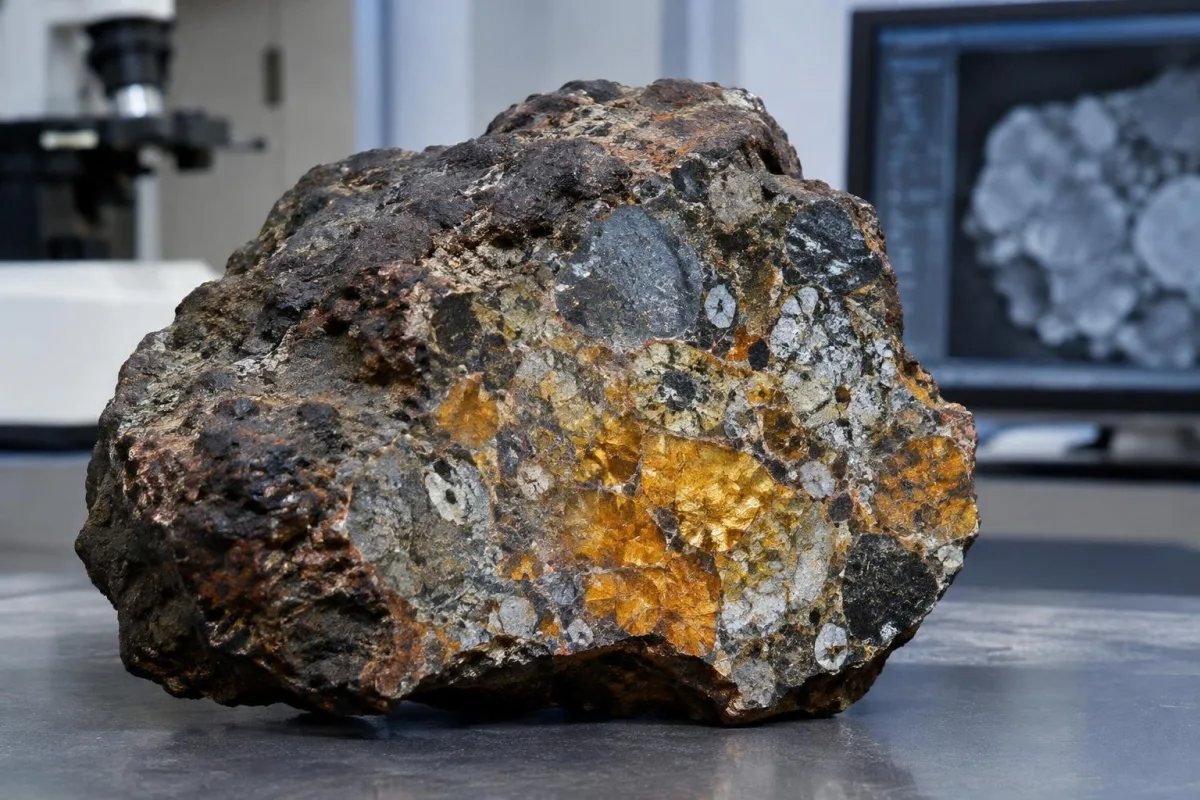
MALI, Nov 4: A meteorite discovered in the Sahara Desert, named Teghaza 001, has been identified as a piece of Mars that formed more than 4.1 billion years ago. This makes it one of the oldest Martian meteorites ever found on Earth.
The rose-colored rock, weighing nearly 2 pounds (800 grams), was recovered from the Teghaza salt plain in Mali in 2022. Researchers at the University of New Mexico confirmed its Martian origin by matching its oxygen isotopes to those in other Martian meteorites. It joins approximately 435 known Martian meteorites that have been blasted off Mars and eventually landed on Earth.
According to Yang Liu, a scientist at NASA’s Jet Propulsion Laboratory (JPL), Teghaza 001 is unlike any other meteorite previously studied. Liu described it as “a Rosetta Stone for Mars,” highlighting its potential to provide valuable insights into the planet’s geological and atmospheric history.
This meteorite’s mineral composition is significant; it contains volcanic minerals altered by water. A study published in the journal Science details how the rock preserved chemical traces of interactions between Martian crustal materials and its ancient hydrosphere.
Lee Saper, another researcher at JPL, stated, “This is really our first piece of Martian crust from a part of Mars we’ve never had a sample of before,” emphasizing the meteorite’s unique geological history. The findings suggest that early Mars had a more dynamic water cycle than previously believed, supporting theories that liquid water once existed on its surface.
Using a novel age-dating method, researchers determined that the rock was altered by Martian water around 4.1 billion years ago. The meteorite’s initial formation may date back even further, but current studies do not definitively pinpoint its original location on Mars. Comparisons to rocks observed by NASA’s Mars Reconnaissance Orbiter suggest connections to the southern highlands.
The research team anticipates that further investigations of Teghaza 001 will enhance understanding of Mars’ early environment and its potential for hosting life.
Sources

Bhupendra Singh Chundawat is a seasoned technology journalist with over 22 years of experience in the media industry. He specializes in covering the global technology landscape, with a deep focus on manufacturing trends and the geopolitical impact on tech companies. Currently serving as the Editor at Udaipur Kiran, his insights are shaped by decades of hands-on reporting and editorial leadership in the fast-evolving world of technology.