

Loans to Get Cheaper, EMI to Reduce: RBI Cuts Interest Rate by 0.25% to 6.25% After Nearly Two Years
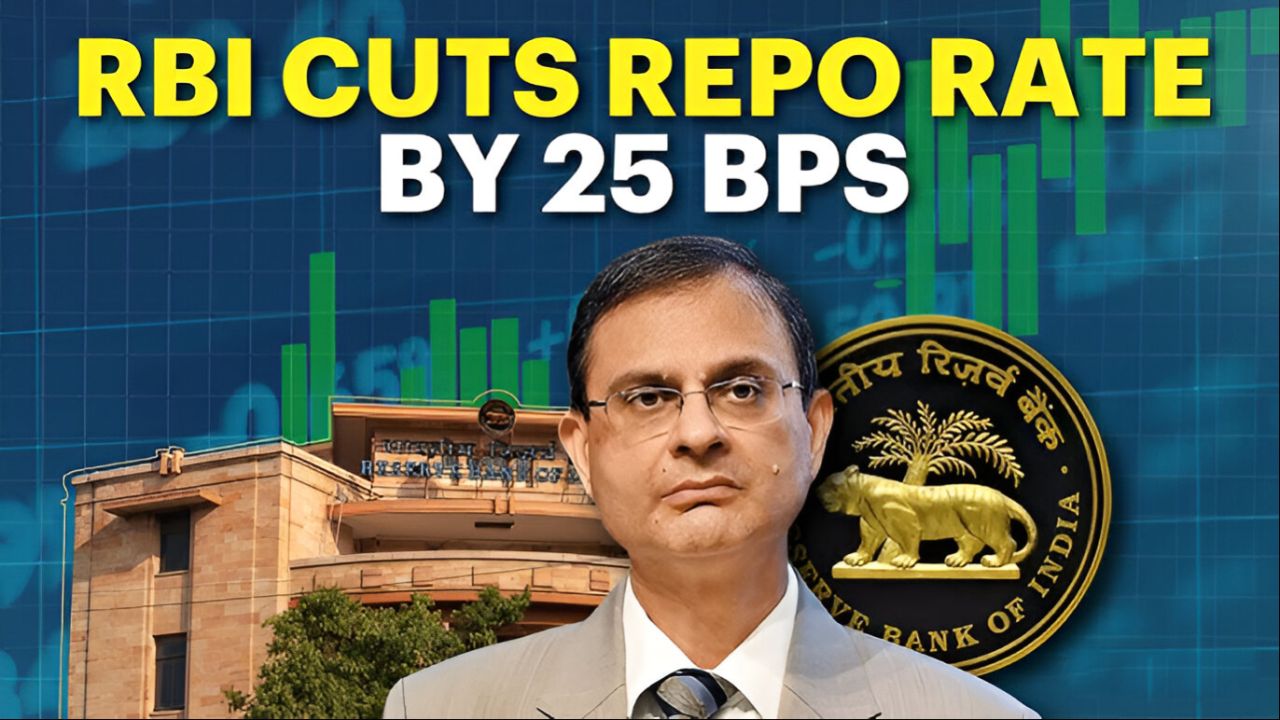
The Reserve Bank of India (RBI) has cut the repo rate from 6.5% to 6.25%, bringing relief to borrowers as loan interest rates will decrease and EMIs will become more affordable. This decision was announced by RBI Governor Sanjay Malhotra following the Monetary Policy Committee (MPC) meeting at 10 AM today.
This marks the first repo rate reduction in five years, as the central bank had last cut interest rates in May 2020, when it lowered the rate by 0.40% to 4%. However, from May 2022 to May 2023, RBI raised the repo rate by 2.50% to 6.5%, in response to inflationary pressures. Now, in February 2025, the central bank has finally decided to ease the rate again.

📊 India’s Economic Growth Projections for 2025-26
The RBI has projected India’s real GDP growth at 6.4% for FY25 and 6.7% for FY26, with the following quarterly estimates:
✔️ Q1 FY25 GDP Growth: 6.7%
✔️ Q2 FY25 GDP Growth: 7.0%
✔️ Q3 FY25 GDP Growth: 6.5%
✔️ Q4 FY25 GDP Growth: 6.5%
✔️ FY25 Real GDP Growth: 6.4%
✔️ FY26 Real GDP Growth: 6.7%
This indicates a stable and growing Indian economy, with the RBI aiming to balance inflation control with economic expansion.
📉 Why Did RBI Cut Interest Rates? Understanding Policy Rates & Inflation Control
The policy rate (repo rate) is one of the most powerful tools that a central bank uses to control inflation and economic growth.
🔹 When inflation is high, the RBI raises the repo rate, making borrowing costlier for banks, which in turn increases loan interest rates for customers. This reduces money circulation in the economy, lowers demand, and helps control inflation.
🔹 When economic recovery is needed, the RBI lowers the repo rate, making loans cheaper for banks and customers, increasing money circulation, and boosting demand and investments.
This latest 0.25% rate cut indicates RBI’s strategy to support economic growth while keeping inflation under control.
📈 What Do Inflation Numbers Indicate?
1️⃣ Retail Inflation (CPI) in December 2024 – 5.22%
✔️ Retail inflation dropped to a 4-month low at 5.22% in December, down from 5.48% in November, mainly due to lower food prices.
✔️ RBI’s inflation target range is between 2% and 6%, meaning inflation remains within control.
2️⃣ Wholesale Inflation (WPI) in December 2024 – 3.36%
✔️ Wholesale inflation rose to 3.36% in December, up from 1.89% in November, due to higher prices of potatoes, onions, eggs, meat, fish, and fruits.
✔️ The Commerce & Industry Ministry released these figures on January 14, 2025.
These numbers reflect a controlled inflation scenario, allowing the RBI to focus on boosting economic growth.
💰 How Will This Rate Cut Impact You?
1️⃣ Loans & EMIs Will Get Cheaper – The reduction in repo rate will lower interest rates on home loans, car loans, personal loans, and business loans, making borrowing more affordable.
2️⃣ More Disposable Income for Consumers – Lower EMIs mean more savings, allowing individuals to spend or invest more, which can boost economic activity.
3️⃣ Stock Market & Investments – Interest rate cuts often lead to higher stock market optimism, as lower borrowing costs encourage corporate growth and expansion.
4️⃣ Fixed Deposits & Savings Rates – Banks may reduce FD interest rates, meaning fixed deposit holders might earn slightly lower returns.
5️⃣ Housing & Auto Sectors to Benefit – Lower loan rates will boost demand for housing and automobiles, as more people will find it affordable to take loans.
📌 The Impact of Inflation on Purchasing Power
Inflation directly affects the purchasing power of money.
For example, if inflation is 7%, then ₹100 today will be worth only ₹93 next year. This means that without proper financial planning and investment, the value of your money could decrease over time. Investments should always be made keeping inflation in mind, to ensure long-term financial security.
📢 Final Thoughts: A Well-Timed Decision for Economic Growth
With inflation under control and economic growth stable, the RBI’s decision to cut the repo rate by 0.25% to 6.25% is a well-calculated move. This reduces borrowing costs for businesses and individuals, encourages higher spending and investments, and supports India’s GDP growth targets.
The next few months will determine how effectively banks pass on these benefits to customers, but for now, borrowers can expect some relief in their loan EMIs.

Bhupendra Singh Chundawat is a seasoned technology journalist with over 22 years of experience in the media industry. He specializes in covering the global technology landscape, with a deep focus on manufacturing trends and the geopolitical impact on tech companies. Currently serving as the Editor at Udaipur Kiran, his insights are shaped by decades of hands-on reporting and editorial leadership in the fast-evolving world of technology.