

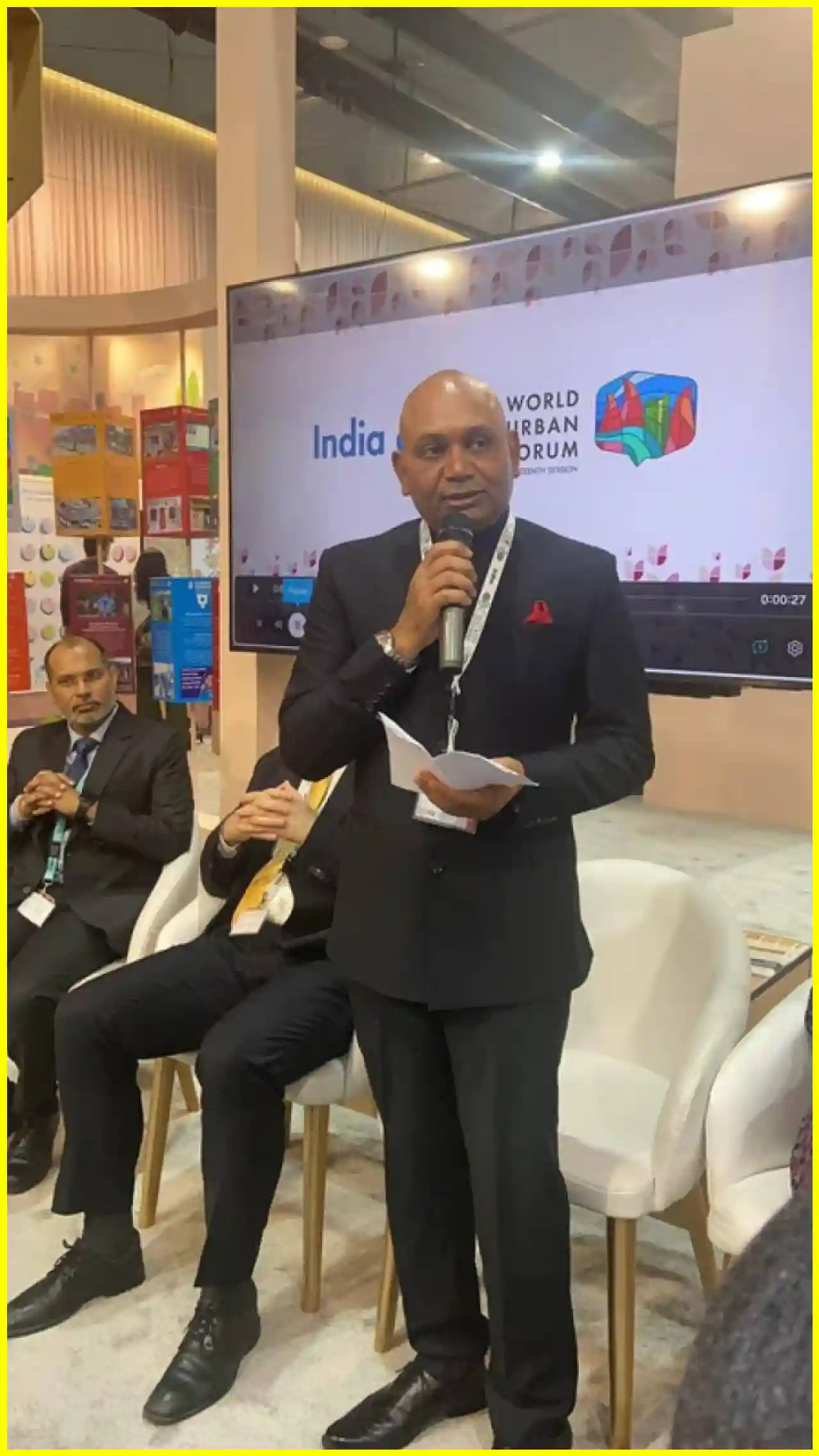

Baku, May 19: The 13th World Urban Forum (WUF 13) was inaugurated in Baku, Azerbaijan, featuring the India Pavilion that highlights the evolving urban landscape of India. The pavilion was inaugurated by Stephen Preissner, the United Nations Resident Coordinator in India, and Abhay Kumar, the Indian Ambassador.
The India Pavilion, themed “Urban Transformation in India: A Home for a Billion Dreams,” showcases the journey of urban development and transformation in the country. It aims to present the arrangements being made for sustainable and inclusive cities alongside India’s urban transformation journey.
Ambassador Abhay Kumar emphasized that the pavilion’s purpose is to “demonstrate India’s journey of urban transformation and its efforts towards inclusive, resilient, and sustainable development.” He noted how national and city-level initiatives are fulfilling the aspirations of the common people, turning them into reality through innovative policies, public participation, and partnerships. Kumar encouraged attendees to spend time at the pavilion to understand its significance.
Organizers believe that the India Pavilion will serve as a platform for dialogue, collaboration, and exchange of ideas among global partners and various stakeholders.
The World Urban Forum is a major global conference established by the United Nations to discuss sustainable urbanization and challenges related to cities. Launched in 2001, it is held every two years. The 13th World Urban Forum is taking place in Baku from May 17 to 22, 2026, with the theme “Housing the World: Safe and Resilient Cities and Communities,” focusing on creating cities with enhanced security and basic amenities for all communities.
According to the official site of PMAY (Urban), the main objective of urban transformation in India is to realize a billion dreams by providing affordable, inclusive, and sustainable housing. Through major schemes like the Pradhan Mantri Awas Yojana (PMAY-Urban) and PMAY-U 2.0, the government is providing central assistance for housing construction, purchase, and rental support to millions of urban poor and middle-class families.
By 2036, approximately 600 million people are expected to reside in Indian cities. Under the guidelines issued by the government, financial assistance and subsidies are being provided to over 10 million urban poor and middle-class individuals for building or purchasing homes at affordable rates.

My name is Kuldeep Singh Chundawat. I am an experienced content writer with several years of expertise in the field. Currently, I contribute to Daily Kiran, creating engaging and informative content across a variety of categories including technology, health, travel, education, and automobiles. My goal is to deliver accurate, insightful, and captivating information through my words to help readers stay informed and empowered.