

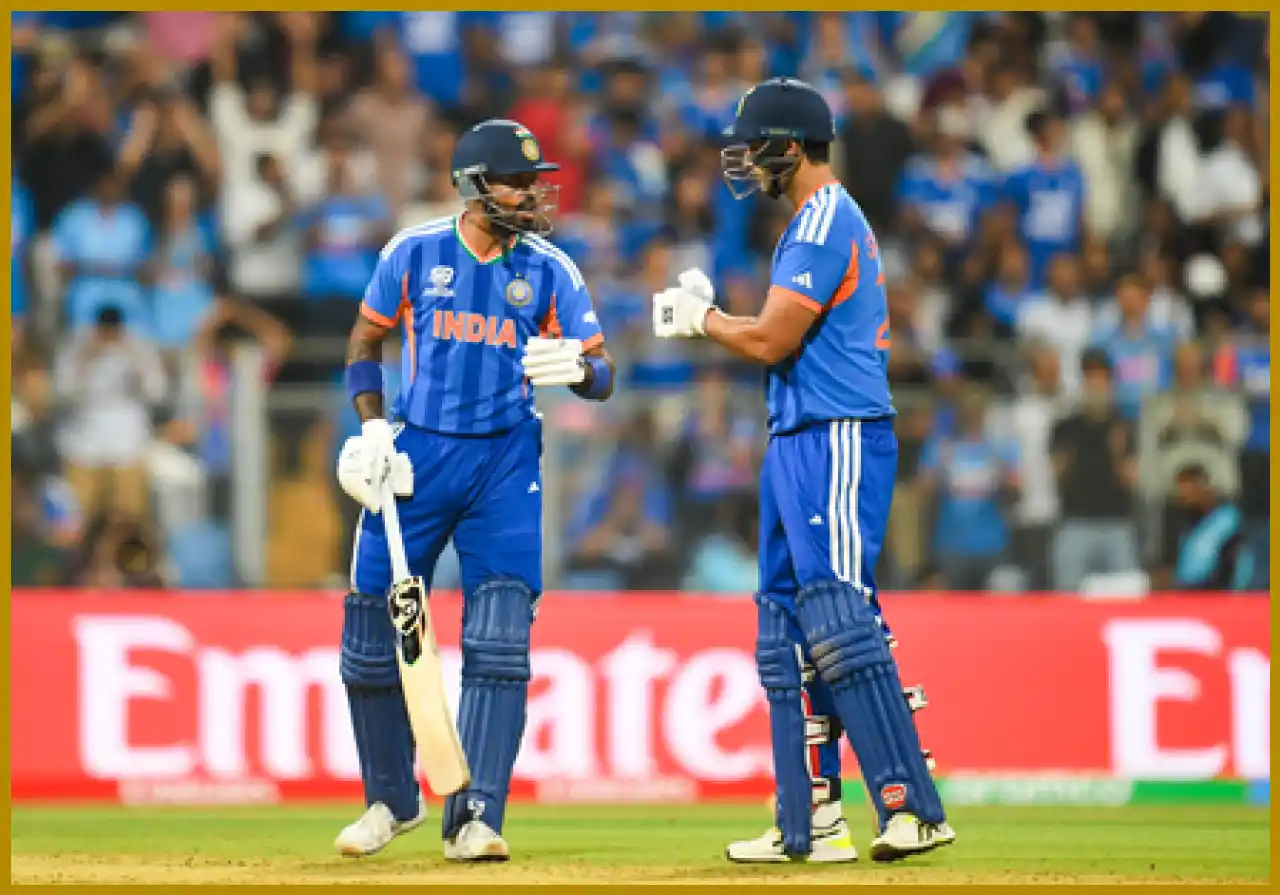

Mumbai, March 5: In a thrilling performance, India set a target of 254 runs against England in the semi-final of the T20 World Cup 2026. The Indian team hit a remarkable total of 19 sixes in their innings, equalling the record for the most sixes in a single T20 World Cup innings, previously held by West Indies and the Netherlands.
The Netherlands achieved this feat in 2014 against Ireland, while West Indies matched it in 2026 against Zimbabwe in a match held in Mumbai. Earlier in this World Cup, India had already hit 17 sixes in a match against Zimbabwe, and Australia had hit 16 sixes against India in 2010.
Sanjay Samson was the standout performer, scoring 89 runs off 42 balls, including 7 sixes and 8 fours. With this innings, he became the Indian player with the most sixes in a single edition of the T20 World Cup, having hit 16 sixes so far in the tournament.
Rohit Sharma (2024) and Shivam Dube (2026) are tied for second place in this record, while Ishan Kishan and Hardik Pandya have each hit 14 sixes this year. Yuvraj Singh previously set a record with 12 sixes in the 2007 World Cup, famously hitting six sixes in an over.
In the ongoing semi-final at Wankhede Stadium, India scored 253 runs while losing 7 wickets. The team faced an early setback, losing their first wicket at a score of 20. However, Sanju Samson formed a crucial partnership of 97 runs for the second wicket, propelling the team past the century mark. Ishan Kishan contributed 39 runs off 18 balls before being dismissed, while Shivam Dube added 43 runs to strengthen the team’s position.
Samson’s innings concluded with 89 runs, while Dube, Kishan, Hardik Pandya, and Tilak Varma contributed 43, 39, 27, and 21 runs, respectively. From the opposition, Will Jacks and Adil Rashid took 2 wickets each, while Jofra Archer claimed 1 wicket.
–
RSG
Agency
“Disclaimer: This news is directly from the agency; our team has not edited it.”

Bhupendra Singh Chundawat is a seasoned technology journalist with over 22 years of experience in the media industry. He specializes in covering the global technology landscape, with a deep focus on manufacturing trends and the geopolitical impact on tech companies. Currently serving as the Editor at Udaipur Kiran, his insights are shaped by decades of hands-on reporting and editorial leadership in the fast-evolving world of technology.