

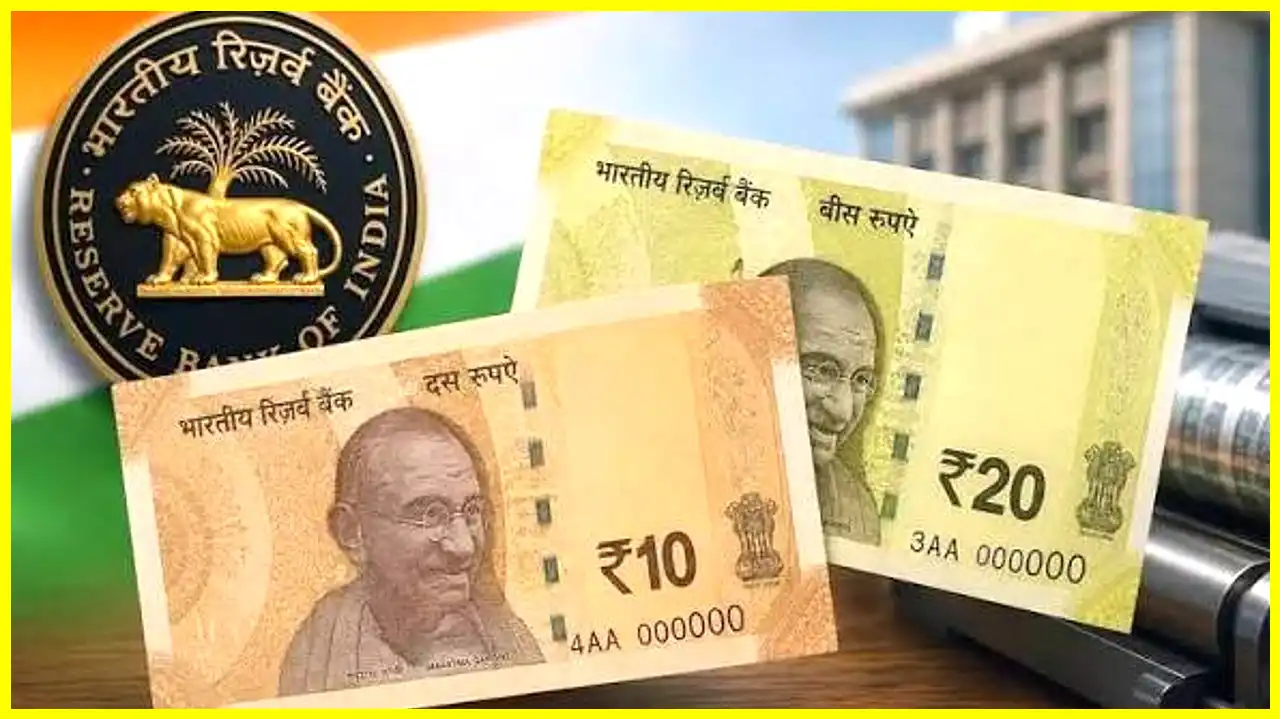
NEW DELHI, July 27: The Central Government has approved the Reserve Bank of India’s (RBI) proposal to conduct a pilot field trial of polymer (plastic) currency notes in the ₹10 and ₹20 denominations. Under the pilot project, 100 crore polymer notes of each denomination will be issued for testing. A decision on large-scale circulation will be taken only if the trial proves successful.

Pilot Project Approved for Field Testing
The Ministry of Finance has approved the RBI’s proposal to issue the polymer notes as part of a pilot project. Minister of State for Finance Pankaj Chaudhary, in a written reply in the Lok Sabha, said the initiative aims to assess the durability and usability of polymer notes under Indian weather conditions and day-to-day usage.
Polymer Notes Expected to Be More Durable
According to the RBI, polymer notes are stronger and have a longer lifespan than conventional paper currency. Several countries have already adopted plastic currency and have reported positive results. India is now planning to evaluate the technology through this field trial.
Paper Currency Will Continue
The government has clarified that the introduction of polymer notes does not mean paper currency will be discontinued. If the pilot project is successful, both polymer and paper notes will continue to remain in circulation.
No Immediate Conclusion on Digital Payments
The government also said it is too early to determine whether the introduction of polymer notes will have any impact on digital payments. Any conclusion can be drawn only after the notes come into regular circulation among the public.
The RBI has stated that cash and digital payments complement each other and will continue to coexist. UPI, card payments, online transactions, and cash are all expected to retain their respective roles in the country’s payment ecosystem.
Trial Outcome Will Determine Future Rollout
If the pilot project is successful, it could mark a significant change in India’s currency system. Polymer notes are expected to be more durable and resistant to wear and tear, which could help reduce currency printing costs over the long term. For now, the focus remains on the outcome of the RBI’s field trial.

Bhupendra Singh Chundawat is a seasoned technology journalist with over 22 years of experience in the media industry. He specializes in covering the global technology landscape, with a deep focus on manufacturing trends and the geopolitical impact on tech companies. Currently serving as the Editor at Udaipur Kiran, his insights are shaped by decades of hands-on reporting and editorial leadership in the fast-evolving world of technology.