

Four Consecutive Supermoons Begin with November’s Beaver Moon
The Beaver Moon on November 24 begins a series of four supermoons, providing spectacular views for skywatchers.

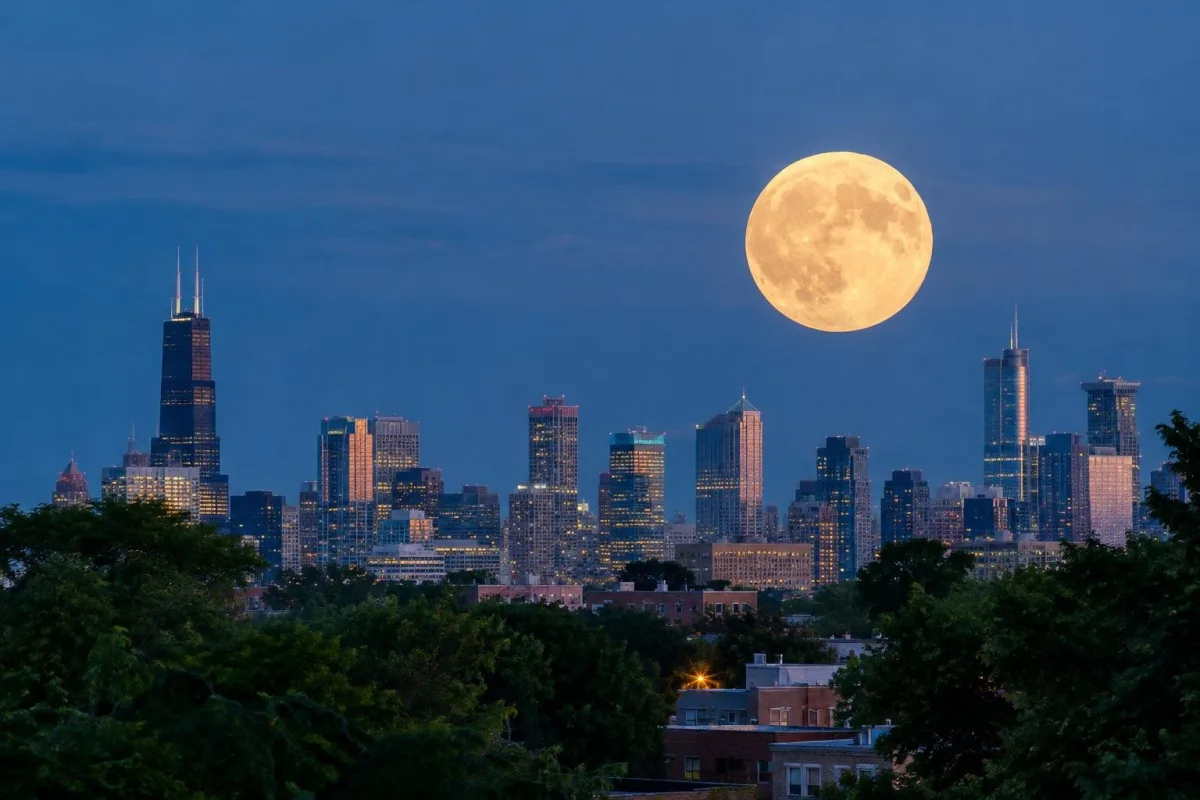
NEW DELHI, Nov 7: The full Beaver Moon rises on November 24, heralding the first of four consecutive supermoons visible this season. This full moon will appear larger and brighter as it reaches perigee, the point in its orbit closest to Earth.
According to NASA, the Beaver Moon is traditionally named for the time of year when beavers prepare for winter. This seasonal activity has influenced its name in North American folklore. The moon will be particularly noticeable around 17:00 in Minsk, where it will rise in the eastern sky before sunset.
NASA indicates that during a supermoon, the full moon can appear 14% larger and 30% brighter compared to a regular full moon at its farthest distance from Earth. For viewers, the best experience will come in the evening while the moon is low on the horizon.
This phenomenon allows for vibrant visual displays and serves as a reminder of the unique nature of the moon’s elliptical orbit, which causes its distance to vary significantly.
Upcoming Supermoons
Following the Beaver Moon in November, the next supermoons are anticipated on December 24 and in January. Each of these events will provide excellent opportunities for skywatching, contingent on favorable weather. No special equipment is necessary to enjoy these lunar spectacles, which can be viewed with the naked eye.
“The Moon will also appear almost full on November 23 and 25,” according to astronomical sources.
Sources

My name is Kuldeep Singh Chundawat. I am an experienced content writer with several years of expertise in the field. Currently, I contribute to Daily Kiran, creating engaging and informative content across a variety of categories including technology, health, travel, education, and automobiles. My goal is to deliver accurate, insightful, and captivating information through my words to help readers stay informed and empowered.