

AI Model Identifies Diabetes Risk in Fatty Liver Disease Patients
Researchers developed an AI model to assess diabetes risk in patients with non-alcoholic fatty liver disease using clinical data.

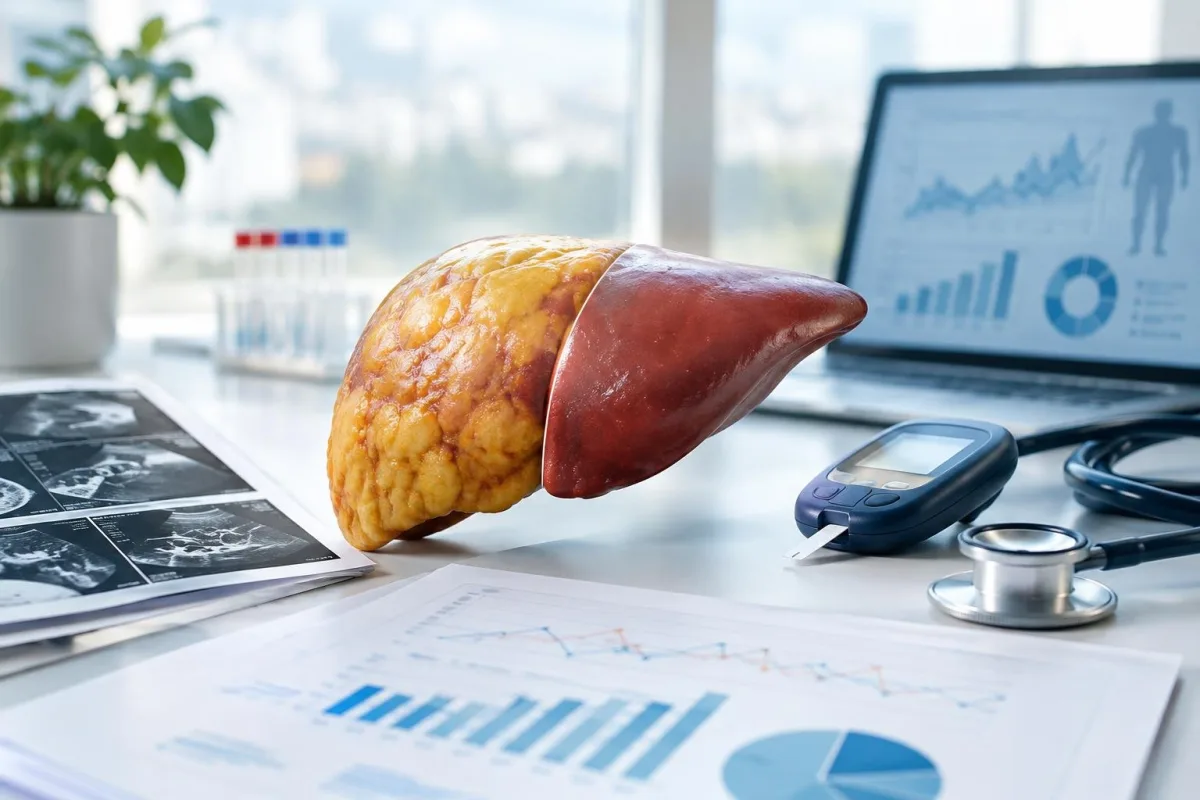
Researchers have created a machine learning model that identifies patients with non-alcoholic fatty liver disease (NAFLD) at increased risk of developing type 2 diabetes (T2D). This development involved two hospital cohorts in China and demonstrates the model’s potential in personalized risk assessment.
The predictive model utilizes five commonly available clinical variables, achieving an area under the receiver operating characteristic curve (AUC) of 0.89 during external validation. Key variables include waist circumference, fasting plasma glucose, triglyceride levels, family history of diabetes, and the neutrophil-to-lymphocyte ratio.
According to the researchers, “We developed seven predictive models, and among these, the artificial neural network exhibited the strongest performance.” However, the XGBoost model was chosen as the final version due to its best overall performance in an external cohort.
The study utilized data from patients with histologically confirmed NAFLD, allowing for a thorough retrospective analysis. The researchers followed patients from the date of their diagnosis until either their first T2D diagnosis or their last clinical record.
The researchers noted that the model was developed using data from specific hospital populations, which might limit its applicability to broader settings where non-invasive diagnoses are more common. They emphasized that while the model offers promising discrimination, it has not yet been shown to impact clinical decisions or improve patient outcomes.
Future work will require prospective, multicentre studies to confirm the model’s effectiveness in a more diverse patient population and standardize follow-up periods. The researchers believe that integrating these clinical variables could provide better risk stratification, facilitating earlier monitoring and preventive strategies for those most at risk.

My name is Kuldeep Singh Chundawat. I am an experienced content writer with several years of expertise in the field. Currently, I contribute to Daily Kiran, creating engaging and informative content across a variety of categories including technology, health, travel, education, and automobiles. My goal is to deliver accurate, insightful, and captivating information through my words to help readers stay informed and empowered.